


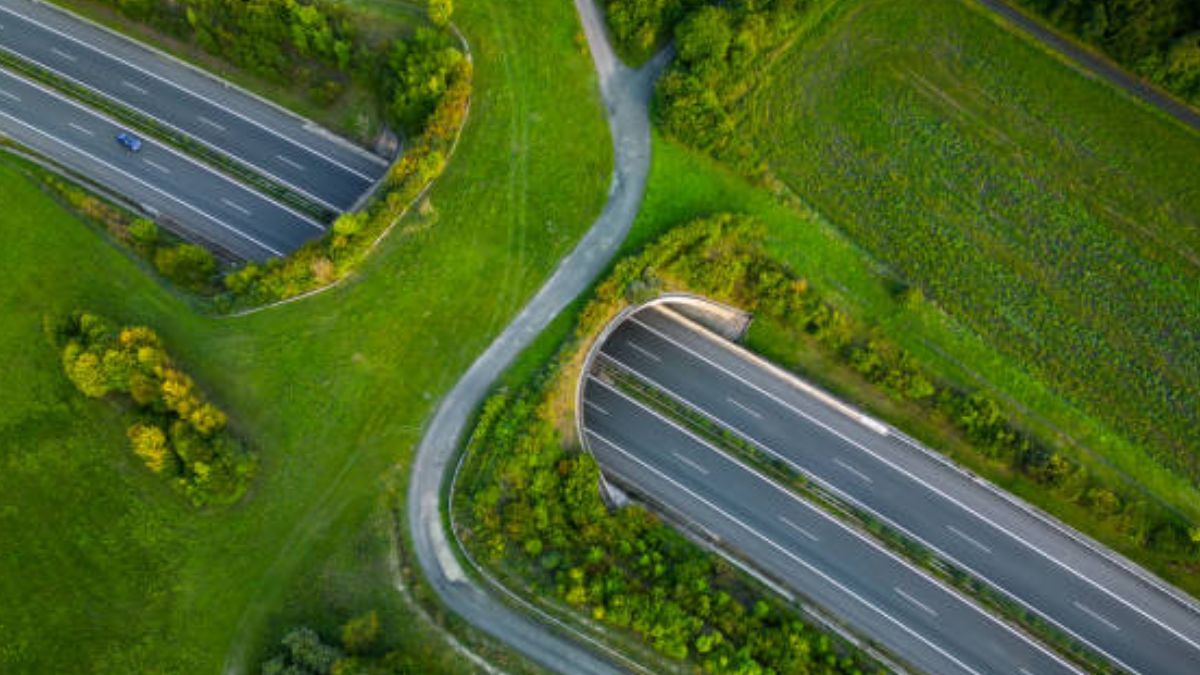
India has achieved a significant milestone in environmentally conscious infrastructure development with the completion of the country’s first wildlife overpass corridor on the Delhi-Mumbai Expressway. The newly opened 12-kilometre stretch traverses the buffer zone of the Ranthambore Tiger Reserve in Rajasthan and is designed to ensure uninterrupted animal movement while maintaining the ecological balance of one of India’s most biodiverse regions.
The expressway section is equipped with five dedicated wildlife overpasses and the nation’s longest animal underpass, seamlessly integrating infrastructure with conservation. National Highway Authority of India (NHAI) officials involved in the project confirmed that 2.5 kilometres of this stretch was constructed in full alignment with the natural forest terrain. This design approach was essential to facilitate safe passage for tigers and other native species, whose habitats extend across the Ranthambore landscape. Officials overseeing the construction revealed that the section posed one of the most formidable engineering challenges of the entire Delhi-Mumbai Expressway project. Given its proximity to protected forest lands, extensive precautions were required both during and after the construction phase. Project teams worked closely with environmental experts and forest officials to ensure that construction activities did not disturb native flora and fauna.
In line with India’s net-zero carbon goals and the national agenda for sustainable infrastructure, the project also implemented a suite of eco-sensitive design practices. Approximately 35,000 trees were planted along the new corridor, reinforcing green cover. Furthermore, rainwater harvesting systems have been installed at intervals of 500 metres along the route to promote water conservation. To manage water usage during maintenance and landscaping, the project employed drip irrigation systems, which have reportedly reduced water consumption by over 50% compared to conventional methods. Construction engineers adopted modular formwork techniques and low-waste construction protocols throughout the stretch to minimise material loss and environmental footprint. These technologies not only reduced pollution during the construction phase but also enhanced the longevity and maintenance efficiency of the expressway.
Wildlife movement corridors, such as these overpasses and underpasses, are vital for maintaining ecological connectivity across fragmented habitats. The Ranthambore Tiger Reserve is home to a wide array of species, including leopards, hyenas, sloth bears, and several species of deer and reptiles. The infrastructure now in place is expected to significantly reduce the likelihood of roadkill incidents, which are a growing concern on highways intersecting forested zones. Experts have lauded the NHAI for undertaking this pioneering effort in wildlife-friendly infrastructure. Conservationists have long argued that India’s infrastructure expansion must account for biodiversity concerns, and this project is being seen as a benchmark for future expressway developments. Similar interventions are now being considered for other highway stretches passing through or near protected areas, including corridors in central and northeastern India.
Beyond its environmental benefits, the wildlife corridor also contributes to India’s global image as a nation balancing rapid economic growth with environmental stewardship. The Delhi-Mumbai Expressway is among the country’s most ambitious infrastructure undertakings, expected to cut travel time between the two metros by over 12 hours. Yet, its ability to incorporate climate-conscious features signals a new direction in transport infrastructure planning. Officials have pointed out that the Ranthambore segment’s successful integration of conservation and connectivity will serve as a model for other megaprojects across India. Urban planners, highway designers, and policymakers are increasingly recognising that sustainable development must include safeguards for wildlife and forest ecosystems, particularly in an era marked by climate volatility and rapid land-use change.
The expressway’s completion has not come without its share of scrutiny. Environmentalists continue to stress the need for stringent post-construction monitoring to ensure the corridors function as intended. Camera traps and data collection systems are expected to be installed to study wildlife usage patterns and measure the long-term success of these interventions. In addition to infrastructure improvements, experts argue for more extensive community engagement and awareness campaigns in adjoining regions to minimise human-wildlife conflict. As highways bring more vehicles and tourists closer to sensitive forest zones, the risk of encroachment and noise pollution also increases.
Nevertheless, the launch of this wildlife corridor has been largely welcomed as a progressive step toward balancing developmental and ecological goals. If consistently replicated, such models may not only transform India’s highway development landscape but also contribute meaningfully to global efforts for biodiversity conservation. As India prepares to invest in over 25,000 km of new national highways in the coming years, this expressway segment stands as a symbol of what modern infrastructure can look like when it embraces both innovation and ecological integrity.
Also Read : Mumbai Allocates 19 Hectare Sanjay Gandhi Forest Land To BMC Twin Tunnel Plan
