Delhi Braces For More Rains As Waterlogging Cripples Morning Commute
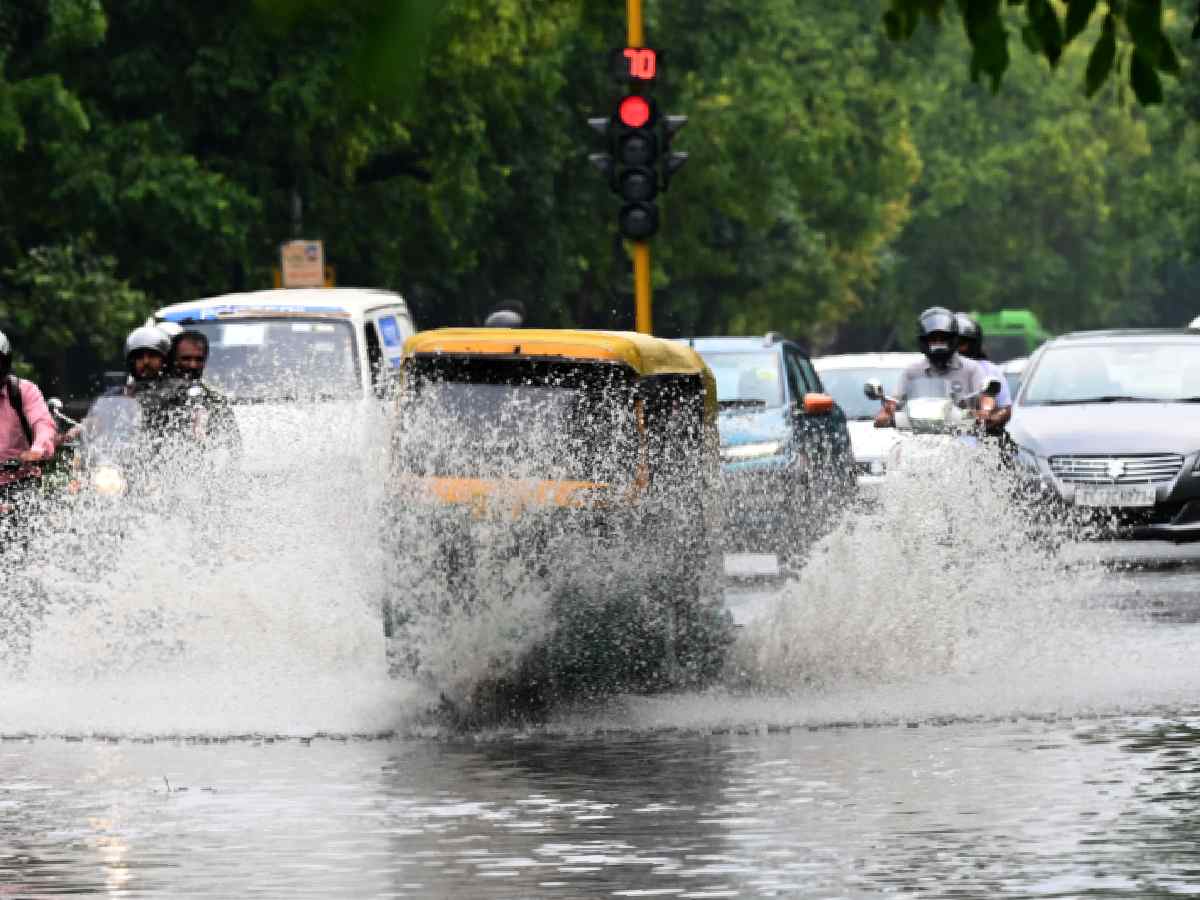
Delhi’s Thursday morning commute turned chaotic as heavy rain drenched the city and neighbouring NCR, leaving several arterial roads submerged in knee-deep water. While the showers brought welcome relief from sweltering heat, they exposed the capital’s chronic drainage woes, crippling traffic in low-lying areas. With forecasts warning of intensified rainfall through mid-August, authorities are bracing for further disruptions and renewed calls for sustainable urban flood management.
According to civic officials, neighbourhoods such as Lajpat Nagar, RK Puram, Lodhi Road, and stretches along the Outer Ring Road near Subroto Park experienced severe flooding, reducing vehicle movement to a crawl. In Gurugram, Basai Road became nearly impassable after the early-morning downpour, while landmark areas including India Gate, Kartavya Path, Punjabi Bagh, and Vasant Vihar saw significant slowdowns.Meteorological data indicated an 84% probability of moderate rainfall on Thursday, with precipitation reaching 8.32 mm. Weather experts predict intensifying showers over the next three days, peaking at over 15 mm on 15 August, coinciding with Independence Day events. High humidity, projected to climb to 80% by 17 August, is expected to make conditions uncomfortable despite lower daytime temperatures ranging between 26°C and 36°C.
Authorities have urged commuters to remain cautious, particularly along arterial routes and ceremonial stretches where both vehicular and pedestrian movement may be hindered. Urban planners caution that such recurrent flooding highlights the urgent need for sustainable drainage systems and resilient infrastructure, especially in the face of unpredictable weather linked to climate change.Environmental experts point out that Delhi’s current storm water management is under increasing strain from rapid urbanisation and the loss of natural water-absorbing surfaces. Concrete-heavy cityscapes, they say, exacerbate runoff and reduce the capacity of the ground to absorb excess rainwater, making flooding inevitable during intense spells. They recommend introducing more green spaces, permeable pavements, and decentralised rainwater harvesting to reduce the burden on existing drainage networks.
The downpour has also reignited debates over climate-adaptive city planning. As extreme weather events grow in frequency, civic bodies are being urged to integrate eco-friendly measures in all new infrastructure projects, ensuring they align with the city’s broader goals of zero net carbon growth, sustainable mobility, and equitable urban living.Forecasts indicate that heavy showers will persist until 17 August before gradually easing, with occasional rain expected later in the month. However, officials warn that even short-lived intense spells can cause severe disruptions if drainage issues remain unaddressed. With the capital preparing for its annual Independence Day celebrations, authorities are expected to deploy additional pumps, traffic diversions, and on-ground personnel to mitigate the impact of waterlogging.For residents, the week ahead will be one of balancing relief from the heat against the challenges of navigating a city struggling to stay dry. The rains have underscored, once again, that climate resilience is not an option for Delhi it is a necessity.