Delhi Boosts Drain Management With Smart Cleaning Machines
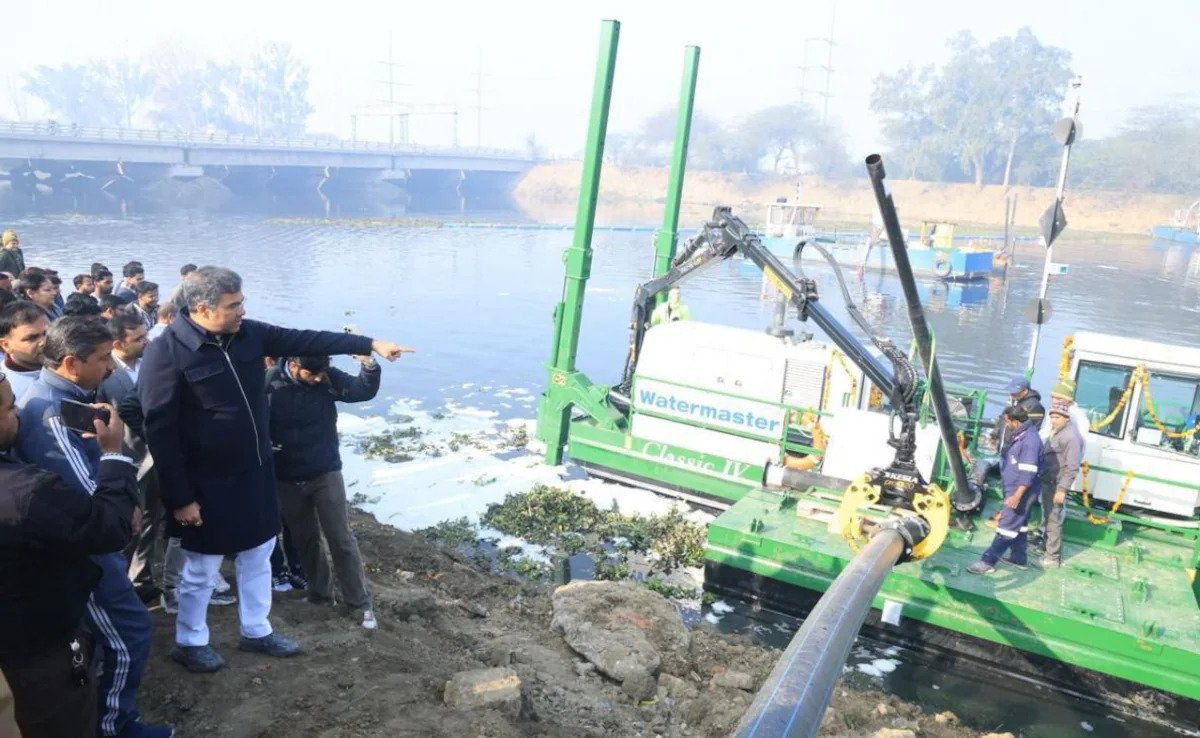
Delhi’s urban water management system is receiving a technological upgrade as mechanised equipment is being introduced to tackle floating waste and aquatic vegetation in one of the capital’s major drainage channels. Authorities have begun deploying specialised weed harvesting machines at the Najafgarh Drain, a key waterway that carries stormwater and runoff across large parts of the city. Officials involved in the operation say the intervention is designed to strengthen urban water infrastructure maintenance ahead of the monsoon season. By clearing dense vegetation and solid waste from the drain, the initiative aims to improve water flow, reduce blockages, and minimise flood risks in surrounding neighbourhoods during periods of heavy rainfall.
The equipment being used combines aquatic weed removal with floating waste collection in a single operation. The machines employ a dual cutting system that trims vegetation both vertically and horizontally before transferring the debris onto a conveyor mechanism. Collected material is then stored on board and discharged once the holding capacity is reached, allowing continuous clearing operations across extended stretches of the water channel. With a storage capacity of nearly fifteen cubic metres per operational cycle, the machinery is designed to manage large volumes of organic and plastic waste commonly found in urban drains. Powered by a high-capacity diesel engine, the units can operate at moderate speeds suitable for water channels while maintaining stability during waste extraction. Urban infrastructure specialists note that clogged drains are one of the principal causes of seasonal flooding in dense cities. In Delhi, the drainage network connects to larger systems that eventually discharge into the Yamuna River, making the maintenance of feeder channels such as the Najafgarh Drain crucial for both flood management and environmental protection.
Technology-enabled monitoring is also being integrated into the deployment. The machines are fitted with GPS tracking and onboard camera systems, enabling authorities to supervise operations remotely and track maintenance coverage across different sections of the drain. Such digital oversight is increasingly being adopted in municipal infrastructure projects to improve transparency and operational efficiency. Urban planners point out that mechanisation can significantly reduce dependence on manual labour in hazardous conditions. Clearing aquatic waste from drains often involves difficult and unsafe working environments, particularly in polluted water bodies. The introduction of mechanised systems not only improves productivity but also reduces exposure risks for sanitation workers. The intervention reflects a broader shift in Indian cities toward smarter maintenance of urban water networks. As climate variability increases the frequency of intense rainfall events, maintaining functional drainage channels has become essential for protecting transport corridors, residential neighbourhoods, and commercial districts from waterlogging.
For Delhi, ensuring that key drains remain unobstructed is particularly important given the scale of the city’s stormwater system and the growing pressure on its ageing infrastructure. Experts say combining mechanised cleaning with continuous monitoring could improve the reliability of drainage networks if sustained over time. With monsoon months approaching, authorities are expected to expand such mechanised operations across other vulnerable waterways in the capital as part of a wider effort to strengthen climate resilience in urban infrastructure.