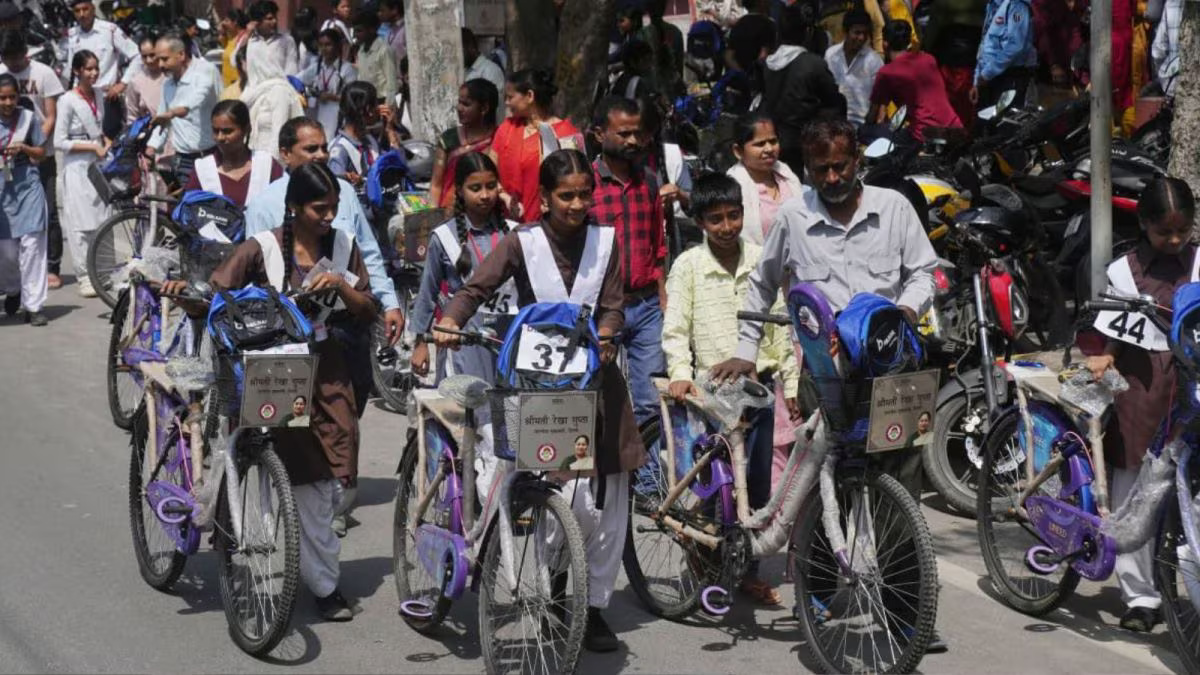
Delhi Bicycle Scheme For Schoolgirls Boosts Mobility
A new mobility-linked education initiative in the national capital is aiming to address school access challenges for adolescent girls while also nudging the city towards more sustainable travel habits. The bicycle scheme for schoolgirls, recently rolled out for students in senior secondary grades, is being positioned as a combined intervention targeting both educational continuity and low-carbon mobility. The programme focuses on providing bicycles to girls in Class IX, a stage where dropout rates often rise due to commuting constraints, safety concerns and financial limitations. Officials estimate that over one lakh students could benefit in the current phase, supported by a dedicated budget allocation for the upcoming financial year. By reducing reliance on paid transport and long walking distances, the initiative is expected to improve attendance and retention.
Urban development experts highlight that the bicycle scheme for schoolgirls reflects a broader shift towards people-centric policy design, where mobility solutions are integrated into social welfare programmes. In dense cities like Delhi, access to affordable and reliable transport remains a critical determinant of educational and economic opportunity, particularly for women and girls. Beyond its social impact, the scheme also intersects with environmental priorities. Delhi continues to grapple with high levels of vehicular pollution, and short-distance trips contribute significantly to overall traffic emissions. Encouraging cycling for daily commutes, especially among students, can reduce the number of motorized trips and promote a culture of non-motorized transport over time. However, transport planners caution that the success of such initiatives depends heavily on supporting infrastructure. Safe cycling lanes, well-maintained roads and secure parking facilities are essential to ensure that students can use bicycles without safety risks. Without these, adoption rates may remain limited despite the availability of bicycles.
There are also long-term behavioural implications. Introducing cycling at a young age can influence commuting habits in adulthood, potentially increasing acceptance of sustainable transport modes. Experts suggest that such programmes, if scaled and integrated with urban planning, could contribute to reducing congestion and emissions in the long run. At the same time, the initiative underscores the need for a more comprehensive mobility strategy. While the bicycle scheme for schoolgirls addresses first-mile connectivity, it must be complemented by reliable public transport, pedestrian-friendly infrastructure and stronger road safety measures to create an inclusive transport ecosystem.
For policymakers, the scheme represents an intersection of education, gender equity and environmental sustainability. For students, it offers a practical solution to everyday barriers. As implementation progresses, its impact will be measured not only in improved school attendance but also in how effectively it contributes to a gradual shift towards cleaner, more accessible urban mobility