


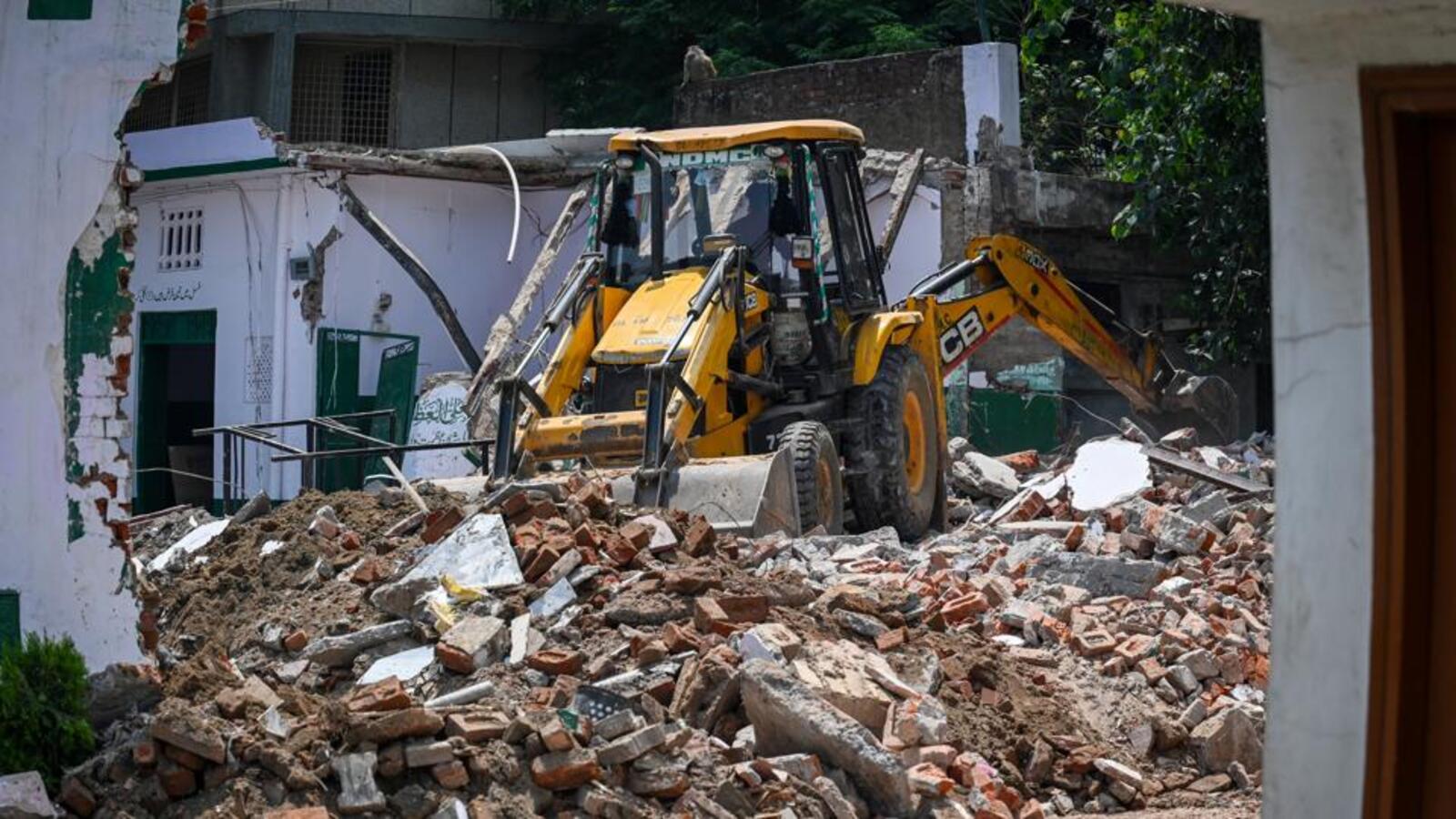
Work has begun in Mangolpuri, northwest Delhi, to dismantle an unauthorised extension of a mosque, following a directive by the Delhi High Court. Authorities emphasise that only illegal structures are being removed while law enforcement remains on alert. Demolition teams started work on Sunday under the shadow of seven paramilitary companies and Delhi Police personnel, signalling the city’s preparedness for possible unrest. “No one will be allowed to breach law and order,” stated a senior officer overseeing the operation.
Officials clarified that the exercise is strictly limited to removing illegal constructions. The mosque’s core structure remains untouched, and residents have been urged to stay clear of the work area for public safety. This development follows routine High Court monitoring of unauthorised civic structures. Orders targeting sites across Delhi have previously triggered institutional scrutiny and community response. The deployment in Mangolpuri marks a continuation of rigorous civic compliance efforts . The scale of the security deployment reflects lessons from past encounters. Witness accounts suggest calm on Sunday, but authorities remain cautious—especially given recent history in nearby areas where removal of illicit structures once escalated to protests .
Urban policy experts regard this demolition as part of a broader emphasis on sustainable and equitable city planning—ensuring public spaces remain accessible, drainage systems unblocked, and zones free from unverified construction. “Mandated enforcement is central to structured urban development,” notes a civic-planning advisor. “But it cannot come at the expense of community harmony or heritage preservation. Transparency and dialogue are essential.” The official on-site confirmed that surveys had flagged the mosque extension as encroaching public space, and that notices were issued before court proceedings. Demolition commenced only after due legal process, officials maintain. For residents of Mangolpuri, the demolition represents a mixed signal. While some see it as upholding civic fairness, others—particularly those connected with the mosque—fear it may disrupt communal trust.
To alleviate such concerns, authorities have invited community leaders to attend monitoring sessions and eased police restrictions to allow local observers in secure zones. Legal analysts caution that following demolition, the municipality needs to replenish the cleared land—restoring parks, walkways or stormwater channels as per urban planning norms. Failure to do so risks transforming civic action into symbolic measures with limited functional impact. The court’s directive included a mandate for rehabilitation: once legal clarity was established, and structures removed, the land must revert to authorised public use. Officials say this phase will commence once demolition is complete. Infrastructure planners also view the operation through a sustainability lens. Removing unauthorised structures prevents clogging of drainage systems—a common cause of localized flooding. The move aligns with Delhi’s climate resilience motto of zero-carbon, equitable infrastructure.
However, experts highlight that removing unauthorised buildings is just the first step. Urban sustainability demands follow-up investments in green corridors, permeable pavements and citizen-led stewardship of public land. Authorities insist that no vehicle or construction debris will be dumped on-site. All rubble will be cleared according to municipal waste management norms to prevent environmental hazards. On the public safety front, demolition teams are equipped with CCTV surveillance, drones and public assistance booths. These investments are part of Delhi’s model for high-stakes urban enforcement. Community counsellors are also on standby to address grievances and observe population groups—such as women and elderly residents—who might feel disproportionately affected. A senior official explained that equitable enforcement is central to avoiding communal alienation.
As the week progresses, the city will also monitor other sites identified in the same High Court order. This could include early warning systems for unauthorised structures in flood-prone corridors, construction near heritage precincts, and encroachments that block pedestrian access. For now, Mangolpuri’s mosque demolition is already being discussed across policy circles as a test case. It exemplifies the complex balancing act between civic rule of law, urban sustainability, and inclusive coexistence.
Also Read : Delhi faces waterlogging fears as drains uncleared
