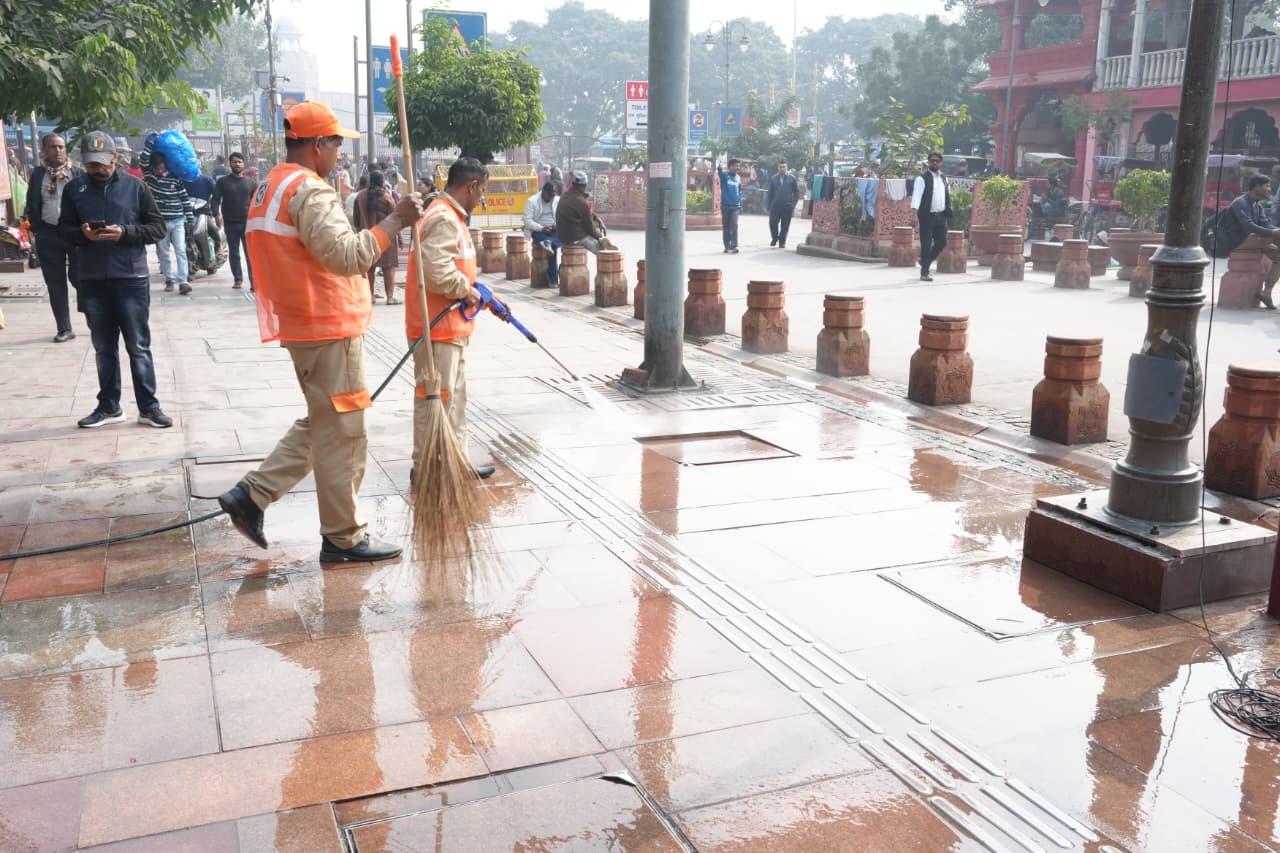
Delhi has launched an extensive clean-up and urban upkeep effort across Chandni Chowk, the Red Fort precinct and surrounding neighbourhoods ahead of a major UNESCO cultural heritage session beginning on 8 December. The initiative, which involves multiple civic and state agencies, aims not only to prepare for the arrival of international delegates but also to set the foundation for long-term improvements in Old Delhi’s public spaces, sanitation infrastructure and visitor experience.
Senior officials said the campaign follows a review meeting chaired by the head of the state government, who directed departments to coordinate closely with national cultural authorities to ensure the historic quarter reflects its heritage significance. The upcoming session of UNESCO’s Intergovernmental Committee for the Safeguarding of Intangible Cultural Heritage is expected to draw more than 1,000 participants from over 180 countries, placing global attention on the city’s conservation practices.
A government representative said the ongoing effort is intended to move beyond event-centric beautification, emphasising a more sustainable approach that blends heritage preservation with modern amenities. According to the official, the administration wants foreign delegates to experience Old Delhi beyond meeting halls its marketplaces, traditional foods and narrow lanes that reveal the layered history of the capital. Officials noted that improved public facilities are essential for inclusive tourism, especially for women, older persons and visitors with limited mobility.
As part of the preparations, civic bodies have deployed additional sanitation workers on continuous shifts to maintain cleanliness in high-footfall areas. Public toilets are undergoing repairs, with one facility being redesigned as a women-centred “pink toilet” to enhance safety and accessibility. A municipal officer said the redesign was part of a broader effort to make historic public spaces more gender-sensitive and user-friendly. The Municipal Corporation of Delhi has also intensified enforcement activities, clearing unauthorised stalls and vehicles that obstruct pedestrian corridors. Officials said these measures would not only improve movement for international guests but also benefit daily commuters and shopowners who navigate crowded streets. Dust-suppression systems have been activated around the Red Fort to address visibility concerns, a move aligned with the city’s broader push to reduce particulate pollution in dense urban pockets.
To support the clean-up, waste collection has been shifted to a two-cycle system to reduce litter accumulation, particularly during evenings when foot traffic is high. Engagement with local market associations is underway to streamline signboards, lighting and waste disposal. Restaurant owners have been asked to adhere to strict hygiene norms, reflecting the city’s intent to balance commercial vibrancy with environmental responsibility.Civic officials said most interventions will continue beyond the UNESCO event, forming part of a longer-term strategy to improve infrastructure and public amenities in Old Delhi. Urban planners argue that such sustained efforts rather than temporary beautification are key to creating inclusive, climate-resilient and culturally rich city centres that serve both residents and visitors.
Delhi Begins Chandni Chowk Clean Up Ahead Of Major UNESCO Heritage Meet