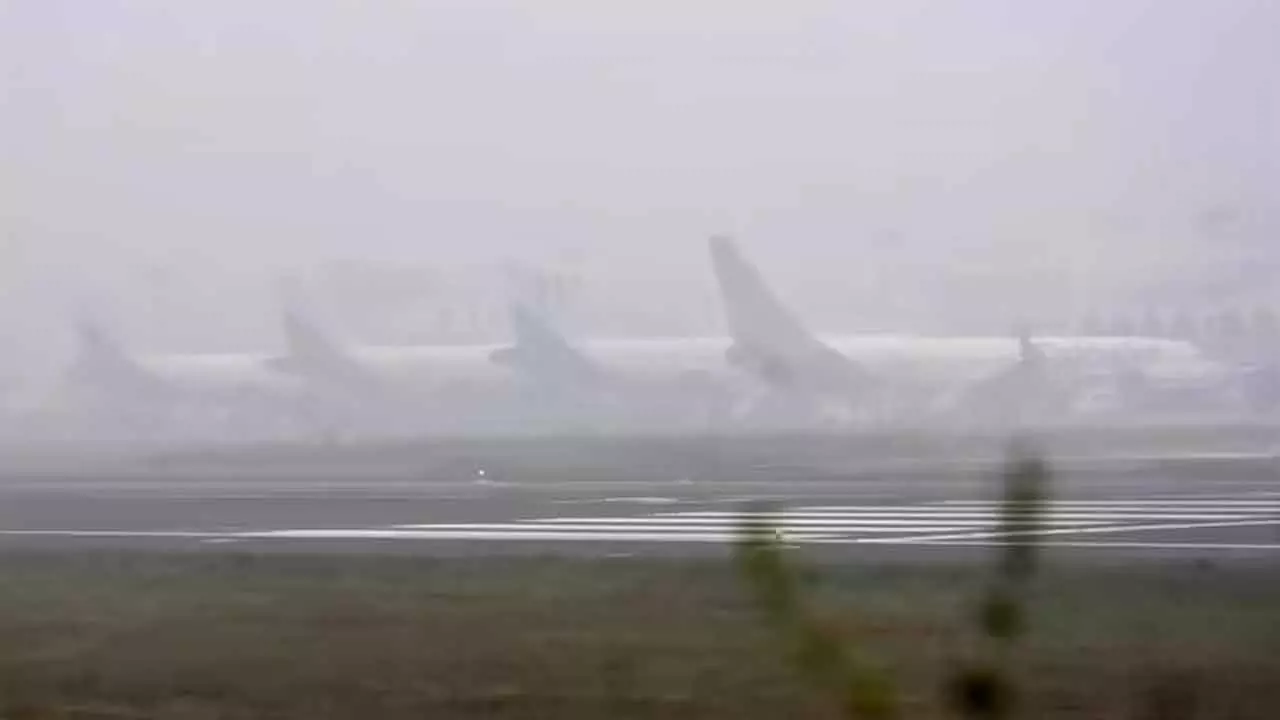
Flight operations at Delhi’s primary aviation hub faced significant disruption on Friday as dense winter fog reduced visibility across the region, leading to widespread cancellations and delays. Dozens of inbound and outbound services were grounded, underscoring how seasonal weather patterns continue to challenge the resilience of India’s busiest airport and its role as a critical economic gateway.
According to airport operations data reviewed by authorities, a total of 66 flights were cancelled over the course of the day as visibility levels dropped below safe operating thresholds during early morning hours. Arrivals and departures were almost evenly affected, leaving thousands of passengers stranded or forced to rebook at short notice. Airlines cited safety considerations as the primary reason for suspending services amid rapidly deteriorating runway conditions.
The disruption comes during the officially designated winter fog period for northern India, which typically runs from mid-December to early February. During this phase, airlines are required to follow enhanced operating protocols, including deploying aircraft equipped with advanced landing systems and ensuring that cockpit crews are specially trained for low-visibility conditions. Despite these safeguards, extreme fog episodes can still overwhelm operational planning, particularly during peak travel windows.
Aviation experts note that while Delhi airport is equipped with advanced instrument landing infrastructure, the effectiveness of such systems depends on multiple variables, including crew availability, aircraft readiness, and real-time visibility on approach paths. Even minor gaps in compliance or scheduling can cascade into large-scale disruption in a high-density aviation environment like the National Capital Region. The economic ripple effects extend beyond the terminal. Flight cancellations affect business travel, time-sensitive cargo, and tourism flows, while also placing additional strain on hotels, ground transport, and logistics providers. For a city positioning itself as a global business and services hub, repeated winter disruptions raise questions about climate adaptation planning for critical infrastructure.
Urban mobility planners argue that fog-related disruptions highlight the need for greater redundancy and intermodal connectivity. Strengthening rail-air integration, improving night-time train capacity, and better coordination with regional airports could help absorb shocks when aviation networks falter. From a sustainability perspective, smoother multimodal travel can also reduce the carbon cost of prolonged delays and aircraft holding patterns.The regulator has reiterated that airlines must strictly adhere to low-visibility operation norms throughout the fog season, including the use of advanced navigation categories that allow aircraft to land with minimal runway visual range.
Industry specialists say continued investment in pilot training, predictive weather analytics, and air traffic management technology will be essential as climate variability intensifies winter extremes. Forecasts suggest that foggy conditions may recur intermittently over the coming weeks. While airlines are expected to adjust schedules proactively, passengers are advised to plan for potential delays. For policymakers and infrastructure planners, the episode reinforces a broader lesson: as climate-linked weather events become more pronounced, urban transport systems especially aviation must evolve to remain reliable, inclusive, and resilient.
Delhi Aviation Disruptions Deepen During Fog Season