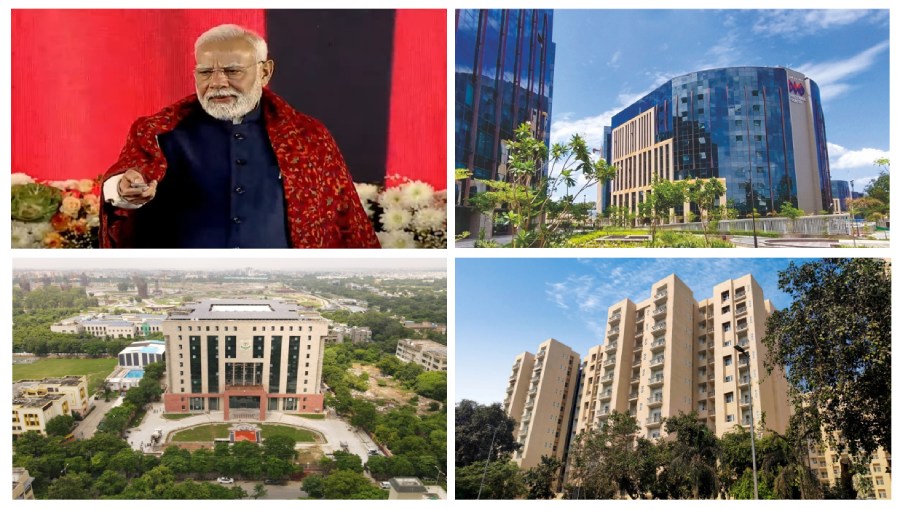
The opening day of Delhi’s Winter Session set the tone for a renewed focus on long-term urban assets, with the city administration outlining priorities that place infrastructure, public health, and environmental restoration at the centre of governance. Addressing the Assembly, the Lieutenant Governor framed the past ten months as a transition period aimed at restoring administrative momentum while redirecting public spending towards core city systems.
The agenda presented underscored a shift from short-term interventions to capital-intensive projects with lasting civic impact. River rejuvenation, road redevelopment, healthcare capacity, and urban mobility emerged as central pillars, reflecting the growing recognition that Delhi’s competitiveness and liveability depend on the reliability of its physical and social infrastructure.
One of the most closely watched areas was healthcare delivery. Officials highlighted expanded health coverage under national insurance frameworks, with increased hospital participation across public and private facilities.
The rollout of neighbourhood-level primary care centres is intended to reduce pressure on tertiary hospitals, a structural challenge in large cities where delayed early care often leads to higher costs and poorer outcomes. Digital hospital management systems and additions to the ambulance fleet were presented as measures to improve response times and operational efficiency.
Infrastructure investment featured prominently in the policy outline. The administration pointed to a sharp rise in capital expenditure in the current fiscal year, with road rehabilitation positioned as both a mobility and economic intervention. Urban transport specialists note that smoother road networks reduce vehicle emissions, improve freight movement, and directly affect productivity in dense commercial corridors. The completion of long-pending flyover projects was cited as evidence of faster execution, particularly in areas with chronic congestion.
Environmental management formed another key theme. The Yamuna river, long emblematic of Delhi’s ecological stress, was identified as a top priority. Planned upgrades include new sewage treatment capacity and decentralised systems to intercept untreated waste before it enters the river. Environmental planners caution that success will depend on consistent operations and coordination across agencies, rather than one-time construction milestones. Air quality management was framed as a year-round challenge rather than a seasonal response. The administration outlined a multi-department strategy combining enforcement, technology deployment, and public participation. Measures to curb vehicular emissions, including fleet electrification and traffic management, align with broader goals of transitioning towards lower-carbon urban transport.
The Assembly proceedings were not without disruption, underscoring the political contestation surrounding Delhi’s governance model. However, policy analysts suggest that the emphasis on roads, water systems, healthcare, and pollution control reflects areas where outcomes are measurable and directly felt by residents. As the session progresses, attention will turn to implementation timelines and financing. For a city facing climate risks, population growth, and infrastructure fatigue, the real test lies in translating stated priorities into durable assets that support inclusive growth, environmental resilience, and everyday quality of life.
Delhi Assembly Signals Shift Towards Urban Renewal