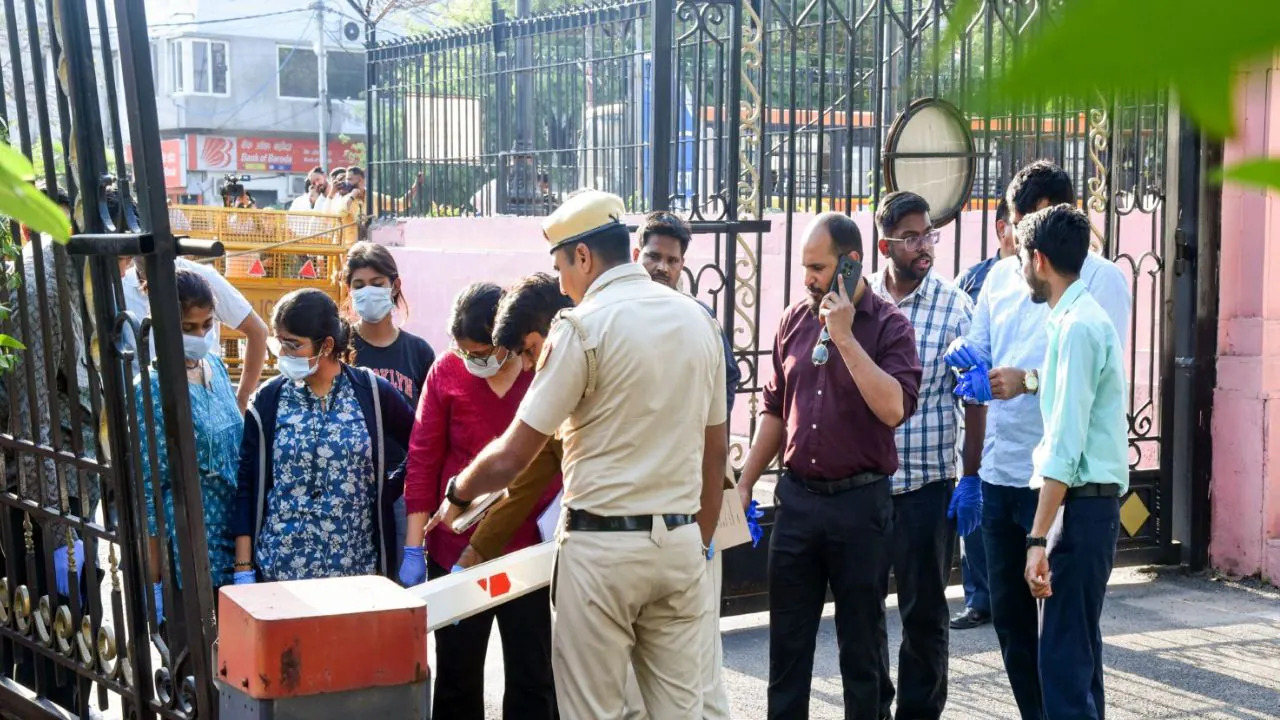
Authorities in the national capital have initiated a comprehensive Delhi Assembly security upgrade following a recent breach at the legislative complex, triggering a review of existing protection measures and operational protocols. The plan includes the installation of advanced vehicle control barriers, strengthened entry systems and a revised coordination framework among security agencies responsible for safeguarding the premises. The move comes after a high-level security assessment involving multiple departments responsible for internal security, intelligence monitoring and infrastructure management. Officials involved in the review indicated that the Delhi Assembly security upgrade aims to address vulnerabilities in access control and improve the speed and coordination of responses in case of emergencies.
One of the key infrastructure changes involves the deployment of hydraulic road blockers at entry gates leading into the Assembly complex. These heavy-duty barriers are designed to prevent unauthorised vehicles from entering restricted zones while allowing controlled access to authorised traffic. Security experts say such systems are commonly used at sensitive government installations to mitigate risks associated with forced vehicle entry. In addition to physical barriers, the security framework will also introduce stricter entry protocols. Every gate at the Assembly complex is expected to be staffed by trained personnel responsible for verifying credentials before granting access. Vehicles entering the compound will undergo mandatory checks to ensure compliance with established security procedures. Officials overseeing the process have also emphasised the importance of integrated coordination between security agencies operating within the premises. The review highlighted the need for faster information sharing between law enforcement units and central security forces responsible for protecting the complex. According to officials, the Delhi Assembly security upgrade includes steps to ensure that communication between agencies occurs in real time, particularly during emergency situations.
Another operational change under consideration is the deployment of a mobile patrol unit within the Assembly grounds. Unlike static guard posts, mobile response teams can move quickly across the campus to address incidents as they arise. Security planners say this approach allows faster intervention and improves coverage across large government complexes. Authorities have also recommended regular preparedness exercises to test the efficiency of the new security framework. Periodic drills will simulate emergency scenarios to evaluate coordination between different agencies and ensure that response protocols remain effective. Infrastructure improvements are expected to complement the operational reforms. Engineers from the public works department have suggested reinforcing gate structures and installing collapsible barriers that can be deployed quickly in case of security alerts. These measures are designed to strengthen the physical protection of entry points while maintaining controlled movement within the complex. Security analysts note that government institutions in large metropolitan areas increasingly rely on layered defence strategies that combine technology, infrastructure and coordinated operations. In rapidly growing cities such as Delhi, where public institutions receive high visitor traffic, maintaining robust access control systems is considered essential.
The Delhi Assembly security upgrade is therefore viewed as part of a broader effort to modernise security infrastructure at key civic institutions. Authorities have indicated that security arrangements will continue to be reviewed periodically to ensure that protective systems evolve alongside emerging threats and operational requirements.