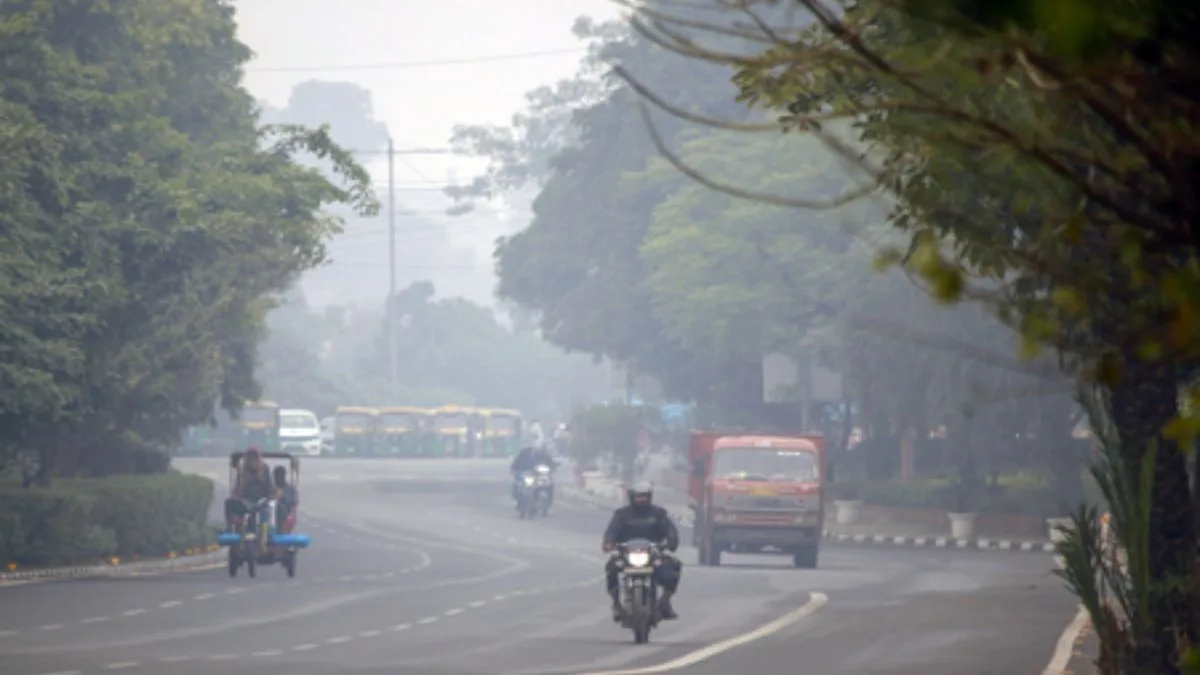
Delhi entered the first week of January under a double strain as air quality remained in the ‘poor’ bracket while a sustained cold wave tightened its grip on the capital. Early morning readings placed particulate pollution well above safe thresholds, reinforcing concerns over how winter meteorology continues to undermine public health, urban productivity, and long-term climate resilience in India’s largest metropolitan region.
Data from national air monitoring networks showed the Air Quality Index hovering in the mid-200 range, a level associated with respiratory discomfort for vulnerable groups and reduced outdoor activity for the wider population. Environmental analysts note that winter conditions marked by low wind speeds, temperature inversion, and shallow fog trap pollutants close to the ground, making episodic improvements difficult despite emission-control measures. The cold wave has also brought minimum temperatures well below seasonal averages, with night-time chill intensifying across residential and informal housing clusters. Urban planners point out that such weather disproportionately affects low-income communities living in poorly insulated dwellings, increasing energy demand for heating and compounding household costs. For cities pursuing inclusive and people-first development, the convergence of cold stress and polluted air exposes gaps in housing quality, public health preparedness, and neighbourhood-level infrastructure.
Meteorological agencies have indicated that cold wave conditions may persist at isolated locations in the capital region for several days, accompanied by morning fog. While daytime temperatures are expected to remain broadly stable, the lack of strong winds reduces pollutant dispersion. Experts say this pattern is increasingly common across north Indian cities during winter, highlighting the need for urban design that improves airflow, expands green buffers, and reduces dependence on fossil-fuel-based transport. Beyond Delhi, the winter system is influencing large parts of northern and central India. Higher Himalayan regions are likely to see light snowfall or rain, while plains across central and eastern states may experience a gradual drop in minimum temperatures. These shifts have implications for logistics, construction timelines, and agricultural supply chains sectors closely tied to urban economies and real estate markets.
From a business and infrastructure perspective, persistent winter pollution raises questions about workforce health, school attendance, and the attractiveness of cities for investment. Developers and employers are increasingly factoring air quality resilience into planning, from improved building ventilation to location choices closer to mass transit and lower-emission corridors. Looking ahead, urban climate specialists argue that short-term measures such as traffic curbs or construction pauses must be paired with structural reforms. Cleaner mobility, energy-efficient buildings, and coordinated regional pollution management are seen as critical to preventing seasonal air quality deterioration. As Delhi and peer cities brace for the remainder of winter, the episode underscores the urgency of aligning urban growth with climate-responsive planning that safeguards health while supporting economic continuity.
Delhi AQI Poor Amid Prolonged Winter Chill