


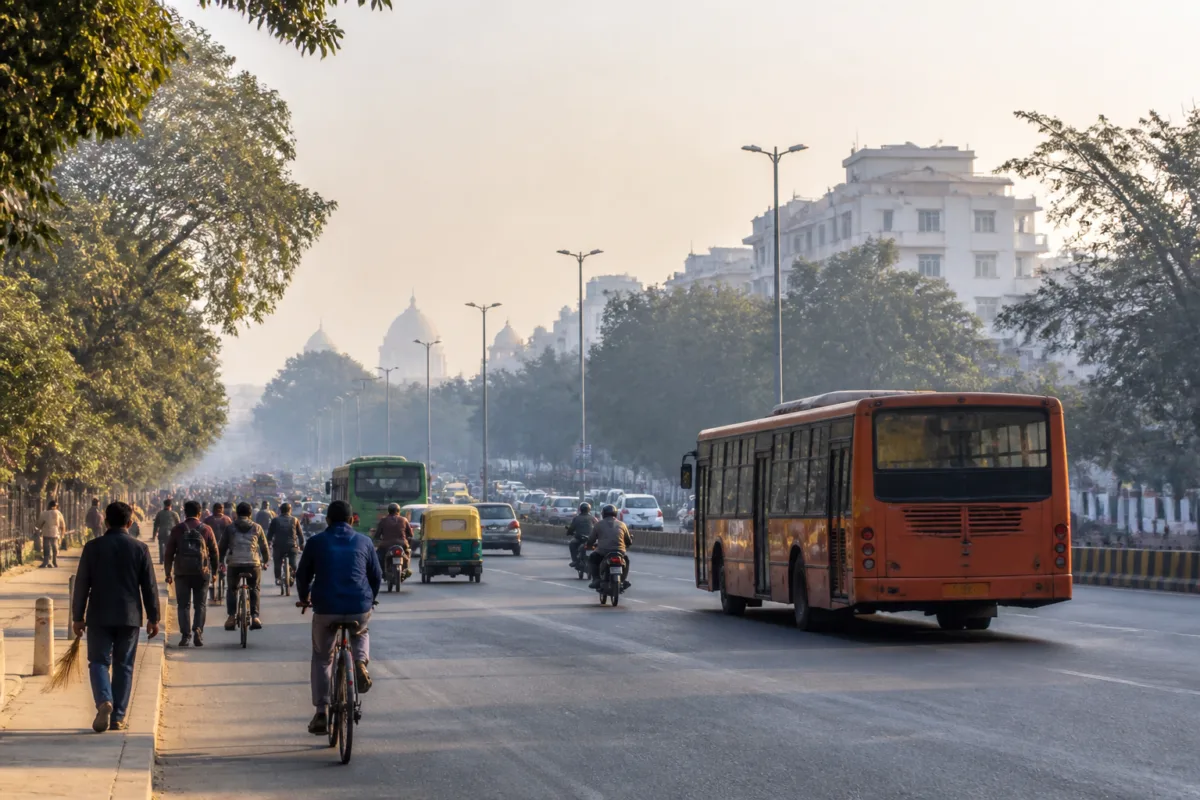
Delhi’s air quality improved to an AQI of 271 on Friday, offering some relief after pollution levels had reached significantly higher levels in recent days, according to a report by Jagran.
The reading places the city’s air quality below the 300 mark, although it remains in the “poor” category under India’s air-quality classification. The report said the improvement was being seen across the capital as winter conditions began, a period when pollution levels typically become a major concern for residents.
Following the improvement, restrictions under Stage III of the Graded Response Action Plan (GRAP) were removed in Delhi, the report said. Measures under GRAP Stages I and II will continue to remain in force.
The report attributed the improvement partly to administrative efforts to control pollution but did not provide details of specific interventions or official air-quality data beyond the AQI reading of 271. It also said that medical professionals had advised residents to remain cautious, particularly children, older people and those with existing health conditions.
Although the lower reading indicates an improvement from the recent peak, an AQI of 271 still represents elevated pollution exposure. The continuing GRAP-1 and GRAP-2 measures indicate that authorities have not treated the situation as fully resolved.
For residents, the change means that some restrictions linked to the stricter third stage of GRAP have ended, while lower-stage pollution-control measures continue. The report did not specify the exact restrictions withdrawn or provide a forecast for how long the improvement would last.
Delhi’s air quality can change quickly during winter because of weather conditions and the accumulation of pollutants. The latest reading therefore provides short-term relief but does not, by itself, establish a sustained improvement in the capital’s air quality.

