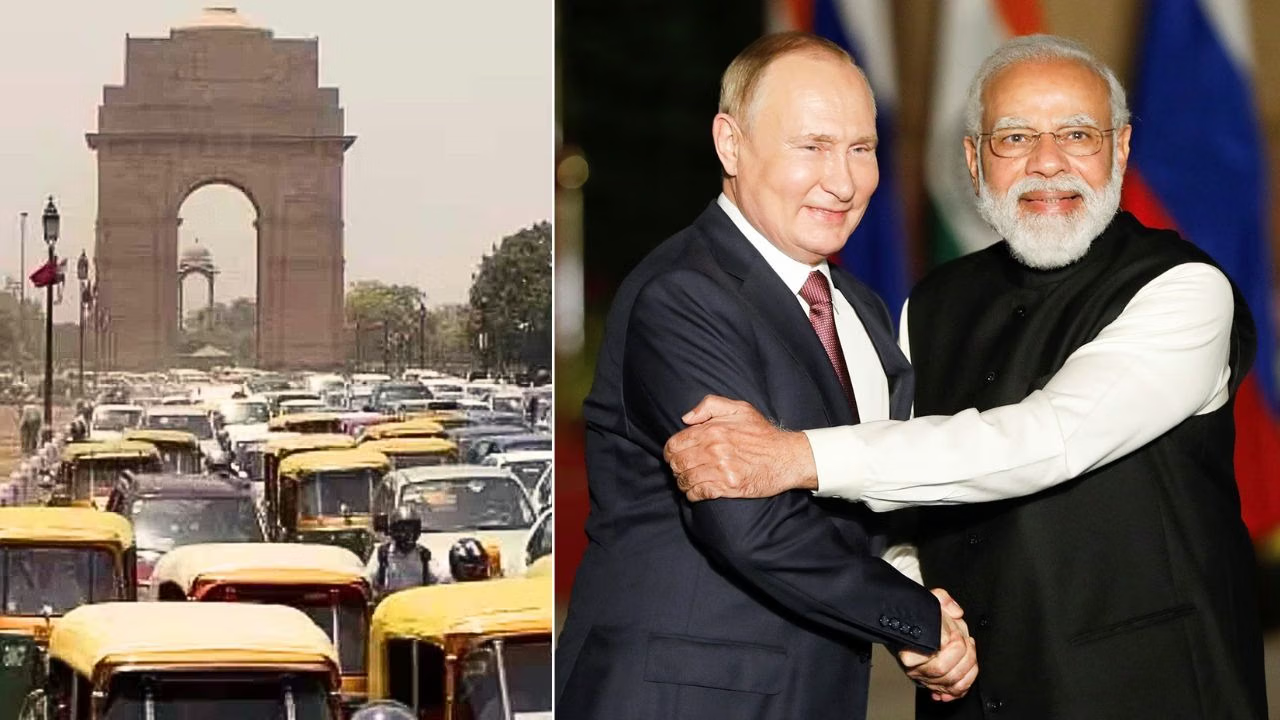
Delhi’s mobility network is set for temporary disruption today as the city implements extensive traffic restrictions and diversions ahead of the high-profile visit of the Russian President. The Delhi Traffic Police issued an advisory detailing time-bound curbs across central and New Delhi zones, anticipating heavier congestion and advising commuters to plan alternative routes. The measures align with broader efforts to manage security while ensuring essential travel remains as smooth and equitable as possible for residents.
According to officials, the restrictions have been designed in three phases to align with the visiting delegation’s movement schedule. The first set of controls will operate between 10am and 11:30am, covering significant corridors such as Mother Teresa Crescent, Teen Murti Marg, Akbar Road, and Janpath Road. Vehicles parked along these stretches will be removed to designated holding areas to maintain unimpeded mobility. Diversions have been placed around administrative and diplomatic roads, where high-security demands often create bottlenecks for everyday commuters.
A second phase of restrictions will follow between 11am and 12:30pm, focusing again on Janpath Road, Windsor Place, and several cultural and institutional stretches near Mandi House. Traffic authorities noted that these areas typically bear heavy weekday movement and require precise coordination to avoid spill-over jams. Commuters have been encouraged to rely on parallel routes such as DDU Marg, Asaf Ali Road, and Maulana Azad Road. Mobility planners say such advisories highlight the ongoing challenge of balancing ceremonial protocols with functional public access in dense urban zones.
The final block of restrictions is scheduled from 3pm to 5pm, again affecting Janpath, Windsor Place, Sikandra Road, and Bhairon Marg. Officials emphasised that no halting or parking will be permitted along these roads, and enforcement will be strict. The curbs coincide with multiple state engagements, including ceremonial events and planned visits to national memorials.Urban mobility analysts argue that days like this expose structural vulnerabilities in Delhi’s transport ecosystem. Concentrated governmental roads, administrative clusters, and ceremonial venues often overlap with critical commuter routes, leaving little redundancy for ordinary travel. They suggest that future city planning should account for more resilient networks where high-security movements do not disproportionately affect daily life, especially for essential workers, students, and service providers.At the same time, the advisory signals progress in the city’s shift towards more coordinated traffic management. Technologies such as real-time updates, digital route guidance, and pre-emptive public communication have reduced uncertainty for commuters compared with earlier years.
Ensuring that temporary restrictions remain predictable and well-publicised is a step toward more inclusive and accessible civic mobility.With the advisory now in effect, residents navigating central Delhi are advised to leave additional travel time, use metro networks where possible, and rely on permitted alternative corridors. As the city hosts international delegations, authorities maintain that planning for both security and citizen convenience remains a central objective for Delhi’s evolving urban governance model.
Delhi Announces Major Traffic Curbs And Diversions Today Amid Putin Visit Security