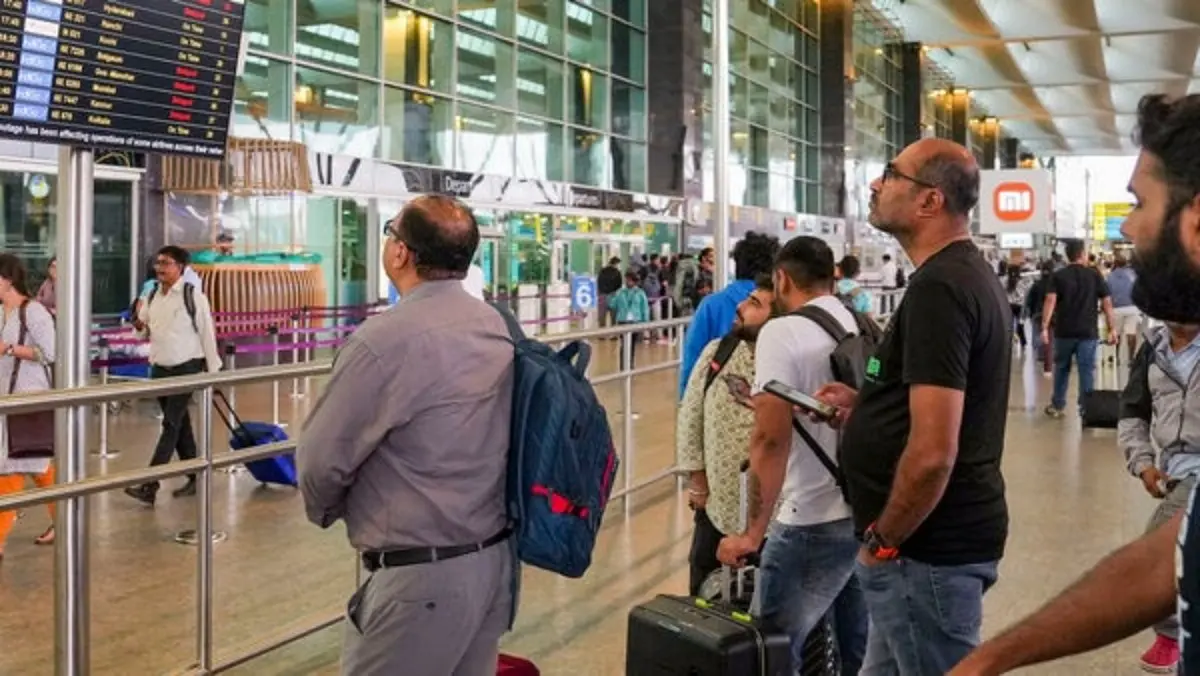
India’s capital will operate under a tightly controlled aviation regime for nearly ten days as airspace restrictions come into force across Delhi and large parts of northern India ahead of Republic Day celebrations. The measures, which affect flight movements at Indira Gandhi International Airport and surrounding regional airports, underscore the complex trade-offs between national security, urban mobility, and the economic efficiency of one of South Asia’s busiest aviation hubs.
The restrictions, scheduled between January 21 and January 29 during specific daily windows, will temporarily halt take-offs and landings at Delhi airport, with ripple effects extending to airfields within a 300-kilometre radius. For passengers, airlines, and cargo operators, this means recalibrated schedules, longer flight paths, and tighter turnaround planning during a period that already sees high winter travel demand. Aviation officials say the closures are a standard security protocol linked to ceremonial flypasts and the protection of critical civic infrastructure during national events. However, the scale of the restricted zone highlights Delhi’s unique position as both a political capital and an economic engine, where airspace management has direct consequences for productivity, logistics, and regional connectivity.
Industry executives note that airlines have been instructed to proactively adjust flight timings to minimise passenger disruption, rather than holding aircraft on the ground. While approved air traffic service routes will remain operational for overflying aircraft above designated altitudes, these constraints add to fuel burn and emissions an increasingly relevant concern as India’s aviation sector faces pressure to align growth with climate goals. Urban planners argue that recurring airspace shutdowns reveal deeper questions about how megacities manage security without compromising mobility. Delhi’s dependence on a single primary airport magnifies the impact of any operational pause, affecting not only passengers but also time-sensitive cargo, including pharmaceuticals and high-value goods that rely on predictable air logistics.
The restrictions also extend beyond commercial aviation. All non-essential aerial activity including drones, unmanned vehicles, and recreational flying devices will be suspended across large zones. This has implications for emerging urban technologies such as drone-based surveying, infrastructure inspection, and logistics pilots, which many Indian cities are exploring as part of smarter, lower-carbon urban systems.From a governance perspective, officials emphasise that exemptions have been carved out for emergency services and state aircraft, ensuring continuity of essential public functions.
Yet the repeated need for broad shutdowns points to the importance of long-term airspace planning, including decentralised airport development and more resilient scheduling systems. As Delhi prepares for Republic Day, the immediate priority is smooth coordination between aviation authorities and airlines. Beyond the celebrations, the episode serves as a reminder that sustainable urban growth depends not only on new infrastructure, but on how cities balance security, efficiency, and environmental responsibility in everyday operations.
Delhi Airspace Curbs Disrupt Winter Flight Schedules