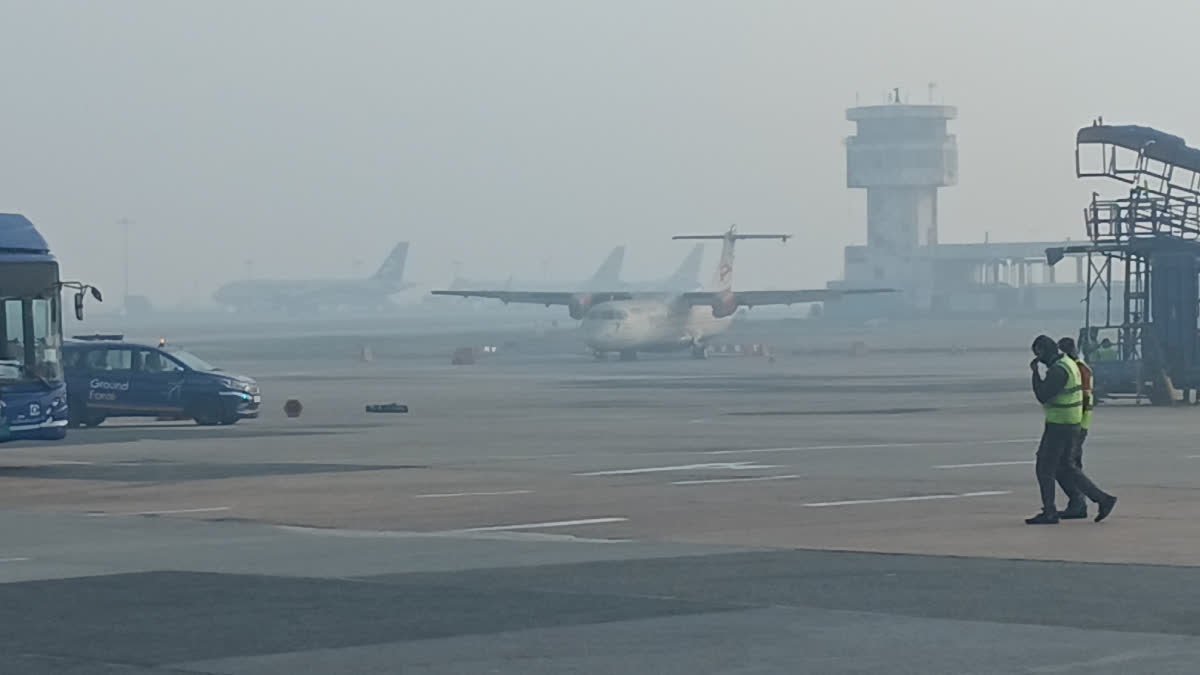
Dense winter fog once again disrupted air travel across the national capital, placing Delhi Airport under sustained low-visibility operating conditions and triggering delays across multiple flight schedules. While operations continued using advanced landing protocols, the episode underscored the growing vulnerability of India’s busiest aviation hub to seasonal climate stress.
Flight movements at Delhi Airport were managed through specialised low-visibility procedures that allow aircraft to land despite poor sightlines. Even so, departures and arrivals faced cascading delays, affecting passenger movement through terminals and onward connections across the country. Airport authorities issued advisories urging travellers to verify flight status before commuting, as ground conditions remained unpredictable through the morning hours.
The disruption matters beyond aviation logistics. Delhi Airport is a critical economic gateway for the National Capital Region, supporting business travel, tourism, cargo movement and employment. Repeated weather-linked slowdowns carry real costs for airlines, ground handlers and urban mobility networks that depend on precise scheduling. Aviation experts note that fog events in north India have become more intense and prolonged in recent years, driven by a mix of meteorological conditions, urban heat retention and air pollution. The interaction of cold temperatures with particulate matter increases fog density, reducing visibility and compressing operational windows even at well-equipped airports.
Delhi Airport has invested heavily in technology to mitigate these risks, including upgraded runway systems and crew training for advanced landing categories. However, infrastructure resilience has limits when fog persists for extended periods. Industry officials indicate that while safety remains uncompromised, operational efficiency takes a measurable hit during peak winter weeks.
From an urban planning perspective, the recurring disruptions raise broader questions about climate preparedness in transport infrastructure. As cities densify and mobility demand rises, airports must operate as climate-resilient assets rather than isolated transport nodes. Seamless coordination with metro rail, road transport and real-time passenger information systems becomes essential to prevent congestion spillovers across the city.
There are also equity considerations. Travel delays disproportionately affect passengers with limited flexibility including daily wage workers, medical travellers and women travelling alone during early hours. Ensuring clear communication, accessible assistance desks and inclusive terminal services becomes critical during weather disruptions. Urban mobility analysts argue that addressing Delhi Airport fog disruptions requires a multi-layered approach. Cleaner air, improved forecasting systems and better integration between city agencies and transport operators could reduce both the frequency and impact of such events.
As winter intensifies, Delhi Airport fog is expected to remain a recurring operational challenge. How effectively the capital adapts through infrastructure resilience, climate action and people-first mobility planning will shape the reliability of its transport systems in an era of growing environmental uncertainty.
Delhi Airport Operations Disrupted Amid Winter Fog