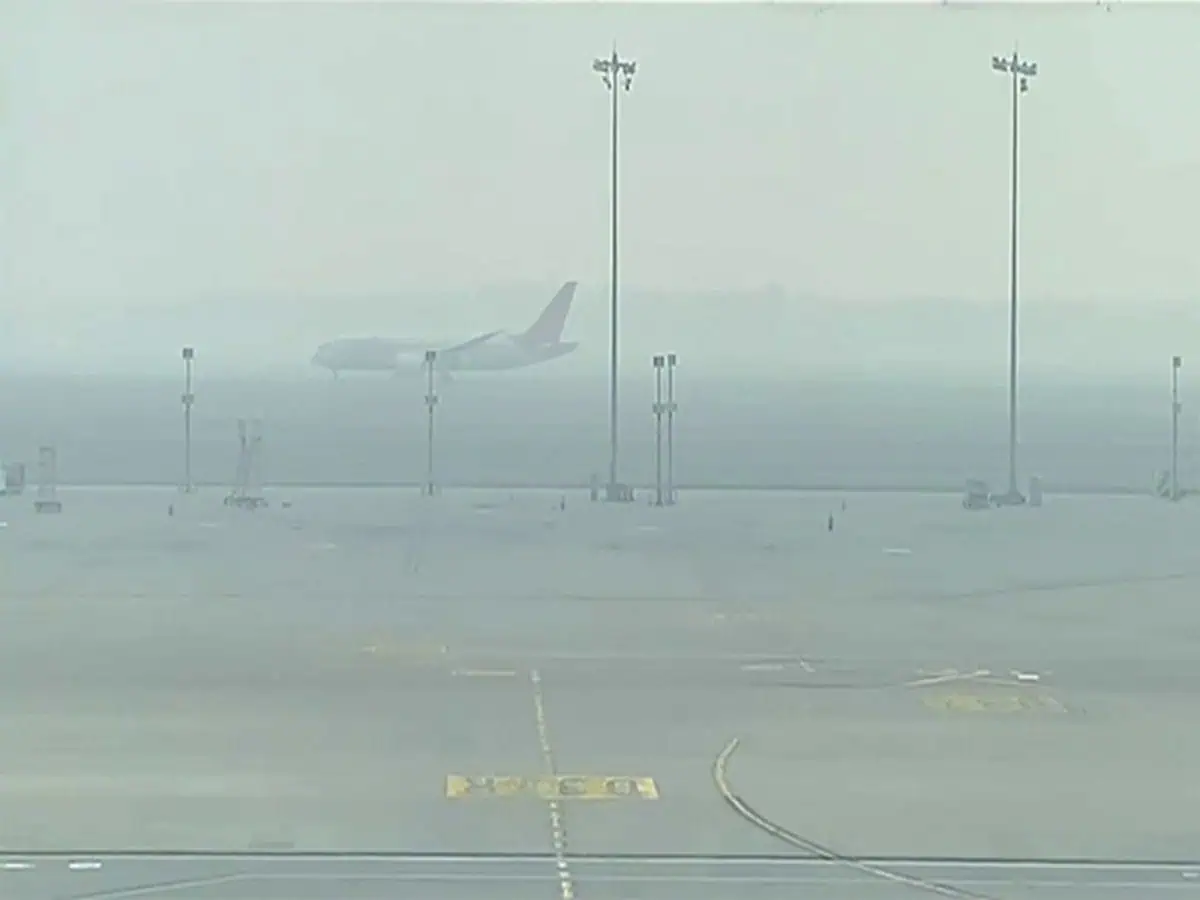
Delhi’s Indira Gandhi International Airport issued a fog advisory on Tuesday morning as dense winter fog and hazardous air quality combined to disrupt flight operations across the national capital. While authorities said services were gradually stabilising, passengers were warned of continuing delays, underscoring how environmental stressors are increasingly affecting urban mobility in India’s largest cities.
Airport officials said reduced visibility during early morning hours had slowed both departures and arrivals, a recurring seasonal challenge for Delhi’s aviation hub. Ground teams were deployed across terminals to assist travellers, while airlines were asked to provide real-time updates directly to passengers. An airport official noted that operational recovery was underway but cautioned that weather-related disruptions could persist through the day. The advisory came against the backdrop of severe air pollution gripping Delhi. According to official pollution data, the city’s Air Quality Index hovered in the ‘very poor’ category on Tuesday morning, with several neighbourhoods slipping into ‘severe’ levels. Areas near key transport corridors and industrial clusters recorded the highest pollution readings, significantly reducing visibility and adding to health concerns for residents.
Urban mobility experts say the overlap of fog and pollution is not coincidental. Particulate matter from vehicular emissions, construction dust, and seasonal factors contributes to thicker smog, which intensifies fog formation during winter. “This is not just a weather issue; it is an urban planning and emissions management challenge,” said a transport policy specialist, pointing to the cascading impact on airports, roads, and public health. While pollution levels showed a marginal improvement compared to the previous day, officials acknowledged that conditions remained unsafe for vulnerable groups. The broader implications extend beyond aviation, affecting productivity, logistics, and investor confidence in the city’s infrastructure resilience. Comparable metro cities across India reported relatively moderate air quality, highlighting Delhi’s unique exposure to winter pollution cycles.
In response, the national air quality regulator recently convened an expert committee to examine vehicular emissions in the Delhi-NCR region. Discussions focused on segment-wise emission contributions, exposure risks, and the readiness of electric vehicle infrastructure. Policy experts believe that long-term solutions will require cleaner transport systems, better last-mile connectivity, and urban design that prioritises low-emission mobility. As Delhi continues to battle severe winter pollution, the disruption at its primary airport serves as a reminder that sustainable urban planning is no longer optional. Integrating clean mobility, resilient infrastructure, and coordinated regional planning will be essential if Indian cities are to remain functional, competitive, and liveable in an era of climate and air-quality uncertainty.
Delhi Airport Issues Fog Advisory As Very Poor Air Delays Flights Operations