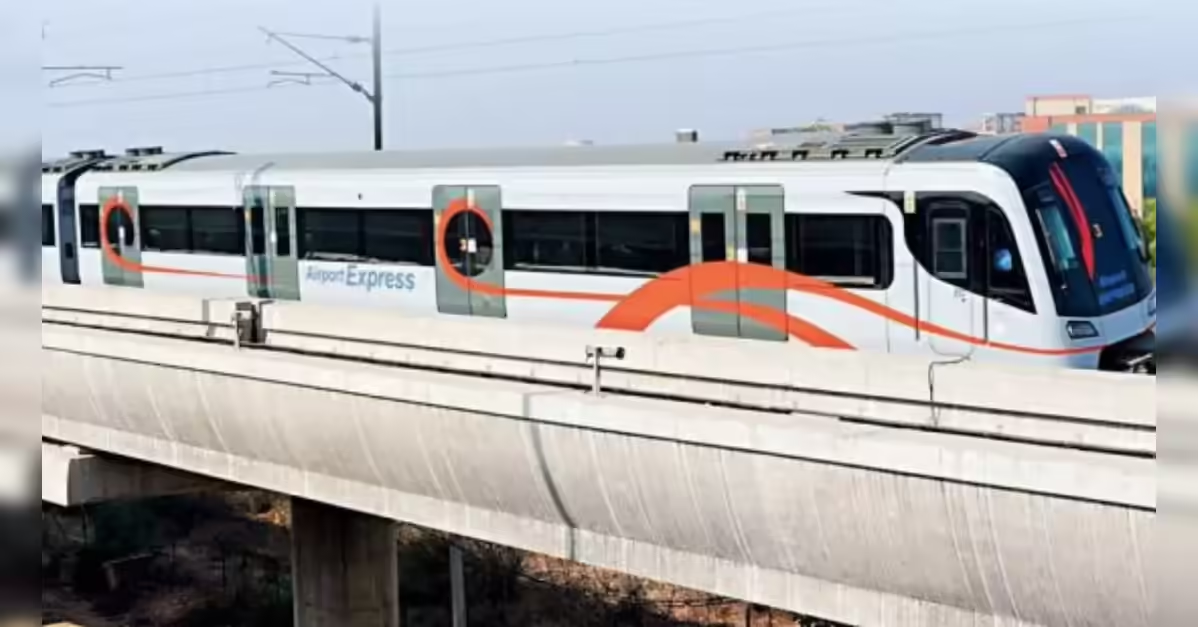
Train services on Delhi’s high-speed Airport Express corridor are operating below normal speeds on a critical central stretch following damage to essential signalling infrastructure, raising fresh questions around the resilience and security of urban transit assets in the National Capital Region. The disruption is concentrated between the Dhaula Kuan and Shivaji Stadium stations, a key segment connecting central Delhi with the Indira Gandhi International Airport.
Metro authorities confirmed that signalling cables along this section were severed during an attempted theft, forcing trains to run at significantly reduced speeds in one direction. While services continue across the corridor, the slowdown has altered travel times on a line designed to offer predictable, rapid airport connectivity. For daily commuters, airline passengers and airport staff, the Airport Express Line plays a strategic role in reducing road congestion and emissions linked to private vehicle use. Any loss of operational efficiency on this corridor has ripple effects across the city’s mobility network, particularly during peak travel hours when reliability is most valued.
Transport officials explained that the damage affected nearly 800 metres of signalling cabling, a core component that enables automated train movement and safe spacing between services. Until full repairs are completed, trains are being operated under restrictive safety protocols, limiting speed on the affected track section. The rest of the Airport Express Line remains unaffected and continues to follow its regular timetable. Urban mobility experts note that signalling systems are among the most vulnerable elements of rail infrastructure, as they are often located in accessible trackside zones. In rapidly expanding cities like Delhi, where metro corridors run alongside roads and open land, protecting such assets requires continuous monitoring and upgraded deterrence measures.
Restoration work, however, presents its own operational challenge. Carrying out major signalling repairs during active service hours could lead to widespread suspensions, undermining commuter confidence. Authorities have therefore opted to schedule replacement work during overnight non-operational hours, balancing passenger convenience with the need for system safety. Preparatory inspections and planning are reportedly underway to ensure night-time repairs are completed efficiently. The incident also highlights a broader urban governance issue: the cost of infrastructure vandalism and theft in high-capacity public transport systems. Beyond immediate delays, such incidents strain maintenance budgets, divert manpower, and disrupt the environmental benefits of mass transit by pushing some passengers back onto private vehicles or app-based taxis.
From a sustainability lens, safeguarding metro infrastructure is as critical as expanding it. High-speed rail links like the Airport Express are central to Delhi’s climate and congestion management goals, offering a low-carbon alternative to road travel for airport access. Repeated disruptions, even if temporary, can weaken public trust in these systems. Looking ahead, transport planners suggest that enhanced surveillance, better lighting, and technology-driven monitoring of trackside assets could reduce similar risks. As Delhi continues to invest heavily in metro expansion and modernisation, ensuring the security and reliability of existing corridors will remain a key test of the city’s commitment to resilient, people-first urban mobility.
Delhi Airport Express Faces Temporary Speed Curbs