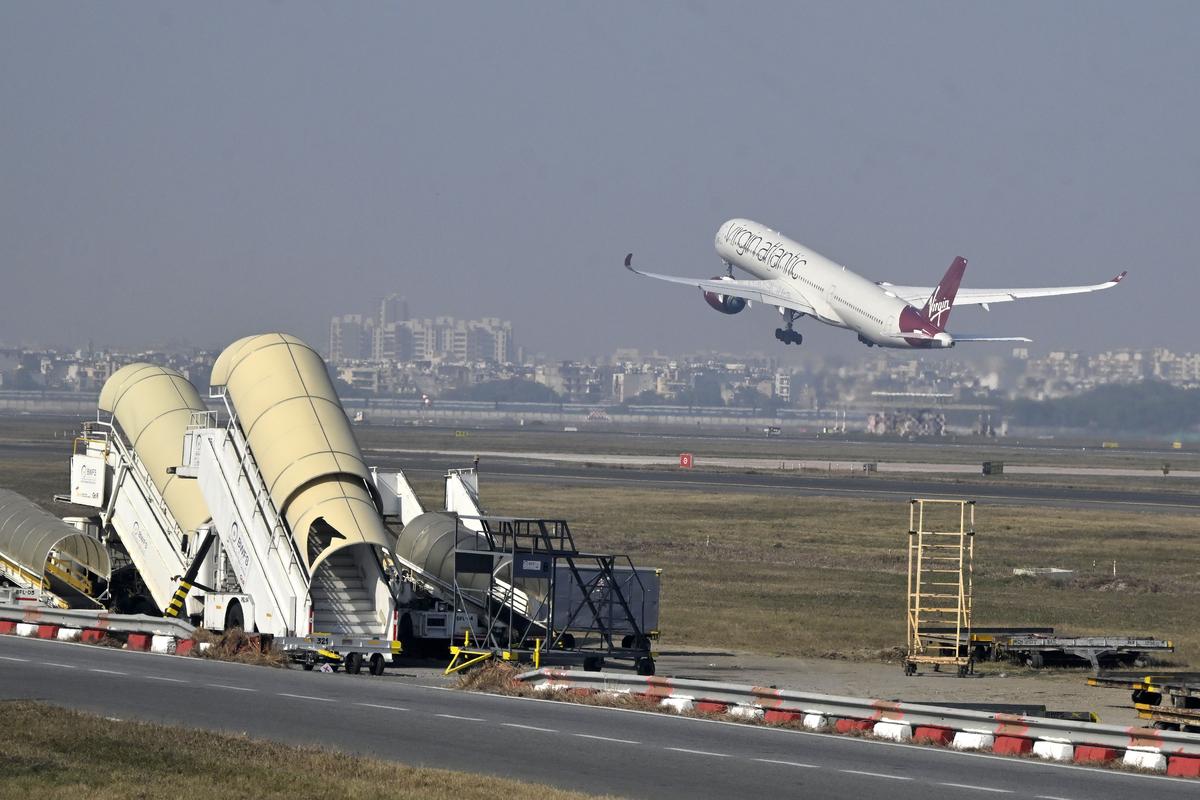
Temporary airspace and operational controls at Delhi’s main airport on Tuesday led to the cancellation of select flights to and from Srinagar, offering a glimpse into how national security protocols can ripple through India’s aviation network during peak civic events. The restrictions were introduced as part of Republic Day preparedness, a period when the capital transitions into a high-security zone. While the immediate impact was limited to a small number of services, the episode carries broader implications for urban mobility, airline planning and the resilience of transport infrastructure in megacities.
Aviation officials indicated that the measures stemmed from a formal air traffic notification governing the use of Delhi’s airspace during ceremonial and security operations. Such directives are routine for major national events, but their practical effect often surfaces unevenly across routes that rely on Delhi as a critical hub particularly those serving geographically sensitive or weather-dependent regions such as Kashmir. For passengers, even short disruptions translate into missed connections, rebookings and logistical uncertainty. Travel industry executives point out that domestic aviation increasingly functions as economic infrastructure, not merely a passenger service. Interruptions, however brief, carry cost implications for tourism, business travel and cargo movements, especially in regions where air links remain the fastest or only reliable option.
The episode also underscores the growing complexity of managing large urban airports within dense metropolitan environments. Delhi airport sits at the intersection of civil aviation, national security and urban land use, requiring authorities to balance efficiency with preparedness. Urban transport planners note that as cities scale up both in population and event intensity, such trade-offs will become more frequent rather than exceptional. Beyond aviation, the wider security mobilisation across the capital reflects how public space and transport nodes are increasingly treated as part of a unified safety architecture. Railway stations, inter-state bus terminals and major commercial districts have all seen heightened monitoring in the run-up to the national celebrations. For urban governance, this convergence of mobility and security highlights the need for infrastructure that is adaptable, digitally integrated and people-centric.
From a sustainability perspective, experts caution that emergency-driven disruptions should not become substitutes for long-term investment in resilient systems. Airports that rely on procedural shutdowns rather than adaptive design such as flexible air corridors, decentralised scheduling and multi-modal fallback options — risk undermining both passenger confidence and operational efficiency.
There are also lessons for real estate and commercial development surrounding major transport hubs. As security protocols expand their footprint, land-use planning around airports, stations and ceremonial corridors must anticipate restricted access zones, crowd control needs and evolving surveillance requirements, without eroding inclusivity or economic vibrancy.
Officials expect normal flight patterns to resume once Republic Day operations conclude and airspace controls are relaxed. Yet for policymakers and infrastructure planners, the brief disruption offers a timely reminder: in a rapidly urbanising India, Delhi airport security is no longer just about protection it is about designing cities where safety, mobility and economic continuity reinforce rather than interrupt one another. As India’s cities aspire towards climate-resilient and people-first mobility, the challenge will lie in ensuring that necessary security measures coexist with seamless, low-carbon and reliable transport systems.
Delhi Airport Curbs Reshape Republic Day Travel Flows