


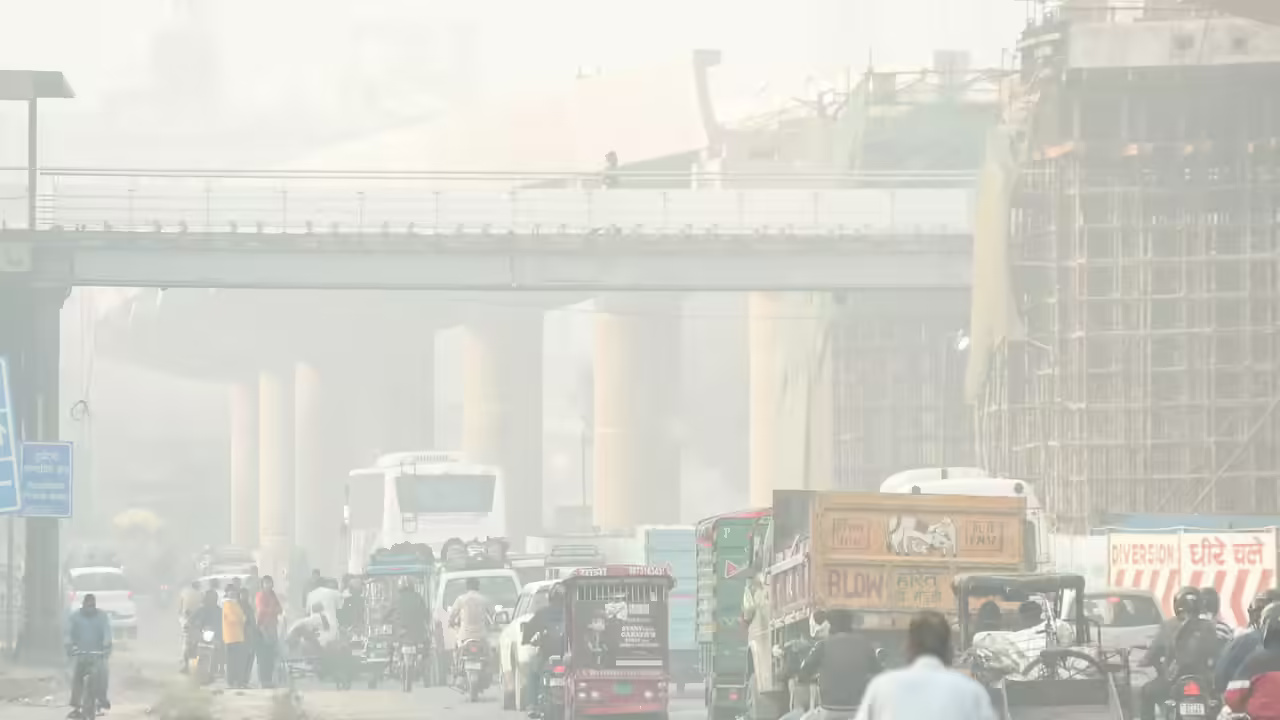
Delhi’s air quality plunged into the ‘severe’ category for the first time this winter, prompting the Commission for Air Quality Management (CAQM) to enforce Stage III of the Graded Response Action Plan (GRAP) across the National Capital Region. The move brings an immediate halt to construction and demolition activities and imposes vehicle restrictions as authorities scramble to contain rising pollution levels.
Under the emergency plan, construction work—except for essential projects like metro, railways, and hospitals—will remain suspended across Delhi, Gurugram, Faridabad, Ghaziabad, and Gautam Budh Nagar. The ban extends to BS-III petrol and BS-IV diesel vehicles, while school classes up to grade five will shift to hybrid mode, offering both online and in-person options. Officials confirmed that all State governments within the NCR have been directed to implement these curbs without delay. The CAQM stated that the decision follows a sharp deterioration in Delhi’s 24-hour average Air Quality Index (AQI), which rose to 428 on Tuesday, crossing the 400 mark that defines the ‘severe’ zone. This level of pollution can cause respiratory distress even among healthy individuals, according to the Central Pollution Control Board (CPCB).
Air quality forecasting models suggest marginal improvement to the ‘very poor’ category by midweek, but experts warn that continued stubble burning, vehicular emissions, and stagnant weather conditions could prolong the crisis. A senior official from the Delhi government noted that enforcement teams have been deployed across the capital to monitor dust control, waste management, and vehicular emissions. “The city’s pollution load is deeply linked to cross-border factors, especially emissions from neighbouring regions,” the official said. “We are taking steps such as mechanical sweeping, anti-smog guns, and extensive water sprinkling to minimise local sources.”
Urban planners and health experts argue that the recurrence of such high pollution episodes underscores the urgent need for structural interventions. “Emergency measures like GRAP provide temporary relief but do not address the systemic sources of pollution,” said an environmental policy expert. “Delhi must invest in cleaner transport, decentralised waste management, and regional emission control to prevent these annual crises.” The hybrid education shift is also being viewed as part of a broader effort to protect vulnerable populations, particularly young children and the elderly, from prolonged exposure to toxic air.
As winter deepens, Delhi’s worsening air quality once again highlights the fragile balance between rapid urbanisation and environmental sustainability. Unless regional cooperation and long-term mitigation strategies take precedence, the capital’s annual smog cycle could remain a persistent threat to public health and economic productivity.
Also Read: Maharashtra Moves To Mandate Wastewater Reuse Policy
