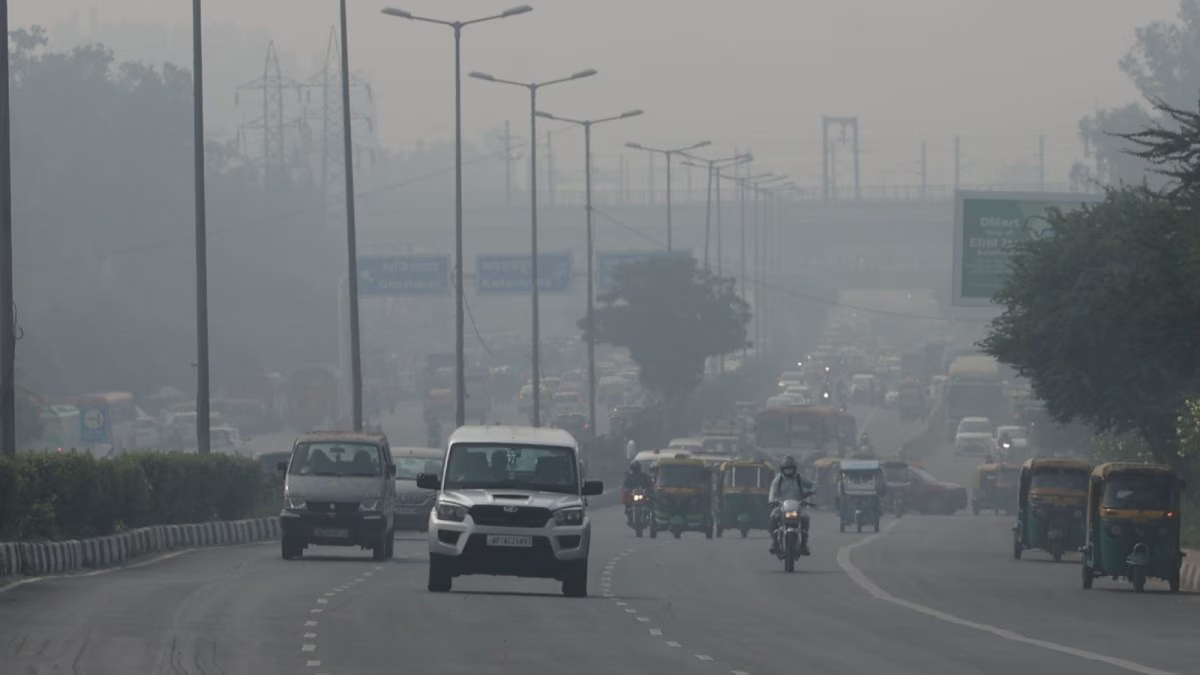
Delhi’s air quality remained in the ‘poor’ bracket on Thursday morning, with the Air Quality Index (AQI) recorded at 209, according to data from the Central Pollution Control Board. The reading, registered around 7 am, indicates pollution levels that can aggravate respiratory conditions and pose health risks for vulnerable groups, including children and the elderly.
Across multiple monitoring stations, particulate concentrations reflected a similar trend. Industrial and traffic-heavy locations in north and east Delhi reported AQI readings above 220, while several central districts hovered close to the 200 mark. Only a few pockets recorded comparatively lower but still moderate levels. A visible haze lingered over parts of the city during early hours, reducing clarity along arterial roads and public spaces. The current Delhi air quality pattern coincides with relatively warm February temperatures. The India Meteorological Department has forecast daytime highs between 26 and 28 degrees Celsius over the coming days, with minimum temperatures ranging from 12 to 14 degrees. Morning mist is expected to persist, though no formal weather advisories have been issued.
Environmental experts say stagnant wind conditions combined with local emissions from traffic, construction activity and neighbouring industrial zones can trap pollutants closer to the ground. As winter transitions into early spring, temperature inversions may weaken, but episodic spikes in particulate matter often continue until sustained wind speeds disperse pollutants. The persistence of ‘poor’ Delhi air quality has implications beyond public health. Urban economists point out that repeated pollution episodes affect workforce productivity, healthcare expenditure and the city’s global competitiveness. Businesses operating in sectors such as hospitality, education and real estate also track air quality trends closely, as environmental conditions influence investor sentiment and residential preferences.
In recent years, authorities have expanded monitoring networks and implemented graded response measures during severe episodes. However, experts argue that long-term improvement will depend on structural interventions including accelerated electrification of public transport, cleaner construction practices and tighter emissions oversight in the wider National Capital Region. Public health specialists advise residents to limit prolonged outdoor exertion during high pollution hours and use protective measures where necessary.
Schools and workplaces increasingly rely on indoor air filtration systems during peak smog periods, reflecting a shift towards climate-responsive building design.
With misty mornings forecast through mid-February and temperatures set to rise gradually, Delhi air quality will remain closely watched. While short-term fluctuations are common, sustained improvement hinges on coordinated regional action and continued investment in low-emission urban infrastructure that prioritises cleaner air as a core component of city planning.
Delhi Air Quality Stays In Poor Zone