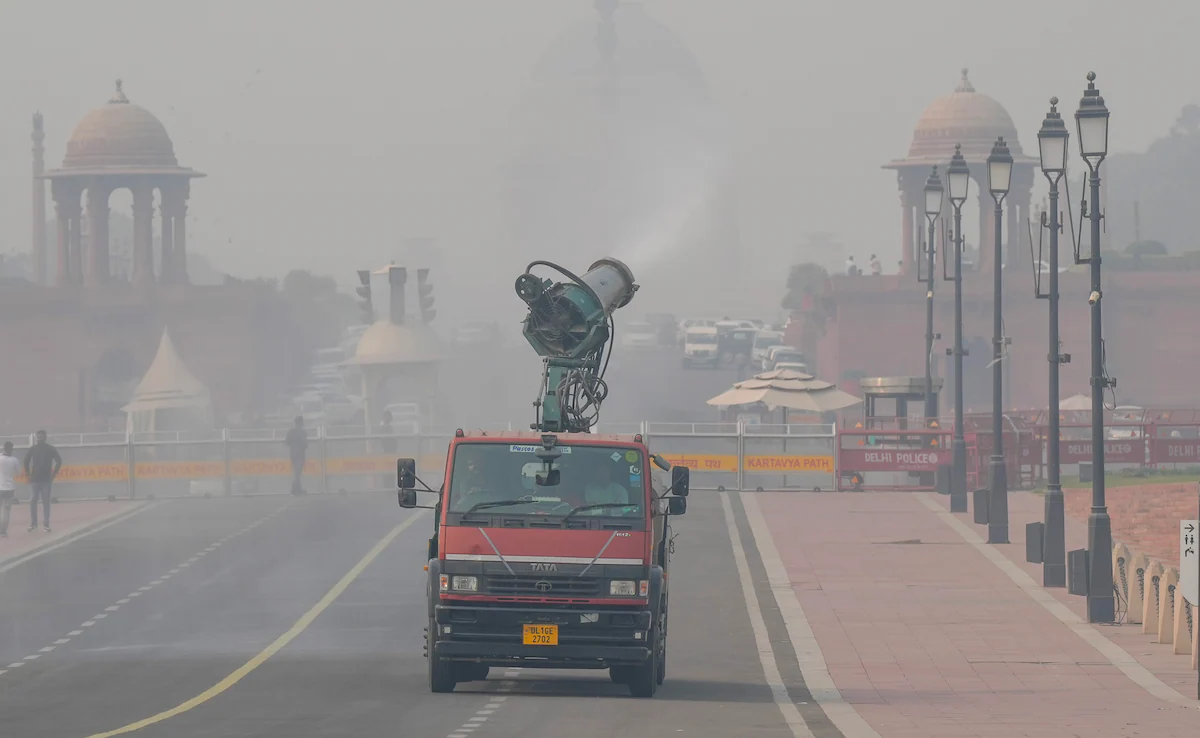
Delhi Air Quality Improves After Months Of Pollution Pressure
Delhi recorded a notable improvement in atmospheric conditions this week as pollution levels dropped into the moderate category for the first time in more than five months. The Delhi air quality index reached 119 on Monday, offering rare relief after an extended period of poor and very poor pollution levels that had dominated the capital’s winter season. Environmental monitoring agencies reported that the latest reading marked the lowest air pollution level since early October last year. The improvement follows light rainfall across parts of the National Capital Region a day earlier, which helped disperse suspended particulate matter and clear the atmosphere.
Air quality experts say such temporary improvements often occur when favourable weather systems combine with rainfall and stronger wind circulation. A western disturbance passing over northern India brought light precipitation to the region, helping reduce pollutant concentrations that typically accumulate during the colder months. The Air Quality Index, which measures pollutants such as particulate matter, nitrogen dioxide and ozone, is categorised into six bands ranging from good to severe. Under the current classification, values between 101 and 200 fall within the moderate range, indicating acceptable air conditions for most residents but with potential concerns for sensitive groups. While the improvement in Delhi air quality has brought temporary respite, environmental planners say it highlights the strong influence of seasonal weather patterns on the capital’s pollution levels. During winter months, cooler temperatures and low wind speeds often trap emissions close to the ground, leading to prolonged smog episodes across northern India’s urban centres. Meteorological observations on Monday also showed temperatures rising slightly above seasonal averages. The city recorded daytime temperatures above the typical range for this time of year, while overnight temperatures remained marginally higher at several monitoring stations. Weather analysts say such temperature variations can influence atmospheric mixing, which in turn affects how pollutants disperse.
Urban environment experts note that while rainfall and wind patterns can improve air quality temporarily, long-term progress requires structural changes in urban infrastructure and energy use. Transport emissions, construction activity, industrial operations and waste burning continue to contribute significantly to air pollution across the capital region. Efforts to improve Delhi air quality increasingly focus on systemic measures such as expanding electric mobility, strengthening public transport systems, enforcing cleaner industrial processes and promoting low-emission energy sources. Urban planners also emphasise the importance of green infrastructure and sustainable land use planning in reducing pollution exposure in dense city neighbourhoods. Cleaner air periods also play a role in assessing the effectiveness of pollution control policies. Environmental regulators use such windows to review emission sources and adjust mitigation strategies ahead of the next seasonal cycle. For residents, the current improvement provides a brief break from months of severe smog conditions that have affected public health and daily life. However, environmental experts caution that sustained improvement will depend on coordinated policy action across transport, energy and urban planning sectors.
As Delhi moves toward warmer months, atmospheric conditions are expected to support better pollutant dispersion. Yet long-term improvements in Delhi air quality will ultimately depend on how effectively the city transitions toward cleaner infrastructure and climate-resilient urban systems.