


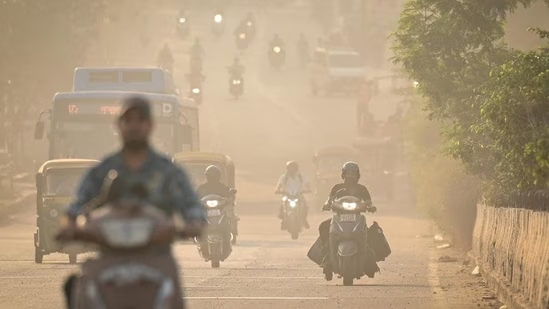
Delhi Air Quality Deteriorates on Polling Day Amid Rising Concerns
Delhi’s air pollution levels worsened on Wednesday, plunging back into the ‘very poor’ category despite recent improvements. As residents stepped out to cast their votes in the Assembly elections, the Air Quality Index (AQI) stood at 311 at 8 am, as per the Central Pollution Control Board (CPCB). This decline comes just a day after the city had witnessed a temporary respite, with the AQI dropping to 245 following light rain. However, the relief was short-lived, as weather conditions failed to sustain the improvement, leading to an escalation in pollution levels across the national capital.
The rise in pollution has once again raised concerns over the effectiveness of temporary mitigation measures. The Commission for Air Quality Management (CAQM) had recently revoked Graded Response Action Plan (GRAP) Stage III restrictions, which had been in place to curb emissions from construction activities and industrial sources. The decision was taken after the AQI dropped below 350 on February 3. However, the resurgence of pollution within just two days highlights the fragile nature of air quality control in Delhi, where vehicular emissions, industrial pollutants, and seasonal meteorological conditions combine to create a persistent crisis.
Impact on Citizens and Polling Participation
For voters, the deteriorating air quality added another layer of difficulty as they navigated through smog-filled streets to reach polling booths. The health implications of prolonged exposure to ‘very poor’ air quality remain a major concern, particularly for vulnerable groups such as children, the elderly, and those with respiratory conditions. Reports indicate that Anand Vihar recorded an AQI of 336, Chandni Chowk stood at 328, while Burari Crossing reported a relatively better 260. In the wider NCR region, Gurugram recorded an AQI of 234, while in Uttar Pradesh’s Gautam Buddh Nagar, air quality was reported in the ‘moderate’ category.
The poor air quality also brings into question the long-term sustainability of Delhi’s air pollution mitigation strategies. While periodic rainfall and wind patterns temporarily improve conditions, they do little to address the root causes. The rapid return to ‘very poor’ AQI levels suggests that a more robust and consistent policy framework is required, one that prioritises emission control, stricter vehicular regulations, and investment in green infrastructure.
Sustainability Challenges and Long-Term Solutions
Delhi’s struggle with air pollution underscores a broader sustainability challenge that India’s urban centres face. Despite recurring measures such as odd-even traffic policies, anti-smog guns, and restrictions on industrial activities, the capital continues to battle toxic air. Experts suggest that without structural changes—such as increasing green cover, investing in public transport electrification, and enforcing year-round emission norms—short-term relief measures will remain ineffective.
Climate scientists also warn that air pollution is not just an urban crisis but a major sustainability issue impacting public health, productivity, and economic output. The need for long-term investments in clean energy, urban planning, and waste management is critical in ensuring a healthier environment for future generations. The upcoming months will be crucial in determining whether policymakers respond to these concerns with a renewed focus on sustainable air quality management.
Weather Outlook and the Path Ahead
The India Meteorological Department (IMD) forecasts that Delhi will experience partly cloudy skies with a minimum temperature of 14°C and a maximum of 23°C. Light rain and drizzle are expected in the coming days, which could bring temporary relief but will not serve as a permanent solution to the air pollution crisis. The pattern of fluctuating AQI levels in the city demonstrates that natural weather conditions alone cannot be relied upon to tackle pollution. A combination of regulatory interventions, infrastructure reforms, and public awareness is essential to addressing Delhi’s air quality crisis in a sustainable manner.
As election results are awaited on February 8, Delhi’s worsening air quality remains a critical issue, reflecting larger urban governance and environmental sustainability challenges that require urgent intervention.
