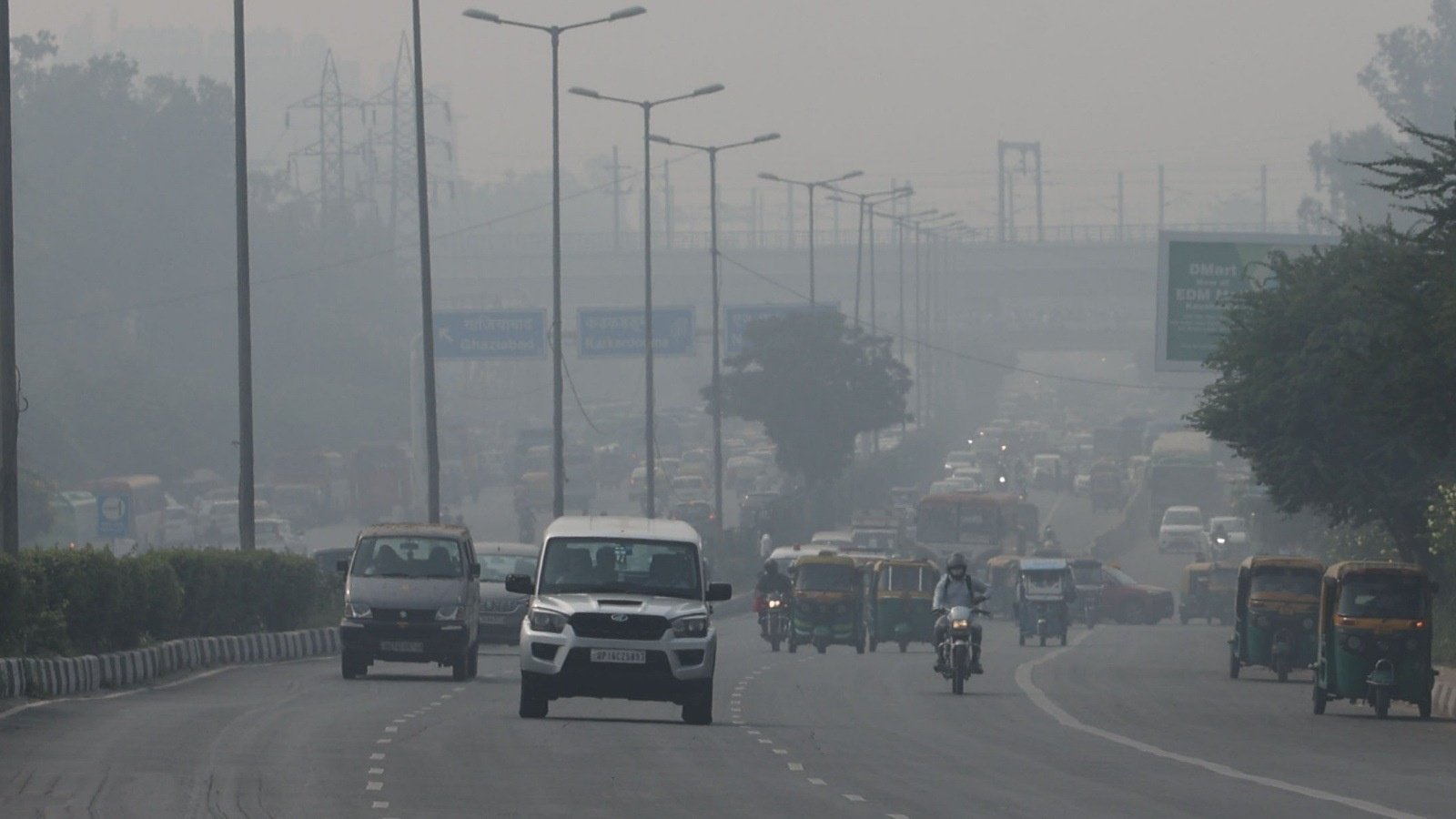
Delhi has recorded a measurable decline in particulate pollution over the past seven years, yet the wider National Capital Region (NCR) continues to remain India’s most polluted urban cluster, highlighting the limits of city-level interventions in tackling a regional environmental crisis. Recent analysis of air quality monitoring data under the National Clean Air Programme (NCAP) indicates that the capital has reduced its average concentration of PM10 — coarse particulate matter generated from dust, construction activity and vehicle emissions — by about 17 percent compared with levels recorded in 2017–18. Despite this progress, pollution levels remain significantly above national standards, reflecting persistent structural challenges in managing emissions across the rapidly urbanising NCR.
Environmental researchers tracking the programme’s outcomes note that while the capital’s PM10 concentration has declined to around 201 micrograms per cubic metre, it still exceeds the national safe limit of 60 micrograms by more than three times. Neighbouring cities such as Ghaziabad and Noida continue to register similar or higher pollution levels, underlining the cross-boundary nature of air quality management in northern India’s most densely populated urban region. Data analysis suggests that Ghaziabad recorded the highest annual PM10 concentration among major Indian cities during the latest monitoring cycle, followed closely by Delhi and Noida. Other NCR centres, including Meerut, also reported levels far above recommended standards, reinforcing concerns among urban planners that air pollution remains embedded in the region’s growth model. PM10 refers to airborne particles small enough to enter the respiratory system, posing risks to public health, particularly for children, the elderly and individuals with pre-existing respiratory conditions. Urban researchers say these pollutants originate largely from road dust, infrastructure construction, industrial emissions and high vehicular density — all of which remain central features of the NCR’s economic expansion.
Across India, the NCAP assessment shows mixed outcomes. Pollution levels improved in several monitored cities over the past year, but many others recorded either minimal change or worsening air quality. Only a limited number of urban centres achieved reductions exceeding 40 percent from baseline levels, suggesting uneven progress in implementing pollution-control measures. In the NCR specifically, experts argue that air quality management cannot rely solely on interventions within Delhi’s administrative boundaries. Transport emissions, agricultural burning in neighbouring states, construction dust and industrial activity across the broader region contribute collectively to particulate concentrations. Urban policy analysts emphasise that sustained improvement will require coordinated action across state governments, metropolitan planning authorities and environmental regulators. Measures such as expanding public transport networks, managing construction dust, regulating industrial emissions and improving waste management systems are considered essential to reducing particulate pollution over the long term.
The findings underline the broader challenge facing rapidly growing Indian cities: balancing economic expansion with environmental sustainability. As urban populations continue to rise across the NCR, policymakers are increasingly under pressure to design integrated regional strategies that link transport planning, land use and industrial policy with long-term climate and air quality goals.