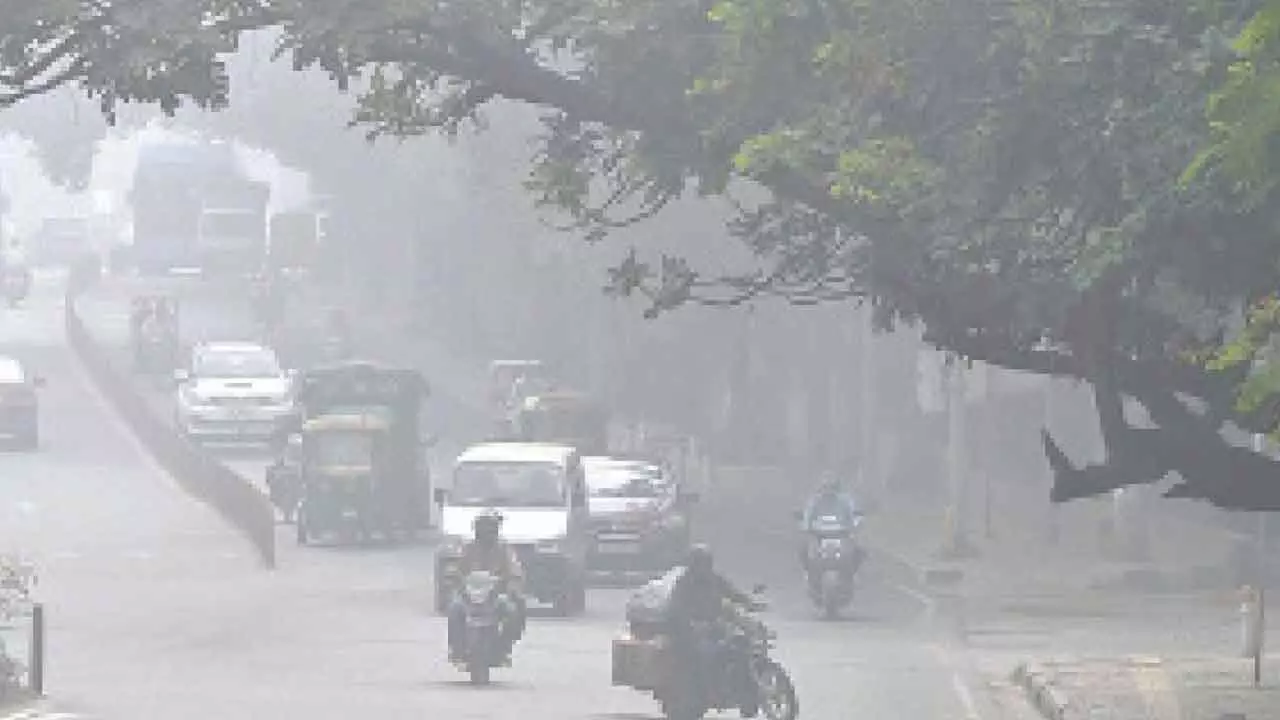
Delhi Air Pollution Spikes As Winter Chill Sets In
Delhi’s winter air quality has deteriorated sharply as colder temperatures combine with stagnant atmospheric conditions, pushing pollution levels into the “very poor” category and raising fresh public health concerns across the National Capital Region.
Monitoring stations recorded an Air Quality Index (AQI) of around 392, while the city’s minimum temperature dropped to nearly 11°C, marking one of the colder mornings of the season. The combination of falling temperatures and weak wind speeds has created ideal conditions for pollutants to accumulate close to the ground, intensifying the annual winter smog phenomenon. According to India’s national air quality classification, an AQI between 301 and 400 is categorised as “very poor”, a level that can trigger respiratory illness even among healthy individuals after prolonged exposure. For children, older adults and people with respiratory or cardiovascular conditions, the health risks can be significantly higher. The deterioration in air quality reflects a seasonal pattern that has become increasingly familiar in north Indian cities.
During winter months, temperature inversions — where a layer of warm air traps cooler air near the ground — prevent pollutants from dispersing. Combined with emissions from vehicles, construction activity, industrial sources and crop burning in neighbouring states, the phenomenon often leads to dense smog episodes across the region. Environmental data shows that the capital consistently experiences some of the most severe pollution episodes during winter. Research tracking air quality trends in the Indo-Gangetic Plains indicates that particulate pollution levels frequently exceed national standards across much of the region during this period.
The deteriorating conditions have prompted authorities to intensify monitoring and consider pollution-control measures under the Graded Response Action Plan (GRAP), a framework that introduces restrictions on construction activity, diesel vehicle movement and industrial operations when pollution levels spike. Such interventions are designed to provide short-term relief while longer-term solutions focus on reducing emissions across sectors. Urban planners and environmental scientists note that Delhi’s air pollution challenge is deeply intertwined with rapid urban growth and rising mobility demands. The metropolitan region now hosts more than 30 million residents, and expanding construction activity, vehicle ownership and industrial development continue to add pressure on already stressed environmental systems. Climate factors are also playing a role. Changing weather patterns, weaker winter winds and shifting rainfall cycles can prolong pollution episodes, making it harder for pollutants to disperse naturally.
Public health experts emphasise that while seasonal measures can mitigate immediate risks, structural changes are needed to address the root causes of urban air pollution. These include transitioning to cleaner transport systems, expanding electric public mobility, improving waste management and strengthening regional coordination between neighbouring states on agricultural burning and industrial emissions. For residents, the onset of winter increasingly brings not just colder temperatures but also deteriorating air quality. As pollution levels remain elevated, authorities continue to advise limiting outdoor activity during peak smog periods and using protective masks where exposure cannot be avoided.
The recurrence of such pollution episodes underscores the urgent need for integrated environmental and urban planning strategies capable of safeguarding public health in one of the world’s fastest-growing metropolitan regions.