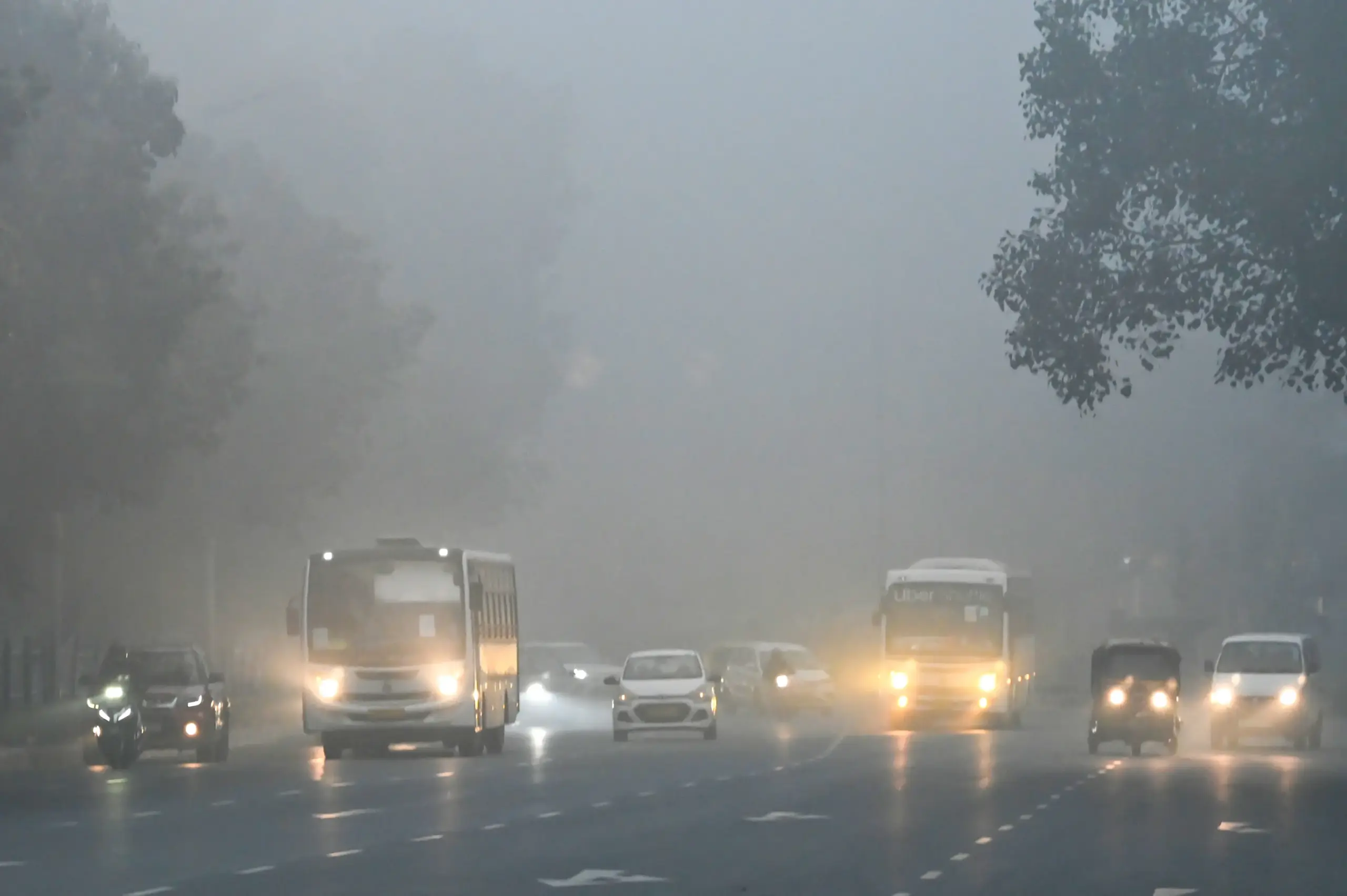
Delhi entered another week under hazardous air conditions, with winter smog tightening its grip on the capital and forcing emergency curbs across the wider NCR. The deteriorating atmosphere matters beyond public health: it is fast becoming a recurring urban risk, shaping how the city plans mobility, construction cycles, housing demand and productivity in one of India’s most economically dense regions.
Air monitoring networks on Sunday indicated pollution levels well into the “severe” bracket, a threshold at which routine urban activity itself becomes a public hazard. Authorities responded by escalating the Graded Response Action Plan to its highest stage, triggering restrictions on construction activity, freight movement and polluting vehicles. While such measures are familiar to Delhi residents, their frequency is now a structural concern rather than a seasonal anomaly. What makes this episode notable is the convergence of weather and emissions. Urban climatologists point to low wind speeds and a weak “ventilation index” a metric describing the atmosphere’s ability to disperse pollutants as primary enablers of the current smog build-up. In practical terms, the city is producing more pollution than the air can carry away. Dense morning fog, common during north Indian winters, further traps particulate matter close to the surface, amplifying exposure in residential neighbourhoods and commercial corridors alike.
Transport and industry remain significant contributors. Official modelling suggests vehicular exhaust alone accounts for over a tenth of total pollution, with industrial sources adding a sizeable share. This matters for infrastructure planning: Delhi’s push towards electric mobility, clean freight corridors and transit-oriented development is no longer just about sustainability branding but about safeguarding economic continuity during peak winter months. The economic implications are immediate. Developers report construction schedules slipping as work halts under pollution curbs, while logistics firms face delays and cost overruns. For office markets, repeated air quality emergencies are prompting employers to revisit hybrid work policies, subtly reshaping commercial real estate demand in central business districts. Meanwhile, residential buyers are increasingly factoring indoor air filtration and green design into housing choices, pushing builders to rethink building envelopes and ventilation systems.
Public health remains the most visible cost. Urban health experts warn that repeated exposure to high particulate levels strains hospital capacity, particularly for children and the elderly. Yet the deeper challenge is civic: how a megacity of over 20 million adapts its growth model to an environment where clean air is no longer guaranteed by default. There are signs of long-term recalibration. Urban planners argue that episodic restrictions cannot substitute for systemic change cleaner fuels for industry, last-mile public transport, dust management at construction sites and the restoration of urban green buffers.
Cities globally facing similar challenges, from Beijing to Mexico City, have shown that sustained policy coherence, not emergency brakes alone, shifts air quality trajectories. For Delhi, the persistence of Delhi air pollution this winter underscores a larger question: can the capital align rapid urban expansion with climate resilience and liveability? The answer will shape not just how Delhi breathes, but how it grows in the decades ahead.
Delhi air pollution grips winter economy