


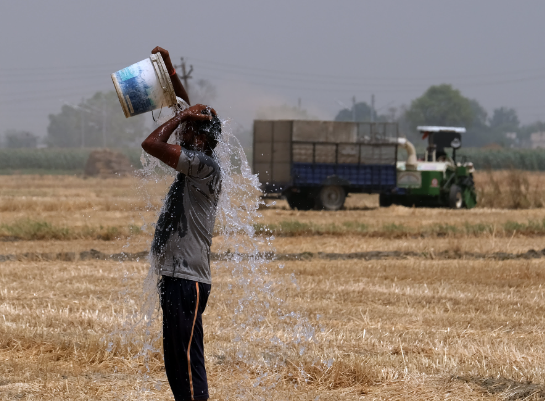
After a prolonged delay, the Indian monsoon has finally resumed its advance across several states, providing much-needed relief from the scorching heat wave that had gripped parts of Maharashtra, Chhattisgarh, Odisha, Sub-Himalayan West Bengal, and Bihar.
The onset of monsoon in these regions marks a significant shift in weather patterns, with the India Meteorological Department (IMD) forecasting a cessation of heat wave conditions in most parts of the country over the next 4-5 days. According to IMD reports, the monsoon is expected to progress further into North Arabian Sea, Gujarat, Maharashtra, Madhya Pradesh, Odisha, northwest Bay of Bengal, Gangetic West Bengal, Sub-Himalayan West Bengal, Jharkhand, Bihar, and east Uttar Pradesh in the coming 3-4 days. This development follows a period of stagnation from June 12-19, during which deficient rainfall and delayed kharif crop sowing affected northern and eastern India, including Bihar and Jharkhand. Data from IMD reveals a 17% deficit in rainfall compared to the seasonal norm, with the country receiving 77 mm of rain from June 1 to 20, against a normal of 92.8 mm. Despite the shortfall in June, meteorologists remain optimistic about abundant rainfall during the remaining months of the monsoon season (July-September).
The monsoon’s timely progression is crucial for agricultural activities, particularly the sowing of summer crops, which had been hampered by the delayed onset. Farmers in the affected regions are now hopeful for improved conditions that will support crop growth and yield. This renewed movement of the monsoon underscores its pivotal role in India’s economy and livelihoods, influencing everything from agricultural output to water availability and rural incomes. The IMD continues to monitor weather patterns closely, emphasizing the importance of timely and accurate forecasts to mitigate the impacts of weather variability on various sectors. As the monsoon advances across the country, stakeholders are keenly observing its trajectory and anticipating its broader implications on the socio-economic landscape in the months ahead.
