


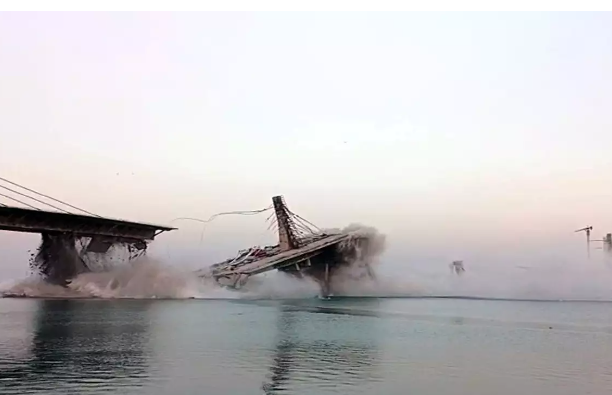
In a series of alarming infrastructure failures, bridges collapsed in Bihar, Jharkhand, and Manipur, resulting in one fatality and highlighting the vulnerability of the region’s infrastructure to extreme weather conditions.
In Manipur, a five-month-old bridge over the swollen Imphal River at Mutum Phibou in Imphal West district gave way on Sunday morning. The collapse plunged a firewood-laden truck and its four occupants into the river, resulting in the death of one individual. The incident followed weeks of complaints from villagers about defects in the structure, which were relayed to a visiting minister but evidently went unaddressed. Similarly, in Jharkhand, the girder of an under-construction bridge over the Arga River at Bhelwaghati in Giridih district collapsed late on Saturday night. Continuous heavy rain was cited as the cause of the collapse. The bridge, part of the Fatehpur-Bhelwaghati road project, was intended to connect Dumritola and Karipahri villages. Residents reported a significant rise in the river’s water level following the downpour, which likely contributed to the structural failure. In Bihar, heavy rainfall led to the collapse of a bridge in Madhubani on Friday, marking the fifth such incident in just nine days. This followed a similar collapse in Kishanganj on Thursday. These repeated incidents underscore the urgent need for a review of construction standards and maintenance protocols to prevent further tragedies.
The collapses have raised serious questions about the structural integrity and oversight of infrastructure projects in these states. Local authorities and construction companies are under scrutiny as the public demands accountability for these failures. The recurring nature of these incidents indicates potential systemic issues in the planning, construction, and maintenance of critical infrastructure. Experts emphasise the need for stringent quality control measures and robust inspection protocols to ensure the safety and longevity of infrastructure projects, especially in regions prone to extreme weather conditions. The latest incidents serve as a stark reminder of the potential human and economic costs of infrastructural negligence. As the affected communities grapple with the immediate aftermath of these collapses, there is a pressing call for comprehensive action to reinforce existing structures and ensure that future projects adhere to the highest standards of safety and durability. The incidents in Manipur, Jharkhand, and Bihar are not isolated cases but part of a broader pattern that requires urgent attention and intervention.
