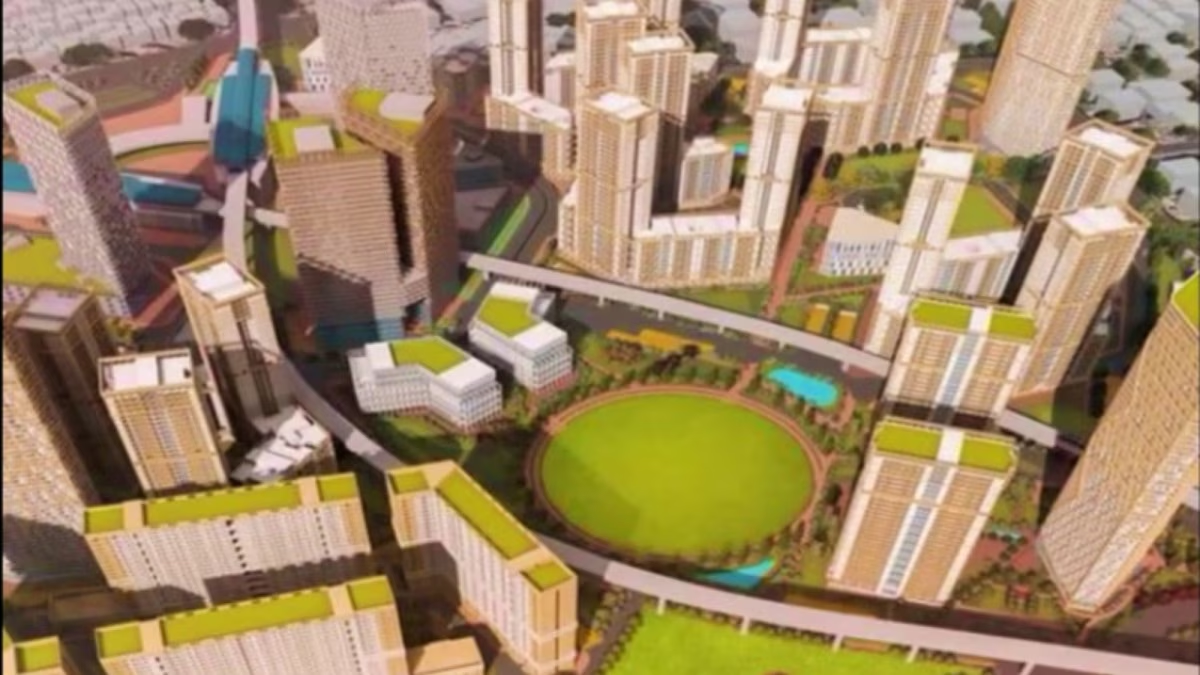
The Delhi Development Authority has moved ahead with the second phase of its high-density residential development at Karkardooma, reinforcing a growing shift towards transit-oriented housing in the capital. The latest rollout at the East Delhi Hub adds hundreds of premium homes directly integrated with mass transit, a model increasingly seen as critical for managing Delhi’s land scarcity, commuting pressures and environmental footprint.
Under the new phase of the DDA Towering Heights project, 848 apartments are being offered, with the majority available to individual buyers through a digital, first-come framework and a smaller portion set aside for institutional allotment. Registration opens this month through the authority’s housing portal, with allotments scheduled to remain open until the end of the financial year. Urban housing officials say the timeline is designed to ensure quicker absorption while limiting speculative holding. Pricing for the DDA Towering Heights units places the development firmly in the premium category, reflecting both its vertical design and strategic location. Buyers are required to commit a partial payment upfront, with the balance payable closer to possession, a structure that reduces immediate capital burden while ensuring delivery discipline. Charges related to taxation, utilities and long-term maintenance will be levied separately, aligning the project with prevailing regulatory norms for completed housing stock.
What distinguishes this project is not just scale, but form. Rising to nearly 50 storeys, the residential tower is currently the tallest of its kind within Delhi’s municipal limits. Urban planners note that such vertical expansion marks a departure from the city’s traditionally low-rise character, signalling a cautious but deliberate embrace of compact development near transport nodes. The project sits directly above a major interchange station connecting two metro corridors, with additional road and inter-state bus connectivity close by. The larger East Delhi Hub spans roughly 30 hectares and is being shaped as a mixed-use district combining housing, mobility infrastructure and civic amenities. Officials involved in the planning say the intent is to reduce dependence on private vehicles by placing homes within walking distance of rail-based transit, retail and workplaces. This aligns with the broader principles of transit-oriented development, which aim to curb urban sprawl, shorten travel times and lower per-capita emissions.
Market response to the first phase of DDA Towering Heights offered insights into demand dynamics. That launch attracted more registrations than available units, indicating appetite for well-located, ready-to-occupy housing even at higher price points. Real estate analysts caution, however, that long-term success of such projects will depend on seamless last-mile access, public realm quality and affordable service charges. As Delhi looks to redevelop ageing neighbourhoods and accommodate future population growth, projects like DDA Towering Heights are likely to shape how density is perceived and delivered. The next challenge will be ensuring that vertical living is matched with social infrastructure, climate resilience and inclusive access, turning transit-linked towers into complete urban communities rather than isolated landmarks.
DDA Advances Transit Oriented Housing In East Delhi