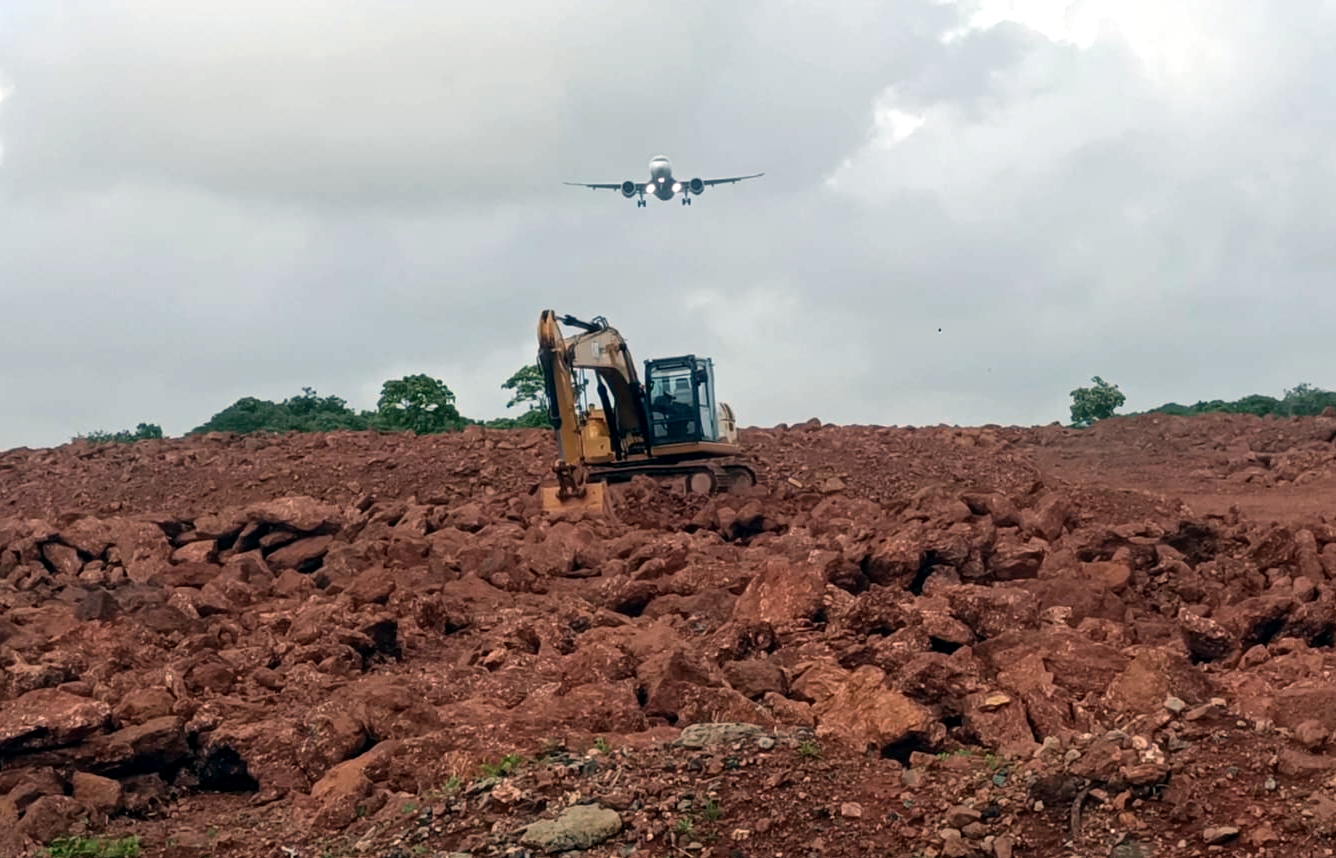
Goa’s Dabolim Airport, a critical gateway to the state, is once again in the spotlight—not for its operations, but for growing fears over construction activities taking place within its regulated funnel zone. A fresh round of excavation and land development near the flight path has raised both aviation safety concerns and legal red flags.
The latest developments involve excavation work reportedly authorised by district authorities, allowing a Delhi-based private developer to carry out significant hill cutting and site preparation in the vicinity of Dabolim Airport’s funnel zone. Despite a prior stop-work order issued by the local panchayat, the work resumed earlier this week, prompting civic activists and local associations to call for urgent intervention.
Officials representing local associations, who have closely monitored land usage in sensitive zones, expressed shock upon discovering full-scale excavation activity ongoing in the area. They raised questions over how permissions were granted despite existing moratoriums, pointing out that the land in question is communally owned and meant for agricultural use under Goa’s longstanding land governance codes.
The funnel zone, which lies directly along the aircraft approach and departure paths, is protected under aviation and environmental regulations to minimise risk to both flyers and the surrounding population. The site, situated close to the main runway’s funnel approach, is particularly sensitive. Aviation experts flagged that earthmoving and construction works in such zones could interfere with radar calibration, mislead navigation systems, and compromise the minimum safe altitudes required during landing and take-off.
What makes this case even more concerning is its timing. The excavation work comes just days after a catastrophic crash involving an Air India flight in Ahmedabad—a tragedy widely attributed to obstacle violations and oversight lapses near aerodrome limits. With over 200 fatalities in that crash, authorities across India have been urged to step up enforcement of aerodrome zoning laws. Against that backdrop, Goa’s apparent disregard of such regulations at Dabolim is being viewed as especially reckless.
Local legal experts representing the community land custodians reiterated that the area under excavation is classified as “afframent land,” historically assigned for cultivation. They argued that no residential or commercial development can take place unless the land use classification is officially converted through state procedures—a process that has not been followed in this case.