


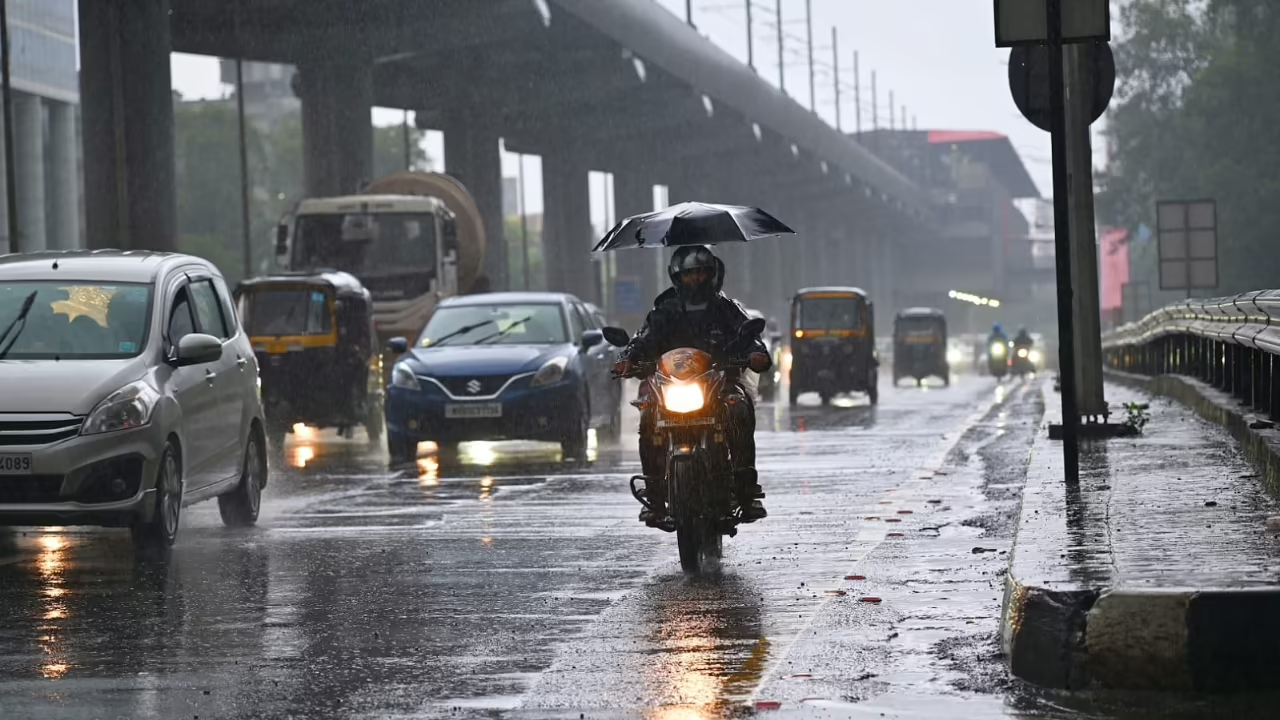
Mumbai’s monsoon has arrived with an unusual pattern this year, with the island city of Colaba witnessing consistently higher rainfall than the typically wetter suburbs. Since the early onset of the southwest monsoon on May 26—the earliest in 75 years—the Colaba observatory has recorded 981 mm of rainfall, outpacing the Santacruz station which logged 803 mm during the same period.
This disparity marks a notable departure from historical trends, where the suburban district, measured at the Santacruz station, usually receives more rainfall. For reference, Santacruz’s average rainfall in June stands at 542 mm, compared to Colaba’s 537 mm. Yet this June, Colaba has already received 477 mm—over 130 mm above its normal for the month—while Santacruz trails with 425 mm.
Experts attribute this shift to monsoon dynamics that favour initial downpours in South Mumbai due to its location and wind patterns. When the monsoon arrived in late May, it was the southern tip of the city that saw the first heavy spells. Localities like Nariman Point, Colaba, Byculla and Do Taki received over 200 mm within a 24-hour window. The monsoon winds, guided by activity over Raigad and south-central Konkan, pushed intense rainfall toward the island city, bypassing much of the suburban belt.Independent weather forecasters have noted that a more active offshore trough around mid-June intensified rainfall over Raigad and nearby coastal areas, with spill-over effects reaching Colaba. This activity was largely absent further north, resulting in relatively drier conditions across the city’s outer districts like Thane and Palghar.
While such rainfall variability isn’t unprecedented—Colaba had also surpassed Santacruz in June 2024 with 507 mm versus 347 mm—the consistency and scale of this year’s deviation is gaining attention. For a city that relies on decentralised water management and drainage systems calibrated to historical rainfall patterns, such shifts could necessitate more dynamic response mechanisms.Looking ahead, the Indian Meteorological Department has issued a yellow alert for Mumbai through the week, with moderate to heavy rainfall likely in isolated parts of the city. Orange alerts have also been sounded for Raigad and Ratnagiri, regions closely linked with the rainfall trajectory into South Mumbai.
This rainfall imbalance, if it persists, raises concerns for low-lying areas in the island city, where waterlogging and traffic snarls are frequent during intense downpours. Mumbai’s ageing drainage infrastructure, particularly in areas with colonial-era networks, could be challenged if the monsoon continues to favour the southern peninsula.
The current trend underscores a broader point: Mumbai’s microclimates are increasingly shaped by climate change, regional weather anomalies, and altered land use. As monsoons grow more unpredictable, the city must invest in weather-adaptive planning, real-time rainfall tracking, and decentralised resilience infrastructure to respond to future rainfall shocks.
Also Read : Lucknow Launches Affordable Housing Drive in Prime Zones
