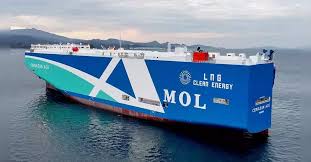
Cochin Shipyard Limited has secured an international order to construct six dual-fuel vessels powered by liquefied natural gas, marking one of the largest clean-fuel commercial shipbuilding contracts for the public sector yard in recent years. The agreement with global shipping major CMA CGM strengthens Kochi’s position in the evolving low-emission maritime economy and signals growing global confidence in India’s shipbuilding capabilities.
The LNG-powered vessels are expected to serve long-haul container routes, where shipping lines are under mounting pressure to cut sulphur oxides, nitrogen oxides and carbon emissions. While LNG is not carbon-neutral, it is widely considered a transitional marine fuel that significantly lowers particulate and sulphur emissions compared to conventional bunker fuels.Industry analysts view the order as strategically important for both the yard and India’s maritime ambitions. For Cochin Shipyard, the contract expands its portfolio beyond domestic defence and offshore projects into high-value, environmentally aligned commercial builds. For Kochi, it reinforces the city’s role as a specialised industrial hub linked to global trade flows.
Senior shipping sector officials indicate that LNG-ready shipbuilding requires advanced cryogenic storage systems, fuel containment technologies and strict safety standards. Developing such expertise domestically reduces dependence on foreign yards and helps build a skilled workforce in naval architecture, marine engineering and green propulsion systems.The project also has implications for India’s broader logistics and port ecosystem. As international shipping lines modernise fleets to meet decarbonisation targets set by the International Maritime Organization, ports and shipyards capable of handling cleaner fuels will gain competitive advantage. Kochi’s shipbuilding expansion complements investments in port modernisation and multimodal connectivity along India’s western coast.
Urban economists note that large shipbuilding orders generate spillover benefits across steel fabrication, component manufacturing, design services and maritime training institutes. In a city where port activity coexists with residential neighbourhoods and sensitive backwaters, cleaner vessel technologies may also contribute to lower air pollution levels in harbour areas.However, environmental planners caution that LNG remains a bridging solution rather than a final destination in shipping decarbonisation. Long-term alignment with climate goals will require parallel investment in green hydrogen, ammonia and electrification pathways. Shipyards building LNG vessels today may need to pivot towards even lower-emission platforms in the coming decade.
For Cochin Shipyard, the immediate focus will be execution timelines, technology transfer and maintaining quality benchmarks demanded by global clients. If delivered successfully, the LNG Vessel contract could anchor Kochi’s reputation as a credible builder in the energy-transition era — linking industrial growth with the maritime sector’s gradual shift towards cleaner operations.