


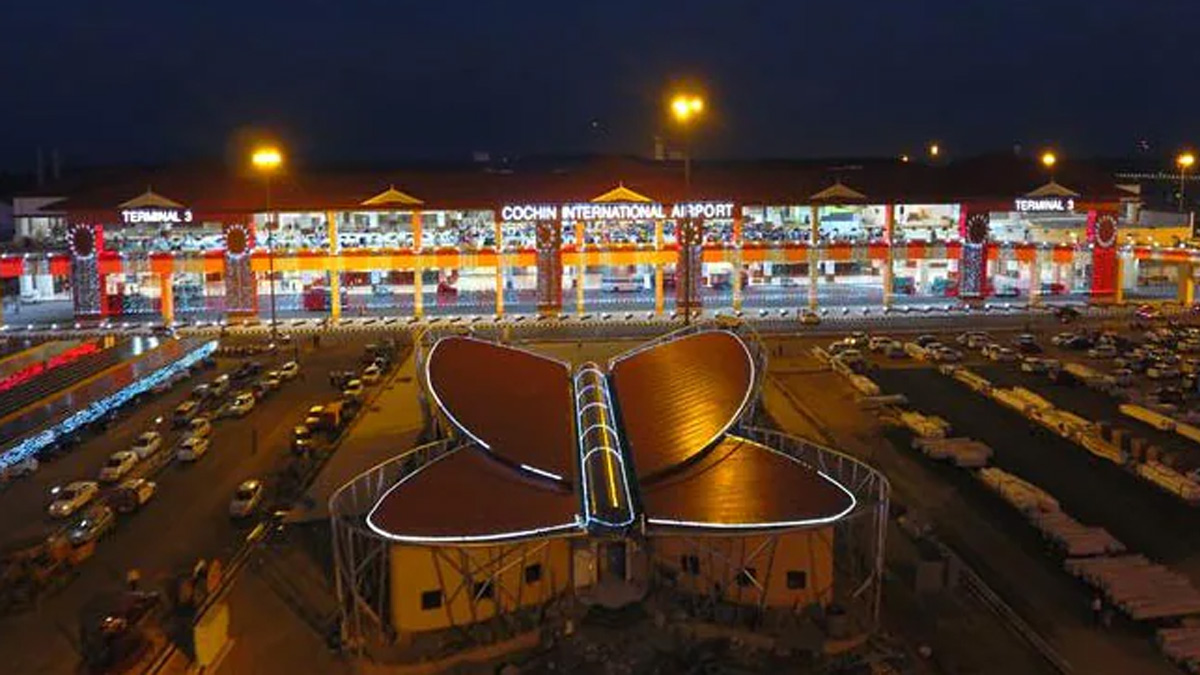
Cochin International Airport Limited has awarded a contract for a comprehensive vehicular access control upgrade at its terminals, marking a significant step in strengthening Cochin Airport aviation security as passenger volumes and regulatory expectations rise across India’s aviation sector.
The mandate has been secured by Godrej Enterprises Group through its security solutions division. The scope includes installation of Under Vehicle Scanning Systems (UVSS), Automatic Number Plate Recognition (ANPR) technology and high-impact tyre killers at entry and exit gates of Terminal 1 and Terminal 2.Airport officials indicate that this is the first structured, technology-led vehicular screening framework implemented at scale within the airport premises. The integrated system will automate undercarriage inspections of vehicles entering designated operational zones, while digitally logging vehicle identities through ANPR for audit and compliance purposes.
Security analysts say the Cochin Airport aviation security upgrade reflects a wider shift across Indian airports toward layered, technology-enabled perimeter management. With increasing air traffic and tighter civil aviation norms, airports are under pressure to reduce manual screening gaps and strengthen real-time monitoring.The UVSS platform captures high-resolution images of vehicle underbodies to detect concealed threats, while ANPR systems automatically record licence plates, creating a traceable digital trail. Tyre killer systems act as a physical deterrent against unauthorised access or forced entry attempts. Together, these measures aim to enhance screening accuracy and improve response times.
Industry observers note that aviation infrastructure is becoming more reliant on smart surveillance ecosystems rather than standalone security hardware. Integrated systems can support predictive risk assessment and centralised command control operations, aligning with global best practices in airport security.For Kochi, which operates one of India’s busiest airports outside major metros, investment in Cochin Airport aviation security carries economic implications. Strengthened perimeter control is critical not only for passenger safety but also for maintaining international compliance standards that affect airline operations and cargo flows.
Urban infrastructure experts add that modern security upgrades must balance operational efficiency with commuter convenience. Automated systems can reduce queue times and streamline vehicle movement, provided they are calibrated to handle peak-hour traffic without causing congestion at access gates.The contract also reflects growing private sector participation in critical infrastructure security. Over the past year, similar deployments have been observed at multiple Indian airports, underscoring rising demand for regulation-ready, technology-driven screening systems.
As airports transition toward higher automation and digital audit trails, the focus is shifting to interoperability — ensuring that surveillance systems integrate seamlessly with emergency response frameworks and cybersecurity safeguards.For Cochin International Airport, the rollout of advanced vehicular screening signals a broader commitment to resilient infrastructure planning. As aviation growth accelerates in southern India, secure and efficient access management will remain central to sustaining passenger trust and operational reliability.
Also Read:India industrial property attracts global capital
Cochin Airport Aviation Security Upgrade
