


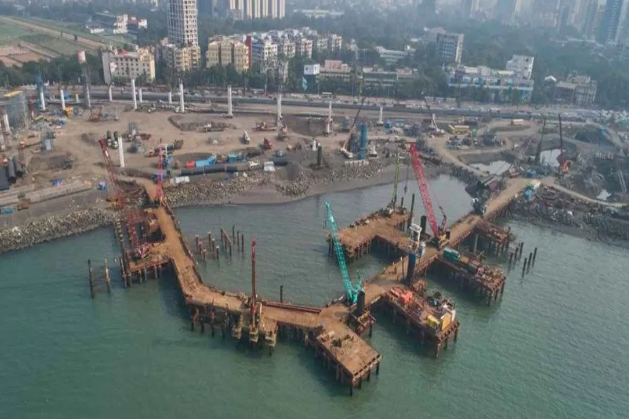
Since its partial opening on March 12, Mumbai’s Coastal Road has witnessed a remarkable surge in traffic, with nearly 4.5 lakh vehicles traversing its nine-minute signal-free stretch from Worli to Marine Drive.
This translates to an average of about 19,500 vehicles daily, marking a significant influx since its inauguration. The road’s popularity is underscored by its highest daily traffic volume of 22,880 vehicles, recorded on March 15, and its peak hourly traffic count of 2,943, achieved on March 21. These figures reflect the growing preference for the Coastal Road among commuters seeking a faster and more efficient route between Worli and Marine Drive. Efforts are underway to bridge the gap between the Worli-end of the southbound arm and the Bandra-Worli Sea Link, with the arrival of a 136-metre-long bow string girder. BMC aims to fully open the road by June, enhancing connectivity and easing traffic congestion in the city.
Despite the road’s closure on weekends, exceptions were made on April 13 for Eid and IPL matches, indicating its significance in facilitating movement during special occasions. Traffic police have observed peak congestion periods from 10 am to noon and 6 pm to 7 pm, emphasising the road’s strategic importance during rush hours. Operational from Monday to Friday, 8 am to 8 pm, the Coastal Road boasts three entry points and two exits, strategically located to optimise accessibility for commuters. Furthermore, ongoing infrastructure enhancements, such as the installation of signals at key junctions like Breach Candy, aim to further streamline traffic flow and improve overall commuter experience. As Mumbai’s transportation landscape continues to evolve, the Coastal Road stands as a testament to the city’s commitment to modern infrastructure development and improved urban mobility. With its promising performance and future enhancements, the Coastal Road is poised to become a vital artery in Mumbai’s transportation network.
