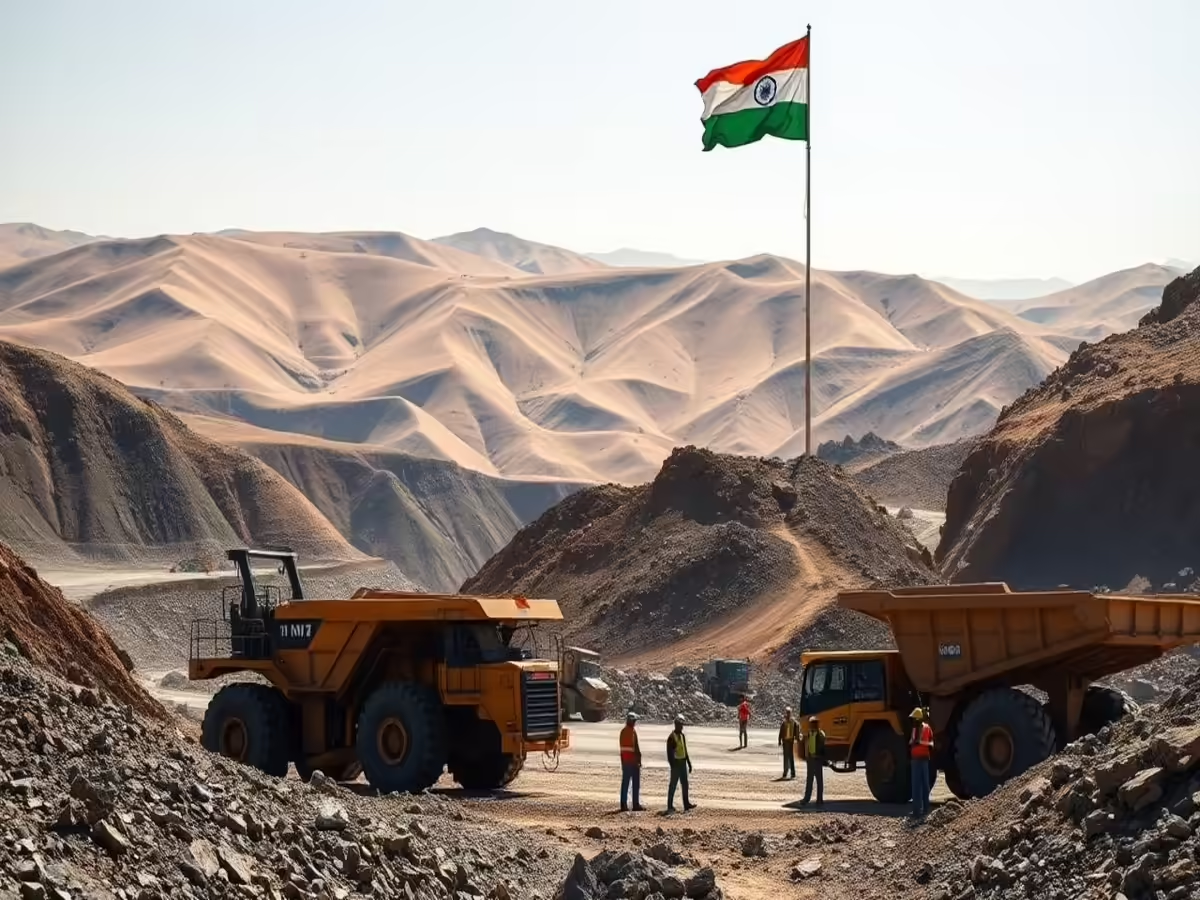
Senior executives of the Central Mine Planning and Design Institute (CMPDI) and South Eastern Coalfields Limited (SECL) convened in Ranchi this week to intensify cooperation on future mining projects and operational priorities. The meeting underscores the growing emphasis within India’s coal sector on integrated planning, technology adoption and regional capacity enhancement at a time when domestic resource development remains crucial to supporting national industrial and urban growth.
The discussions, led by the respective chairpersons of CMPDI — the engineering and consultancy arm of Coal India Limited — and SECL, one of the largest producing subsidiaries, focussed on strengthening project planning and execution across existing and prospective coal mining sites. Both institutions share a mandate to optimise extraction efficiencies, streamline environmental planning and align new project rollouts with national energy and supply chains that feed power utilities, steel manufacturers and other infrastructure sectors. A senior sector planner explained that CMPDI’s role encompasses geological surveying, mine design and environmental assessment, making it a linchpin in planning future mines that are both economically viable and environmentally compliant. SECL, which operates dozens of mines across Madhya Pradesh and Chhattisgarh, brings deep operational experience to implementing these designs on the ground. The renewed focus on collaboration aims to reduce friction between planning and execution phases, thereby accelerating project cycles.
Coal mining remains a core component of India’s energy infrastructure, particularly for supplying thermal power and coking coal for steel production. Domestic resource stability is vital to urban electrification, industrial growth and sustained development of manufacturing clusters. Aligning the planning and operational capabilities of CMPDI and SECL can minimise delays that arise from misaligned project schedules or regulatory clearance hurdles, especially in ecologically sensitive areas where environmental oversight is rigorous. The meeting also touched on leveraging modern mine‑planning technologies and shared data platforms to enhance safety, productivity and environmental monitoring. Recent initiatives in the broader coal sector have highlighted the potential of digital tools such as remote sensing and advanced analytics to improve on‑site decision‑making and reduce ecological impact, a strategic priority as India balances resource extraction with climate resilience goals.
Community stakeholders and regional development experts note that improved collaboration between planning and operations teams can also strengthen socio‑economic outcomes for mining belt populations. Well‑executed mining projects can improve local infrastructure, generate employment and expand access to skills training, healthcare and education when integrated with structured corporate social responsibility frameworks. However, experts caution that such collaboration must be matched by proactive environmental management. Coal extraction continues to pose challenges around land use, water resources and emissions, making rigorous environmental impact assessments and rehabilitation plans essential components of any expansion strategy.
Looking ahead, the steel, power and construction sectors will be watching how this renewed institutional alignment translates into project delivery timelines and supply consistency. For urban planners and policymakers, the ability of India’s mining ecosystem to operate cohesively will be central to meeting downstream demand from infrastructure and industrial growth trajectories.