


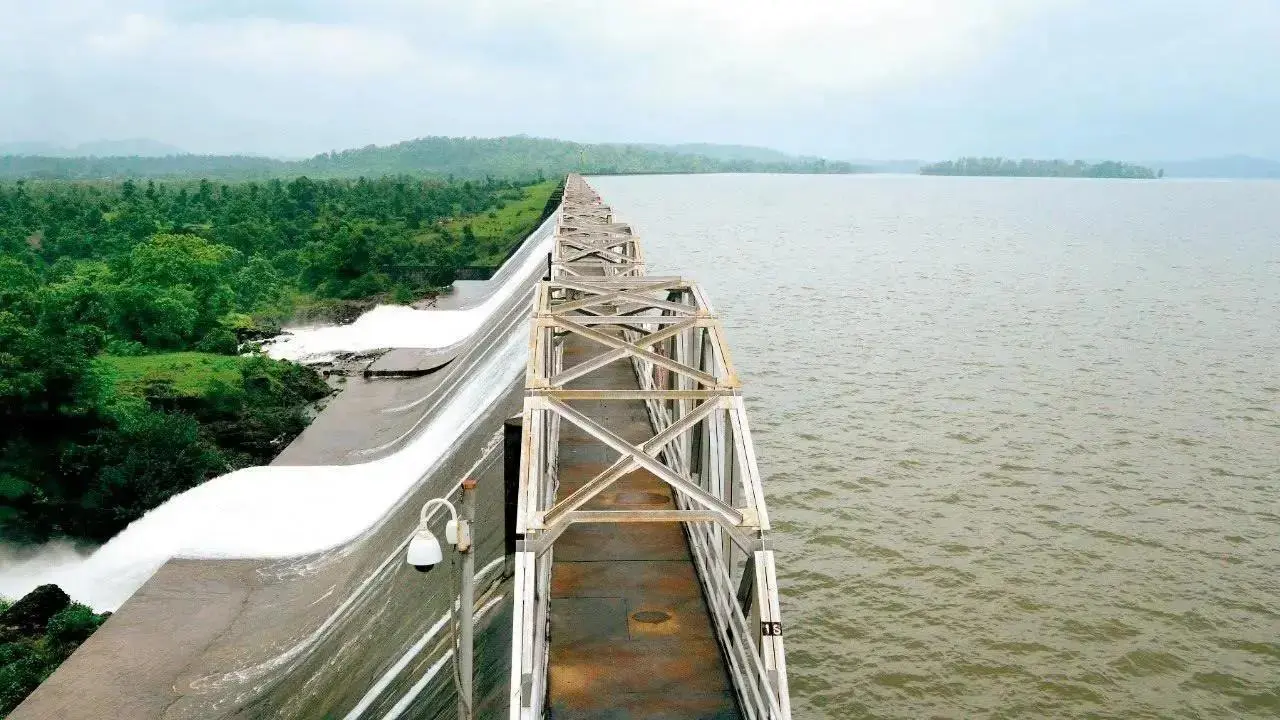
The city’s seven major reservoirs have surged to 78.3 percent of capacity, holding 11.3 lakh million litres of water, thanks to sustained monsoon rainfall across the catchment areas. This marks a significant improvement from 35.1 percent a year earlier, signalling a promising recovery in urban water reserves. Heavy showers in June and early July replenished the reservoirs of Middle Vaitarna, Tansa, Modak Sagar, Bhatsa, Tulsi, Powai, and Vihar—key sources for municipal supply. In contrast, on the same day last year, stock stood at just 31.2 percent. This year’s seasonal rise outpaces 2024, when the 70 percent threshold was crossed only on 24 July.
Experts on urban water sustainability point out that this uptick offers a brief respite but should not prompt complacency. “It reflects timely rainfall, yet system resilience must be bolstered through equitable distribution, leakage control, and demand management,” noted a city water resources official. Despite improvements, the city’s water infrastructure faces challenges. Significant losses from ageing pipelines persist, and distribution lags in parts of the expanding suburbs. Authorities are now emphasising a dual strategy: augmenting supply while legislating efficient consumption. Campaigns encouraging citizens to adopt water-saving appliances, rainwater harvesting, and responsible usage are gaining traction.
Urban planners highlight the role of ecological conservation in building water resilience. Maintaining healthy catchment forests and urban green cover improves monsoon absorption and reduces runoff. In response, civic bodies are fast-tracking eco-restoration efforts around reservoir zones, with mangrove planting and wetland buffer zones being implemented by environmental departments. Sustainability analysts argue that ensuring gender‑equitable access is critical. Disadvantaged neighbourhoods often bear brunt of water scarcity. Supply data is now being reviewed to assess per‑capita provisioning across zones, aiming to ensure fair access to every household, irrespective of socio-economic status.
As reservoir levels near pre-deficit benchmarks, the water board is scaling up testing and preserving a high alert for water quality. Officials highlight that turbidity could rise during heavy rains, particularly from upstream deforestation. Continuous water-quality monitoring and purification system upgrades are being deployed to safeguard public health. While this monsoon revival reaffirms the benefits of timely rainfall and sustainable catchment management, experts caution that long-term drought-proofing requires structural reforms. These include integrating renewable energy-powered pumps, smart metering for households, and enhancing groundwater recharge zones within urban spaces.
Mumbai’s on‑course rebound in reservoir stocks offers reassurance, but city planners emphasise that climate‑informed infrastructure, equitable distribution, and sustainable practices are essential to securing reliable water access for all residents in the face of climate volatility.
Also Read : Bombay HC Clears Mumbai Jetty Project Worth ₹229 Crore Near Gateway
