


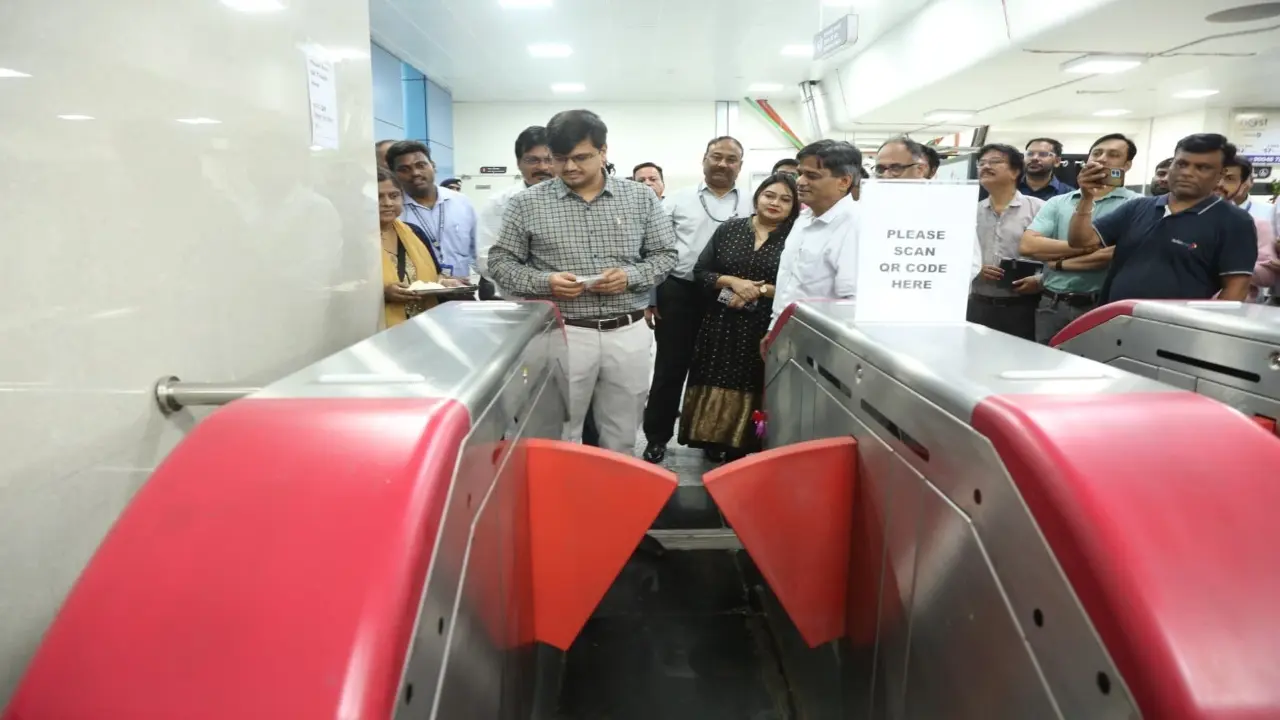
Navi Mumbai Metro has taken a significant step towards smarter, greener urban mobility by launching a QR-based paper ticket system on Line 1 between Taloja and Belapur. This marks an important early move in CIDCO’s plan for a unified, multimodal digital fare network, supporting equitable and sustainable city transport.
The QR ticket system, unveiled recently at Belapur station, replaces traditional tokens with simple paper tickets embedding Quick Response codes. Commuters now scan at entry and exit gates, cutting waiting times and easing crowding at fare collection points—tangible progress in commuter convenience and carbon-efficient infrastructure. CIDCO officials also confirmed that further digital enhancements are in the pipeline. A mobile app, WhatsApp-based ticketing and full integration of National Common Mobility Cards (NCMC) are due to arrive shortly—measures designed to include phone-mobilising users and those without smartphones alike.
The deployment included a wholesale upgrade of the AFC system across all Line 1 stations. A private contractor handled the technical installation, guided by CIDCO and Maharashtra Metro Rail Corporation Ltd. The project follows the national smart mobility agenda, enabling seamless cross-network ticketing and reduced reliance on paper tokens. Transport policy experts say the system aligns with zero-carbon goals by encouraging modal shift through ease of access and reduced emissions. Moreover, paper QR tickets cut plastic and e-waste, while enabling system-wide data capture—traffic flow, peak times, station usage—for refined service planning and crowd management.
A CIDCO spokesperson emphasised the move as part of a “commitment to delivering world-class transport services for passengers” and noted the QR implementation was a significant milestone in the city’s journey to a comprehensive Common Mobility Solution. The broader national transit landscape also mirrors this trend. Mumbai Metro Line 3 (Aqua) recently introduced similar QR ticketing via ONDC-enabled consumer apps, signalling a nationwide shift towards unified, app-enabled metro access. Commuters at Belapur welcomed the change. One passenger shared that QR tickets “speed boarding, no waiting in line—and it’s inclusive since printed tickets are still available for everyone.” CIDCO underlines that the hybrid model prevents exclusion of unbanked or low-tech users.
Urban transit analysts note that such innovations raise new expectations. For seamless adoption, reliability is key—without scanner downtime, ticketing queues, or farebox errors. Staff training and user education also matter, particularly for first-time or non-English speakers . CIDCO’s upcoming integration of mobile, social-media and NCMC payments is expected to deepen equity and access across Navi Mumbai’s growing network. NCMC, especially, promises unified payment across metros, buses, tolls and parking, catering to both daily riders and occasional travellers. Environmental planners highlight the system’s alignment with circular economy principles—by reducing plastic tokens, uses less material and less waste. With the global net-zero race ongoing, every metro line rolling out digital fare mechanisms is a step toward sustainable infrastructure.
Metro Line 1’s 11.1 km stretch currently links Belapur and Pendhar, with plans to extend further to MIDC Taloja and eventually the Navi Mumbai International Airport, spanning 23 km and 20 stations. The digital ticketing upgrade sets a scalable precedent for future network phases. Inclusive, gender-neutral access is also a key goal. The system ensures that paper tickets remain available for those without smartphones, including older commuters, women without access to mobile payments and migrant or low-income riders.
Looking ahead, CIDCO must focus on continuous refinement—real-time data dashboards, inter-agency fare policy, anti-fraud measures and multilingually tailored interfaces—to build trust and reliability into the platform. Critically, this initiative places Navi Mumbai among a growing cohort of global cities that marry transit expansion with digital fare innovation, acknowledging that the future of cities depends not only on tracks built, but on systems that let people, quietly and sustainably, move with ease. Whether a QR ticketing paper slip or a tap on a phone, the goal—and the promise—is the same: easy, inclusive, and resilient metro journeys that reduce car dependency and carbon footprints.
In the coming months, commuters across other corridors will be watching. For now, Line 1 riders in Navi Mumbai are the first to travel on a paper slip printed with just enough code to represent ambition—a simple move that could transform how cities connect and citizens commute.
Also Read : New Delhi Faces Sewer Overflow Traffic Jam
