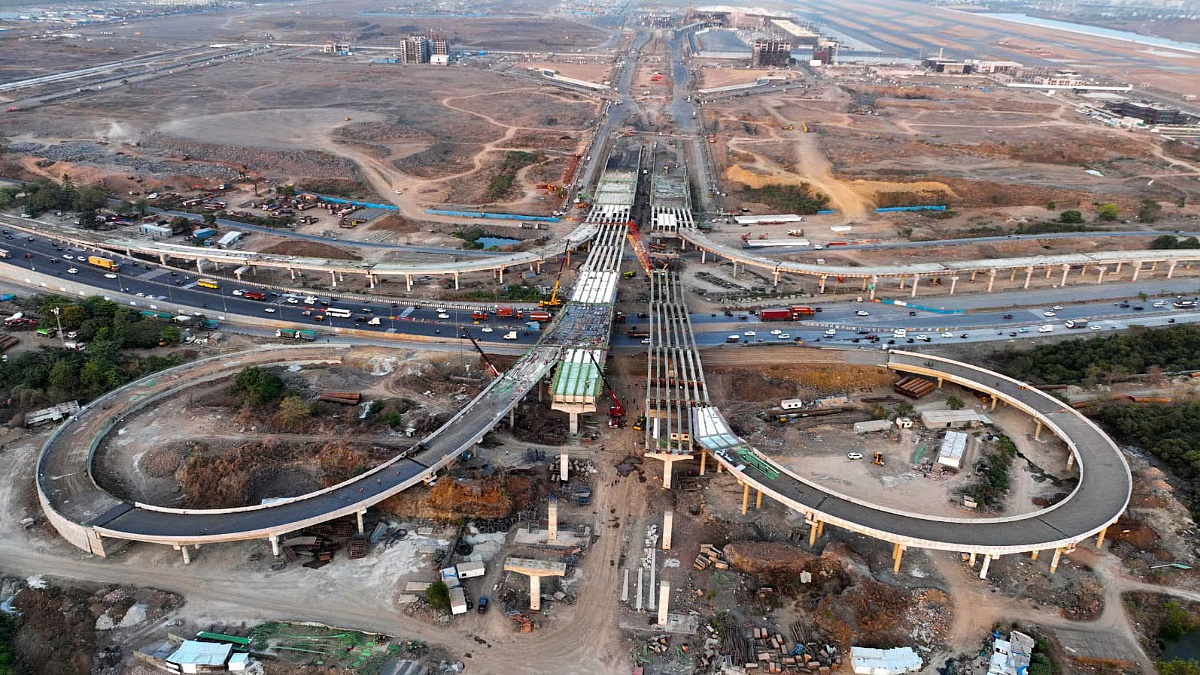
Commuters heading to the upcoming Navi Mumbai International Airport are set to see a sharp reduction in travel time following the finalisation of a new signal-free road interchange linking the Atal Setu with the Ulwe Coastal Road. Planned near Shivaji Nagar in the Gavhan area, the infrastructure upgrade is expected to cut the last-mile airport approach to around 10 minutes, significantly reshaping regional mobility between South Mumbai and Navi Mumbai.
Officials overseeing urban development in Navi Mumbai confirmed that detailed engineering designs have been cleared for a six-ramp, grade-separated interchange that will allow uninterrupted traffic movement from the Atal Setu into key urban and logistics corridors. Currently, vehicles exiting the sea bridge spend up to 40 minutes navigating junctions and internal roads before reaching the airport zone. Once operational, the reconfigured network is projected to reduce the total South Mumbai–airport journey to under 40 minutes. The proposed interchange will replace the existing signalised junction with a high-capacity cloverleaf-style layout. Multi-lane ramps, directional loops, and slip roads will segregate traffic streams immediately after entry into Navi Mumbai. According to transport planners involved in the project, this design is intended to keep airport-bound passenger traffic separate from freight vehicles heading towards port and industrial zones, improving safety and reducing congestion across Ulwe, Panvel, and Uran.
The interchange forms a critical element of the Ulwe Coastal Road project, a seven-kilometre corridor connecting emerging residential nodes, logistics hubs, and coastal industrial areas. The corridor also includes a railway overbridge across the Nerul–Uran rail line, strengthening multimodal connectivity in a region witnessing rapid urban expansion driven by the airport and port-led development. From an urban planning perspective, the project reflects a broader shift towards signal-free, access-controlled road infrastructure aimed at improving fuel efficiency and reducing idling emissions. Transport experts note that smoother traffic flow on high-volume corridors can contribute meaningfully to lower per-vehicle carbon output, particularly for airport traffic that typically involves longer dwell times at junctions.
Environmental considerations have also shaped the project’s execution. Officials said the road and interchange structures are designed to be built on stilts, limiting ground-level disruption in ecologically sensitive coastal zones. Compensatory plantation measures have been planned to offset the impact on mangrove habitats, in line with judicial and regulatory requirements. These safeguards have contributed to cost escalations, with the overall project value now estimated at nearly ₹1,600 crore. While certain statutory approvals are still awaited, agencies involved continue to target completion by August 2026. Urban economists suggest that timely delivery will be crucial, as airport-linked connectivity often influences real estate demand, logistics investment, and employment clustering.
As Navi Mumbai prepares to absorb airport-led growth, the interchange is expected to play a pivotal role in shaping a more efficient, resilient, and regionally balanced transport network—one that supports economic expansion while easing pressure on Mumbai’s already congested road system.
CIDCO Interchange To Ease Navi Mumbai Airport Access