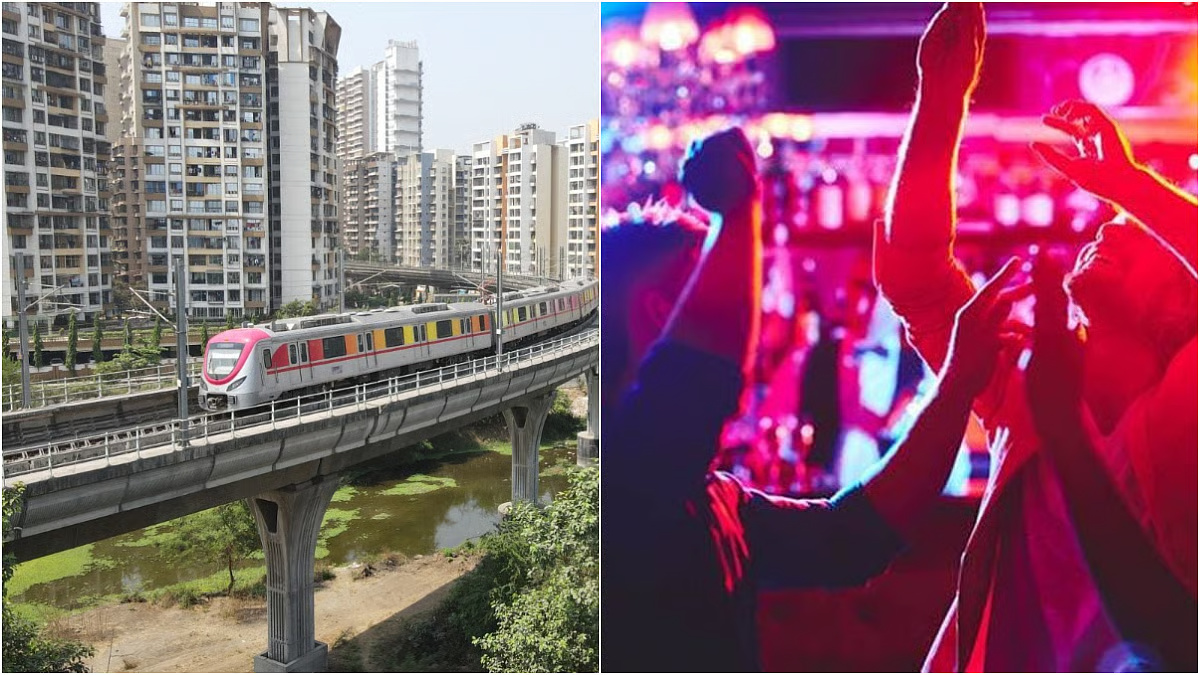
Navi Mumbai is set to ring in 2026 with enhanced public transport access as the city’s development authority extends metro services on the Belapur–Pendhar corridor during New Year’s Eve. The move is aimed at supporting late-night travel demand, improving commuter safety, and encouraging the use of mass transit during one of the busiest nights of the year.
According to officials overseeing the metro network, services on Metro Line 1 will operate beyond regular hours on the night of December 31, continuing until 1.30 am on January 1. Trains will run at 20-minute intervals from both terminal stations during late-night operations, allowing revellers, workers, and service staff to travel without relying on private vehicles or informal transport options. Transport authorities confirmed that the final departure from Belapur is scheduled for 1.30 am, while the last service from Pendhar will leave at 1.00 am. Outside these extended hours, the metro will follow its standard timetable. Officials said the staggered last departures are designed to optimise fleet movement while maintaining safety protocols across stations and depots.
Urban mobility experts view the decision as part of a broader shift in how Indian satellite cities manage large-scale public events. “Late-night metro operations signal a growing recognition that cities must remain accessible beyond conventional working hours,” said a transport planner familiar with transit-oriented development in the Mumbai Metropolitan Region. “This improves inclusion, particularly for hospitality workers, shift employees and young commuters.” The Belapur–Pendhar line, though relatively new, has steadily grown into a key connector for residential and commercial clusters in Navi Mumbai. Planners argue that consistent service extensions during peak occasions can help build long-term ridership habits, supporting cleaner transport choices and reducing congestion on arterial roads during festive nights.
Officials also urged citizens to opt for public transport wherever possible, noting that concentrated use of metros and buses significantly lowers the risk of road accidents and emissions spikes during celebrations. From a sustainability perspective, extended metro services align with Navi Mumbai’s wider ambition to evolve as a low-carbon, transit-led urban node within the region. As Indian cities grapple with balancing celebration, safety and environmental responsibility, Navi Mumbai’s New Year metro plan offers a glimpse into how urban infrastructure can adapt to social rhythms. While limited to a single night, such measures increasingly reflect a long-term rethinking of mobility—one that places people, equity and climate resilience at the centre of urban growth.
CIDCO Extends Late Night Metro Services On Belapur Pendhar Line Till 1:30 AM