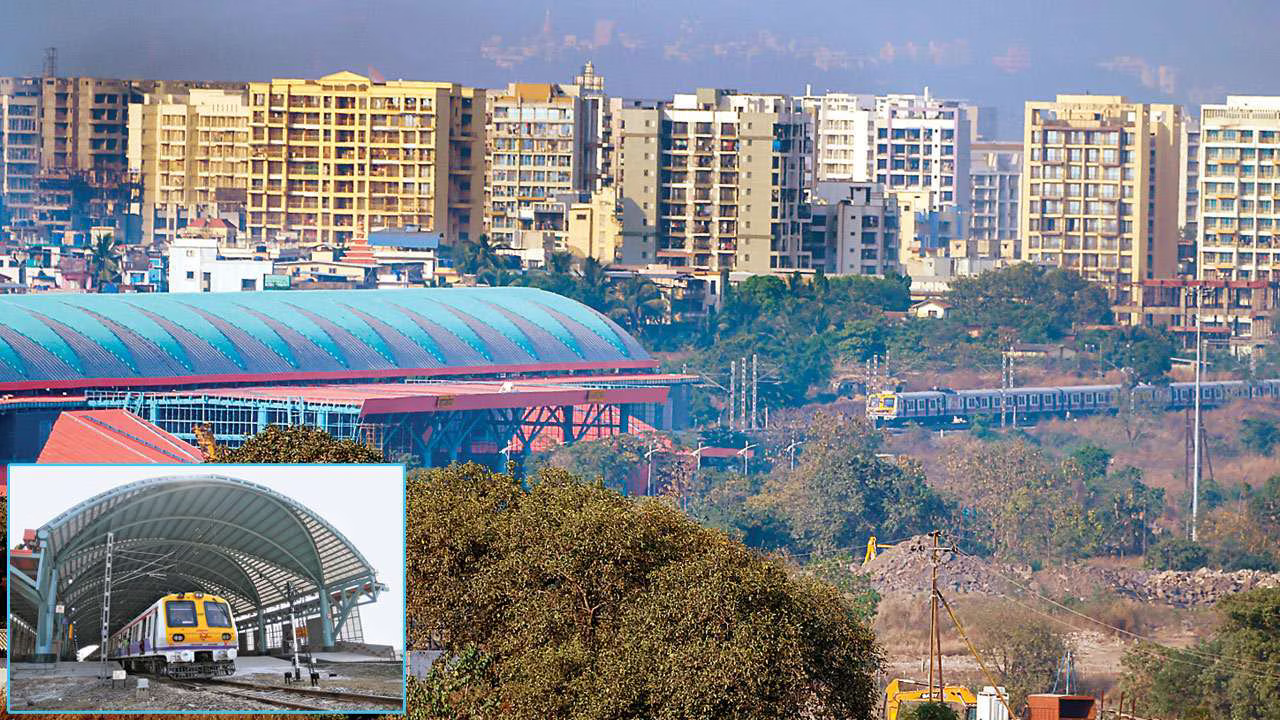
As Navi Mumbai prepares for the operational launch of its long-awaited international airport, gaps in everyday urban infrastructure are drawing renewed scrutiny in Ulwe, one of the city’s fastest-growing nodes. A recent site inspection by planning and transport authorities has brought focus to the absence of basic public transport facilities near Kharkopar suburban railway station, a key interchange expected to handle increased passenger movement once airport operations begin.
Officials from the city’s development authority and the transport department recently assessed a parcel of land opposite Kharkopar station to evaluate its suitability for a permanent municipal bus depot. The review examined land contours, road access, circulation patterns, and the feasibility of supporting operational infrastructure required for a high-frequency bus network. The proposed facility is expected to anchor several important municipal routes linking Ulwe with Nerul, Belapur, Ghansoli and the upcoming airport terminal. Urban planners say the issue highlights a recurring challenge in India’s new city extensions: transport systems often lag behind real estate growth and regional infrastructure investments. Ulwe has witnessed rapid residential development over the past decade, driven by rail connectivity and proximity to the airport influence zone. However, the lack of organised bus infrastructure near the station has placed daily strain on commuters and frontline transport workers.
At present, bus staff operating routes from Kharkopar reportedly function without access to basic amenities such as shaded waiting areas, rest facilities or administrative offices. During peak weather conditions, this has led to operational inefficiencies and discomfort, raising concerns about worker welfare and service reliability. Transport experts note that humane working conditions are directly linked to service quality, especially in high-demand transit corridors. According to senior officials familiar with the inspection, a preliminary feasibility assessment has been forwarded for internal review and approvals. If cleared, the site could be developed into a permanent depot capable of supporting electric and low-emission buses, aligning with broader goals of reducing transport-related emissions in the Mumbai Metropolitan Region. Experts say such facilities are essential for enabling clean, high-frequency last-mile connectivity to major infrastructure assets like airports and railway stations.
Residents and daily commuters view the inspection as a positive but overdue step. Civic groups have repeatedly flagged the mismatch between large-scale infrastructure announcements and on-ground preparedness. With airport-linked travel expected to reshape commuting patterns in Navi Mumbai, the absence of a coordinated bus hub near Kharkopar risks congestion, informal halting arrangements and poor passenger experience. Urban mobility specialists argue that the success of the Navi Mumbai International Airport will depend not only on aviation infrastructure but also on seamless, affordable public transport integration. As authorities move the Ulwe bus depot proposal through approvals, the coming months will test whether planning agencies can deliver people-first transport infrastructure in step with the city’s next phase of growth.
CIDCO Examines Ulwe Transit Infrastructure Ahead NMIA