Coal Sector Sees Strong February Production Expansion
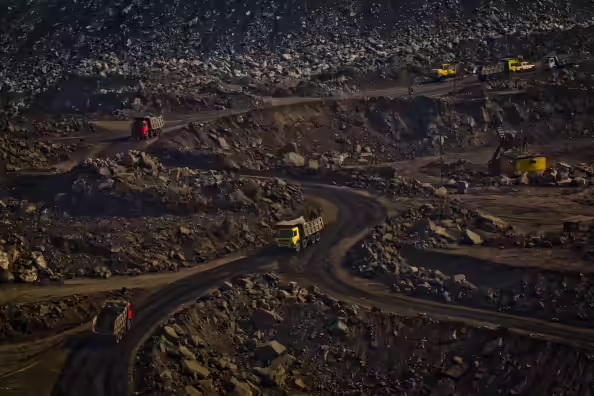
A cross-regional media exposure visit to Chhattisgarh’s Gevra coal complex has spotlighted the growing importance of sustainable resource extraction in India’s evolving energy and industrial landscape. The visit brought journalists from a northeastern Himalayan state to one of the world’s largest open-cast mining operations, offering insights into how coal supply chains continue to support power generation and heavy industry while attempting to reduce environmental impacts.
Organised through a government-led outreach initiative, the field engagement focused on the operational scale of the SECL Gevra Mine and the technological upgrades shaping modern mining. Officials emphasised that such interactions are aimed at improving public understanding of how large extractive industries intersect with national energy stability, infrastructure expansion and regional employment ecosystems.The SECL Gevra Mine, located in Chhattisgarh’s coal belt, remains a critical contributor to India’s electricity production and industrial fuel demand. The facility is among the largest coal-producing sites globally and has steadily expanded output capacity over the past decade to address rising consumption needs linked to urbanisation, manufacturing and construction growth. Industry analysts note that projects like Gevra underpin power reliability in rapidly expanding cities, where electricity demand is closely tied to economic productivity and real estate expansion.
During the site visit, participants observed high-capacity heavy earth-moving equipment used to accelerate output while improving worker safety and operational efficiency. Officials highlighted that the SECL Gevra Mine is increasingly adopting surface mining techniques that reduce the need for conventional blasting. These technologies are designed to limit vibration, noise and particulate emissions, helping the industry align with tightening environmental compliance frameworks and occupational safety standards.Environmental mitigation measures formed a major component of the briefing. Engineers and project teams described dust suppression systems, mechanised coal handling and afforestation programmes introduced to minimise the ecological footprint of large-scale mining. Urban sustainability experts say such initiatives are becoming essential as mining-linked regions face pressure to balance energy security with ecological resilience and community health.
Infrastructure connectivity around the SECL Gevra Mine was also showcased as part of a broader logistics modernisation effort. Automated loading facilities and dedicated transport corridors are helping streamline coal evacuation while reducing road congestion and lowering emissions intensity per tonne transported. Analysts believe such integrated supply-chain planning can reduce the environmental burden on nearby settlements and improve transport efficiency across industrial corridors.Energy economists underline that coal remains central to India’s near-term energy mix, especially as infrastructure growth, cement production and housing construction continue to accelerate. However, they also stress that operational upgrades at sites such as the SECL Gevra Mine reflect an industry-wide transition towards cleaner extraction technologies and better land restoration practices.
As India advances its dual goals of infrastructure expansion and climate-conscious development, policymakers and industry stakeholders are expected to intensify investments in emission reduction, community rehabilitation and ecological restoration. Observers note that the evolution of large mining hubs like Gevra will likely shape how the country balances industrial growth with long-term environmental stewardship.