


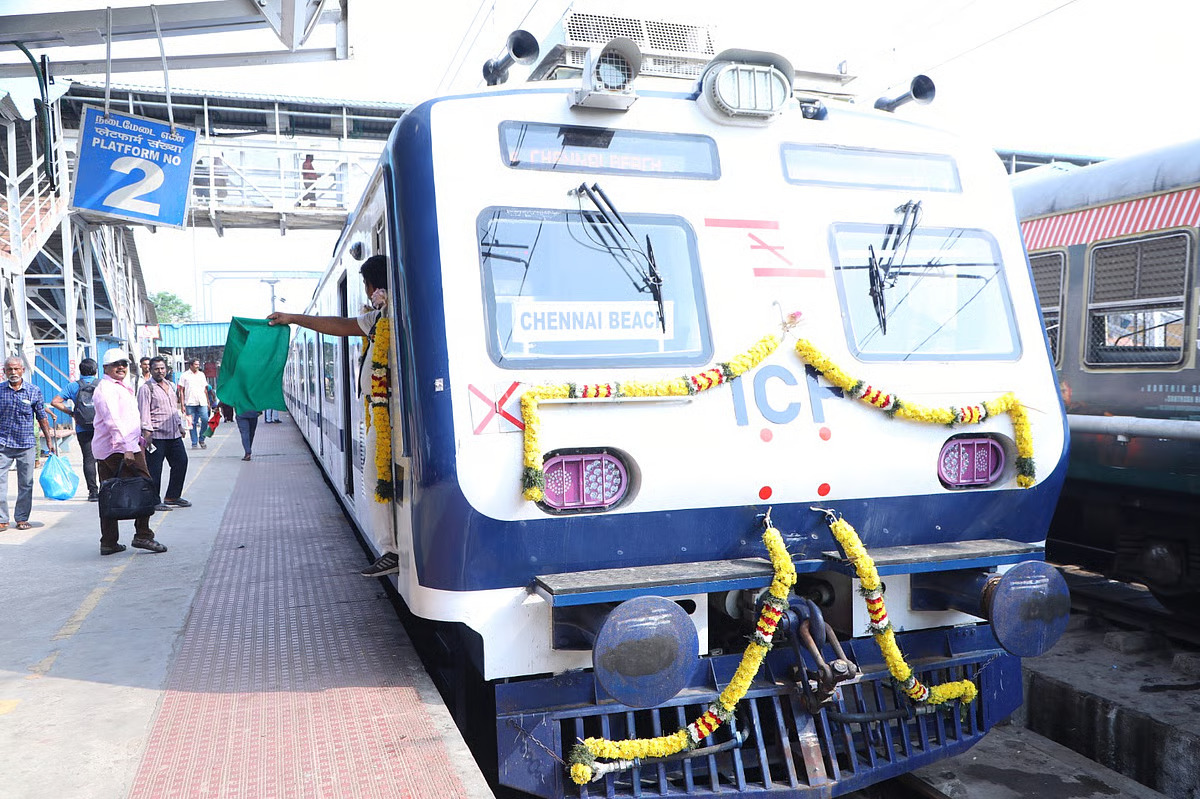
Chennai’s maiden air‑conditioned suburban EMU, launched in April between Beach and Chengalpattu via Tambaram, is struggling to find traction among commuters. Despite offering relief from scorching summer temperatures, the 12‑car rake carries barely half its sitting capacity of 1,120—with only around 1,500 riders daily compared to its full capacity of 3,798.
Passengers appreciate the Metro‑style interiors—stainless‑steel seats, automatic doors, vestibule coaches and fans enhancing airflow. Yet, high fare remains the top deterrent. At ₹85 for Beach–Tambaram and ₹105 to Chengalpattu, commuters are critical. Activist Dayanand Krishnan noted other AC trains like Gujarat’s Vande Metro offer similar comfort at far lower cost—₹55 for 42 km—suggesting fare rationalisation is overdue. Operational planning has also drawn criticism. Initial schedules did not align with office commuters’ needs—early morning and evening services were scant outside peak windows. Responding to over 600 complaints, Southern Railway has now adjusted timings from 2 May: the rake departs Tambaram at 06:50 AM and Chengalpattu at 07:50 AM, arriving at Beach by 09:25 AM—better suited for working schedules.
Since launch, the AC EMU has faced technical setbacks. Videos from commuters show the rake scraping platforms—staff resorted to manually adjusting the train with hammers, revealing a possible mismatch between rake dimensions and legacy infrastructure. This has raised safety concerns and undermined confidence in the service. Chennai commuters have offered varied feedback. Some welcomed climate relief and non‑crowded coaches, while others lamented inconvenient stops and schedules. One college lecturer questioned the value when stations like Nungambakkam and Kodambakkam are bypassed, forcing extra transfers. Another noted the fare is nearly double comparable Metro journeys, making it less attractive.
Southern Railway has opened feedback channels via WhatsApp and online forms to refine the service. Operating more frequent short‑haul runs between Tambaram and Beach, expanding stops, and aligning fare with Metro pricing could widen appeal. Ensuring train‑platform compatibility must be prioritised to avoid technical mishaps. Chennai’s AC EMU offers promising glimpses of modern, comfortable suburban transit. However, without addressing fare equity, schedule relevance, safety compliance and careful integration with commuter routines, it risks becoming an underutilised luxury. For commuters and transport planners alike, the decision ahead is clear: adapt and democratise, or risk allowing a valuable public transport innovation to fall short.
Also Read: Haryana inaugurates India’s largest in‑plant rail terminal at Manesar facility
