


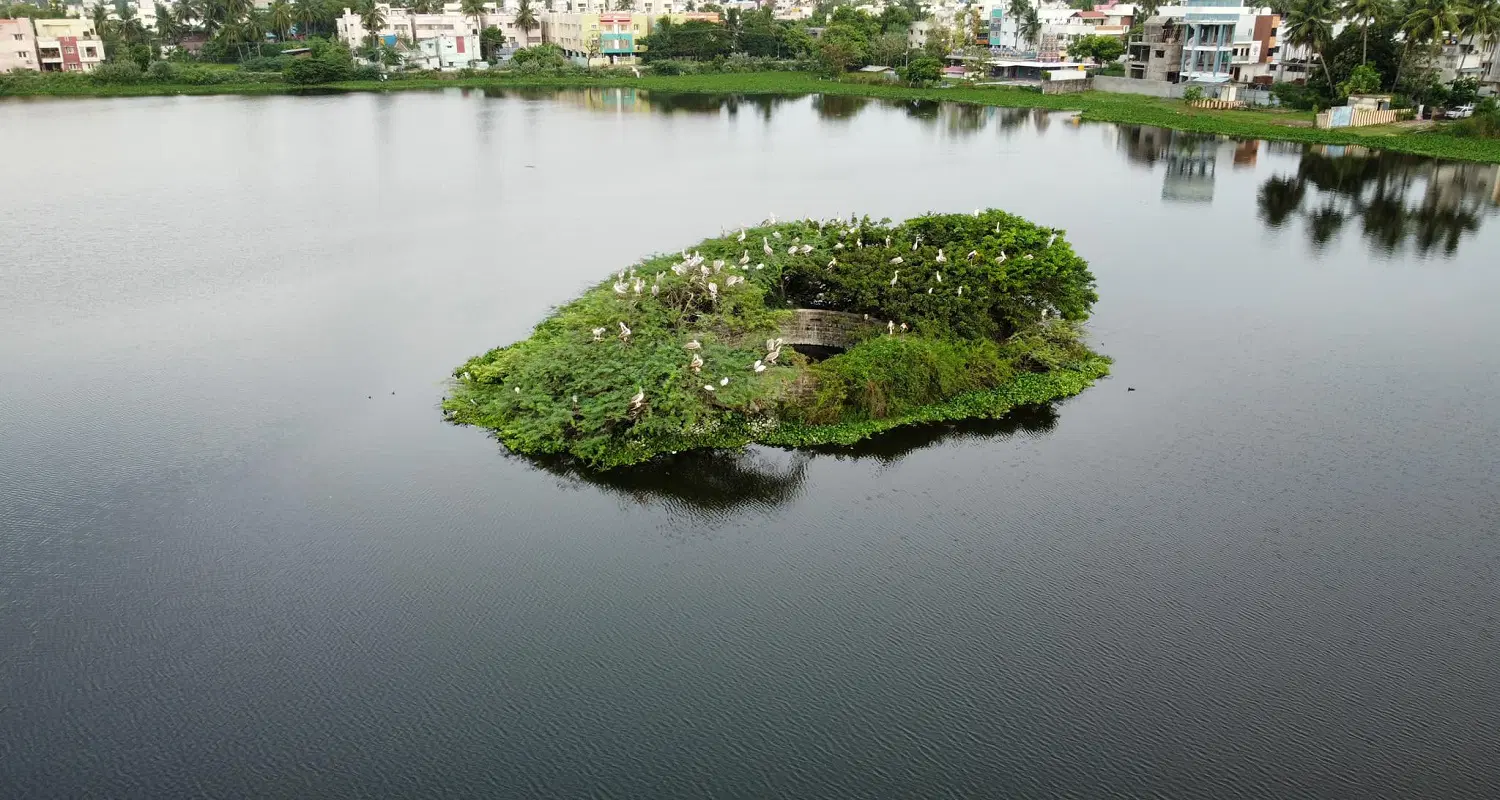
A renewed focus on wetlands and historic water systems is reshaping conversations around flood control and groundwater security in Chennai, as environmental institutions and civic agencies mark World Wetlands Day with public engagement and on-ground learning initiatives. The discussions come amid growing concern over how rapid urbanisation has weakened the city’s natural capacity to manage water extremes.
At a restored urban wetland in south Chennai, researchers and conservation professionals highlighted how ancient South Indian water networks functioned as integrated systems rather than isolated structures. These networks, developed centuries ago, linked tanks, channels and low-lying wetlands to slow down floodwaters and allow gradual groundwater recharge. Urban planners say such decentralised designs offer valuable lessons for modern cities struggling with climate volatility.The event brought together students, ecologists and urban practitioners to examine how wetlands operate as natural infrastructure. Participants observed plant species adapted to fluctuating water levels, along with birds, insects and small fauna that signal ecosystem health. Experts explained how wetlands store excess rainwater during peak monsoons, release it slowly into aquifers and reduce surface runoff that otherwise overwhelms stormwater drains.
For Chennai, which has experienced both severe flooding and acute water shortages within short spans, the implications are significant. Studies indicate that large portions of the city’s historic wetlands and marshlands have been encroached upon or fragmented by roads, real estate development and utilities. This has reduced their capacity to absorb rainfall, increasing dependence on engineered drainage systems that are often undersized or poorly maintained.Urban ecologists at the programme pointed out that wetlands also provide less visible services that are increasingly relevant to city economies. These include carbon storage, temperature regulation and support for urban biodiversity. In dense neighbourhoods, accessible green-blue spaces improve public health outcomes and offer inclusive recreational areas, particularly for students and low-income communities with limited access to open land.
Parallel activities were organised at the city’s estuarine edge, where a state-led wetlands mission partnered with forest officials and academic institutions to combine awareness-building with direct action. Volunteers participated in guided nature walks and a clean-up exercise that removed significant quantities of waste from sensitive habitats. Officials involved said such programmes are intended to build a sense of stewardship among young residents, rather than relying solely on enforcement.Urban development experts argue that the challenge now lies in translating awareness into planning decisions. Protecting remaining wetlands requires integrating them into master plans as essential infrastructure, not vacant land banks. This includes restoring hydrological links between water bodies, preventing sewage inflows and ensuring surrounding development respects natural buffers.
As climate models predict more intense rainfall events along India’s east coast, Chennai’s experience underscores the cost of ignoring natural systems. Reviving and safeguarding wetlands may not offer quick fixes, but city officials acknowledge that long-term resilience will depend on aligning modern infrastructure with the ecological logic that sustained earlier urban settlements.
Also Read:Chennai Water Utility Turns To Pipeline Robotics
Chennai Wetlands Revival Draws Lessons From History
