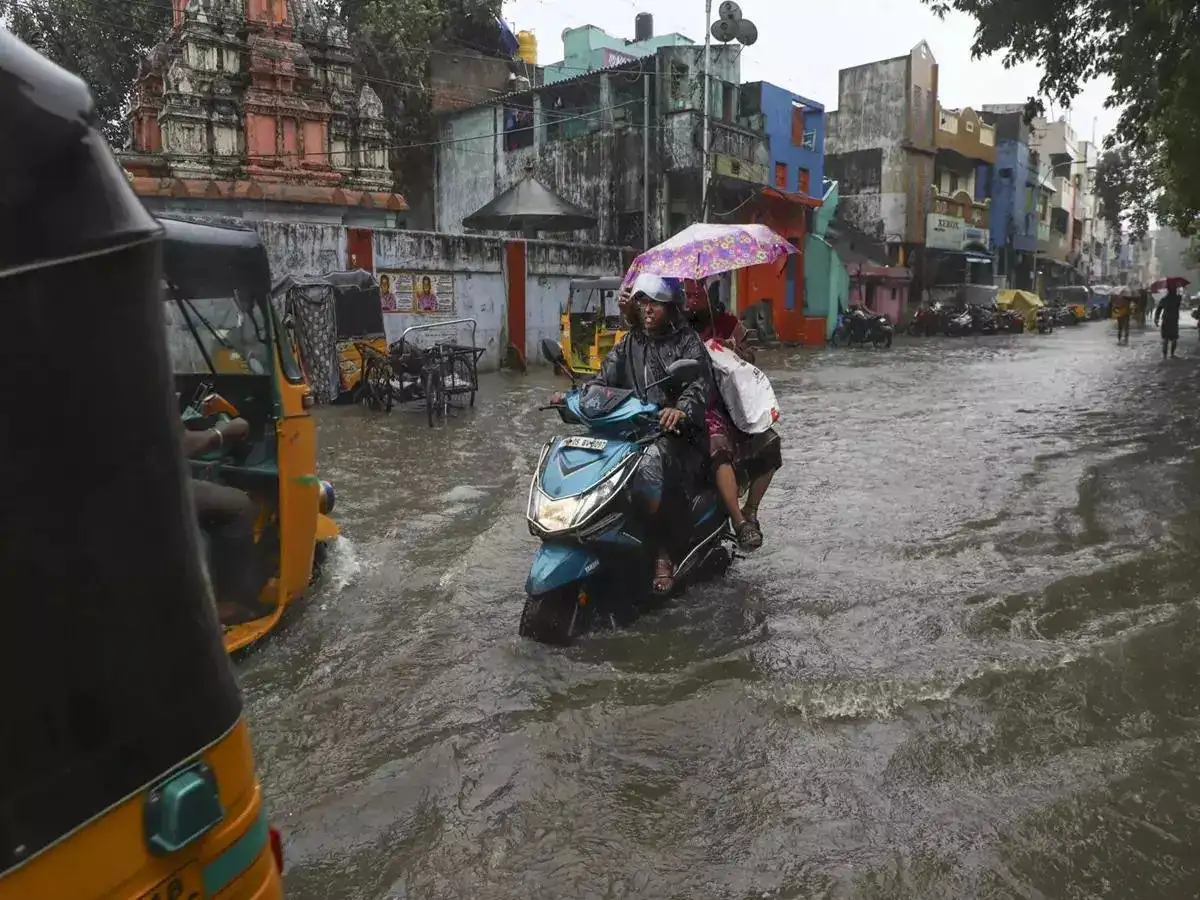
Chennai and surrounding districts in Tamil Nadu remain under heightened rainfall vigilance as the India Meteorological Department (IMD) sustains a yellow alert for heavy rain today, with isolated heavy rainfall and thunderstorms likelyto affect urban life across the metropolitan region and suburbs. The ongoing weather system, driven by a deep depression over the Bay of Bengal, underscores persistent climate variability that tests the resilience of city infrastructure.
Meteorological assessments indicate that Chennai, Chengalpattu, Kancheepuram, and Thiruvallur could see significant rain accumulation, with the potential for waterlogging and traffic disruption if intense showers materialise later in the day. This follows unusual overcast conditions and breezy mornings on Saturday, where anticipated showers largely underperformed, even as cloud cover kept temperatures subdued. Urban planners and disaster management officials are tracking the depression’s trajectory as it moves westwards from the Bay of Bengal, which is forecast to weaken gradually but maintain sufficient moisture convergence to generate rain bands over coastal and inland districts. Such persistent weather patterns — increasingly frequent in the wake of climate shifts — put pressure on drainage systems already challenged by rapid urbanisation and rising sea levels in low‑lying neighbourhoods.
The IMD’s advisory specifically warns of light to moderate rainfall with thunderstorms and lightning, which could hamper commuter flows, slow public transport and elevate the risk of minor flooding in key arterial zones. Traffic management teams have been placed on standby, particularly in drainage‑prone corridors where past downpours have led to transport bottlenecks and delays. Experts note that while yellow alerts denote “weather of concern,” they stop short of the more severe orange or redcategories used in extreme events. However, the combination of high humidity and unstable atmospheric conditions means that storm bursts — short, intense rain showers — could still disrupt daily life, especially in dense urban settlements. Such episodes highlight the need for scalable, climate‑adaptive infrastructure upgrades, from improved stormwater networks to more resilient transport hubs.
For residents, the IMD recommendation centres on preparedness: plan travel with potential delays in mind, minimise exposure in flood‑prone areas, and follow advisories from civic authorities. While schools have not been broadly shut in Chennai as of Sunday morning, local bodies are considering contingency plans if rainfall intensifies or persists into the evening hours. This weather alert arrives at a time when Chennai’s long‑term climate profile is under scrutiny, with policymakers and planners working to embed zero‑emission mobility and storm‑resilient design into future urban projects. The current forecast reinforces how climate‑related disruptions are evolving beyond seasonal monsoons to become year‑round urban planning challenges.
Looking ahead, authorities urge residents to stay informed through official channels and for municipal agencies to accelerate investments in drainage capacity, early warning systems, and community outreach to mitigate the next wave of heavy rainfall impacts.