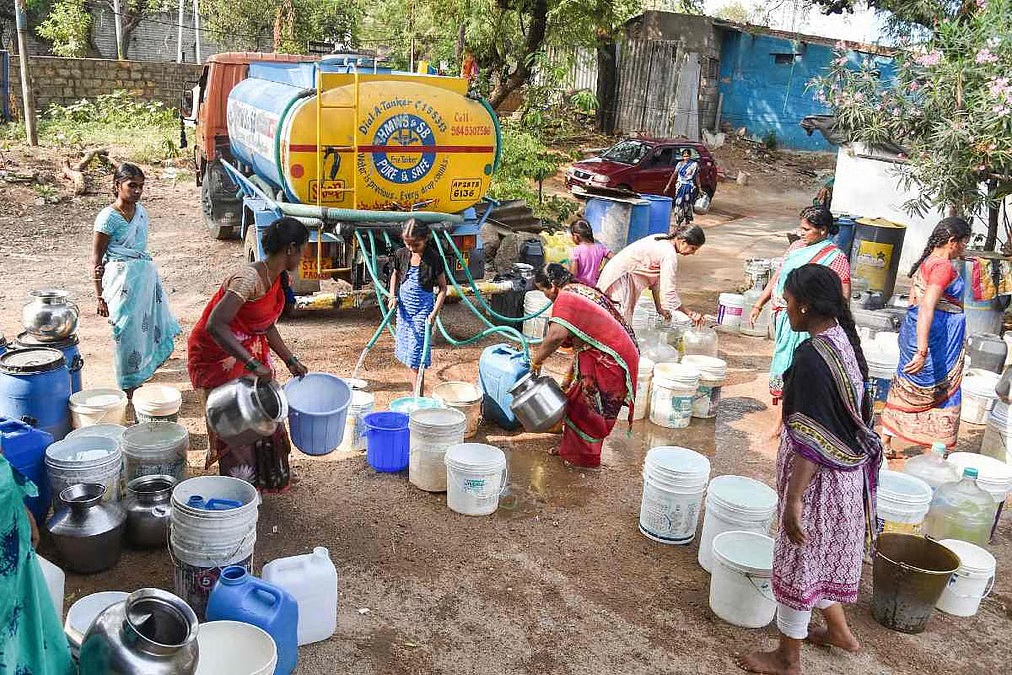
Chennai’s ageing water grid received a structural upgrade this week as new storage and distribution assets were commissioned across the city’s northern quarters, improving Chennai water supply reliability for nearly 70,000 residents. The intervention targets long-standing service gaps in dense trading and residential neighbourhoods, where outdated pipelines and limited storage have historically disrupted daily access. The works include a 15-lakh-litre underground reservoir constructed near Broadway, designed to stabilise distribution pressures in George Town, Clive Battery and Mannady. In parallel, a high-capacity transmission main has been laid across more than a kilometre to strengthen bulk supply during peak demand periods. Two additional overhead tanks, each with comparable storage volume, are under construction to further augment the network.
Urban planners note that north Chennai’s mixed land use characterised by wholesale markets, small manufacturing clusters and tightly packed housing creates volatile consumption patterns. Without sufficient intermediate storage, pressure fluctuations often lead to uneven supply, particularly in multi-storey and informal dwellings. By expanding buffer capacity, the Chennai water supply system can moderate these variations and reduce dependency on tanker deliveries. Officials overseeing the rollout indicated that the project forms part of a phased strategy to modernise core water infrastructure in older precincts. A secondary pipeline network is currently being laid to enhance redundancy, reducing vulnerability during maintenance or emergency shutdowns. Such redundancy is increasingly critical as climate variability intensifies stress on urban utilities.
North Chennai has long faced intertwined challenges of water scarcity and sewerage backflow due to ageing underground assets. Infrastructure economists argue that incremental investments in storage and transmission can yield high returns in dense city centres, where service interruptions carry economic costs for trade and logistics. Improved Chennai water supply continuity is also expected to benefit small enterprises that depend on predictable daily operations. From a climate resilience perspective, enhanced storage capacity enables better management of both surplus and deficit conditions. During heavy rainfall, managed inflows can be temporarily balanced within the network, while in dry spells, stored reserves cushion fluctuations in source supply. This aligns with broader efforts to build adaptive urban systems in coastal cities vulnerable to extreme weather events.
The intervention also carries implications for public health and gender equity. Reliable piped water reduces time spent collecting or purchasing water, a burden that often falls disproportionately on women and informal workers. In dense neighbourhoods, improved supply continuity lowers risks associated with unsafe storage practices. As additional overhead tanks near completion and distribution lines are integrated, attention will turn to monitoring performance and leak detection. For a city pursuing long-term water security, sustained asset management rather than one-time capital expenditure will determine whether the Chennai water supply network can meet the demands of a growing population while advancing toward a more climate-resilient urban future.