



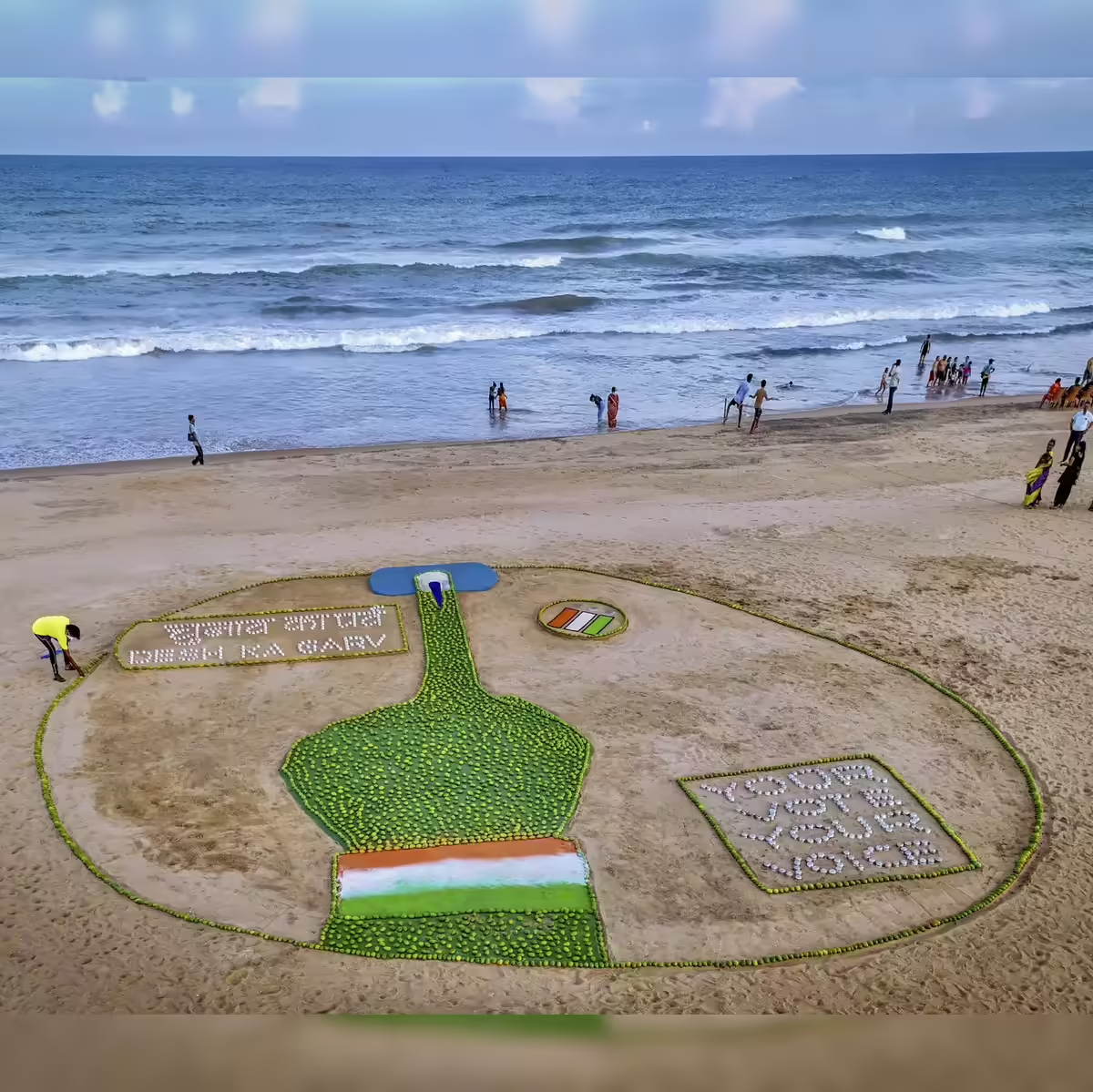
A civic outreach initiative in Chennai is leveraging public art along its coastline to encourage greater electoral participation, signalling a shift towards more creative, community-focused voter engagement strategies in Indian cities.
The campaign, centred on large-scale sand installations, aims to draw attention to voter awareness while using public spaces to connect with diverse urban audiences.Officials involved in the initiative indicate that the effort is designed to reach both first-time voters and historically underrepresented groups in dense urban neighbourhoods. By situating the installations in high-footfall areas such as city beaches, authorities are attempting to embed voter awareness into everyday urban life rather than limiting it to traditional outreach channels.Urban planners note that such interventions reflect a broader trend in civic governance, where public spaces are increasingly being used for social messaging. Chennai’s coastline, already a key recreational zone, becomes an informal platform for civic education, allowing authorities to communicate essential democratic processes in a visually engaging manner. This approach is particularly relevant in cities where information fatigue and fragmented media consumption can dilute conventional awareness campaigns.
The voter awareness campaign also highlights how art-led initiatives can complement infrastructure-led governance. While urban development typically focuses on transport, housing, and utilities, civic participation remains a foundational element of city-building.
Encouraging informed voting behaviour directly influences how resources are allocated, how policies evolve, and how inclusive urban growth is achieved.From an economic standpoint, higher voter engagement can shape local governance priorities, affecting sectors such as real estate regulation, transport planning, and environmental management. Industry observers suggest that participatory governance tends to produce more predictable policy environments, which can support long-term investment and sustainable urban expansion.There is also a social dimension to the initiative. By making voter awareness visible and accessible, the campaign reduces barriers to participation, particularly for marginalised communities who may feel disconnected from formal political processes. Experts argue that inclusive civic messaging, when delivered through shared public spaces, can foster a sense of ownership and belonging among residents.Environmental considerations are also evident in the choice of medium. Sand art, being temporary and non-invasive, aligns with low-impact urban interventions that avoid permanent alteration of natural landscapes. This reflects a growing emphasis on climate-sensitive civic programming, especially in coastal cities vulnerable to ecological stress.
As cities across India grapple with the challenges of rapid urbanisation, Chennai’s voter awareness campaign offers a model of how governance can extend beyond infrastructure to engage citizens meaningfully. The long-term effectiveness of such initiatives will depend on whether they translate into measurable increases in voter turnout and sustained civic participation.
Also Read:Chennai Luxury Property Deal Signals Realty Growth
