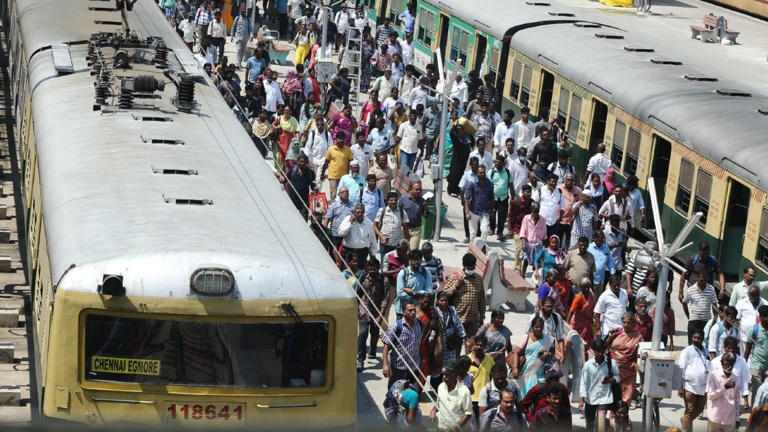
Chennai’s suburban railway network is struggling under sustained disruptions, leaving thousands of daily commuters facing extended waits and overcrowded platforms. The Southern Railway’s decision to curtail 44 local train services on the Beach–Chengalpet corridor has compounded travel challenges across the city’s key transit routes, highlighting vulnerabilities in urban transport infrastructure during critical redevelopment works.
Platforms at stations including Nungambakkam, Mambalam, and Guindy have consistently experienced overcrowding, with commuter flows exceeding safe handling capacities during peak hours. Trains that previously ran at intervals of 7–12 minutes now arrive in gaps of up to 30–40 minutes, intensifying risks of boarding accidents and raising public safety concerns. This disruption has particularly affected students and office workers reliant on predictable schedules for timely access to educational institutions and workplaces.
Officials attribute the service cuts to redevelopment work at Egmore station, which has necessitated temporary operational adjustments. Trial runs indicate that trains must cross multiple main lines to access certain platforms, slowing movement and triggering delays. Safety protocols near key stations have also contributed to slower transit times, while shuttle services have been proposed to facilitate connections to the metro network. Municipal transport agencies have supplemented these measures with additional bus services, but the gap between commuter demand and available capacity remains significant. Urban planners note that the disruption underscores a structural challenge: suburban rail networks often operate near peak capacity without flexible alternatives for service interruptions. Scheduling major infrastructure upgrades during high-demand periods exposes commuters to prolonged inconvenience and operational risk. Experts suggest that phased construction, off-peak scheduling, and integration with other mass transit modes, such as metro and bus networks, could mitigate these impacts and enhance resilience in the city’s transport ecosystem.
The economic and social consequences of reduced train frequency are also apparent. Delayed commutes affect workforce productivity, increase dependence on road transport, and elevate urban congestion and emissions. For a city pursuing climate-conscious and inclusive urban development, these disruptions reveal the critical importance of synchronized infrastructure planning, risk assessment, and advance communication with citizens. While Southern Railway plans to restore full service by early April, interim solutions including dynamic shuttle services, staggered work hours, and improved crowd management will determine whether Chennai’s suburban rail network can continue to support equitable, safe, and sustainable urban mobility during major redevelopment works.