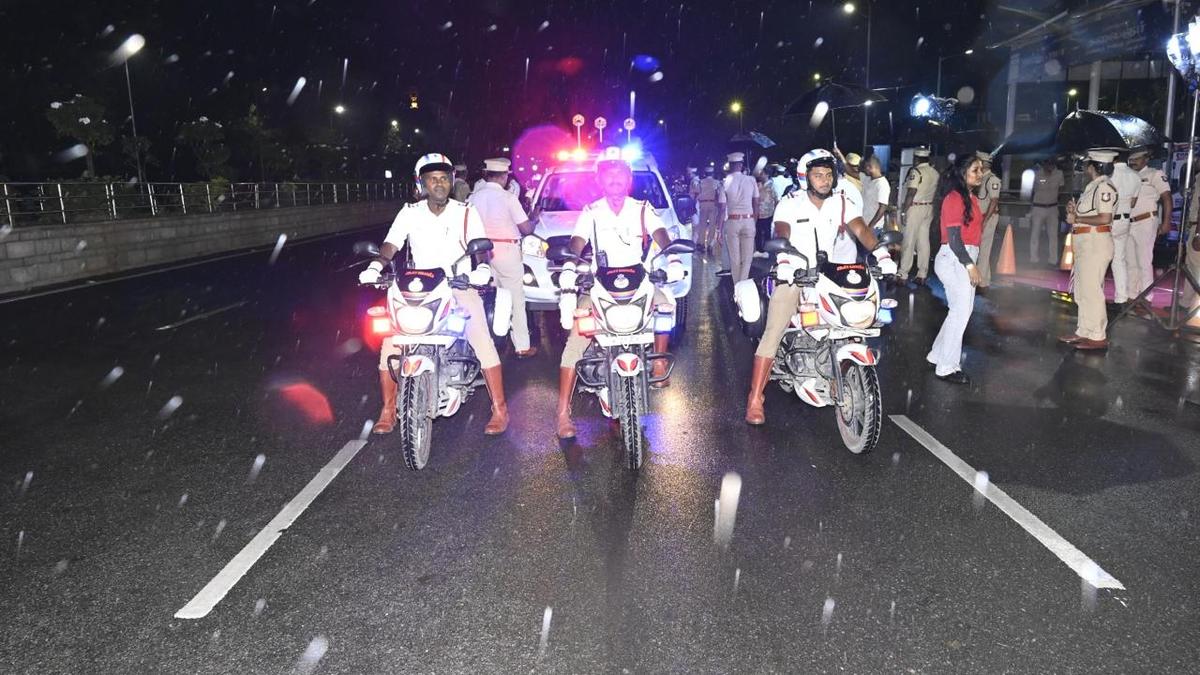
Chennai Traffic Police Super Bike Rally Promotes Safety
Chennai’s transport governance is taking an unconventional route to road safety this month as the Greater Chennai Traffic Police (GCTP) organised a super bike rally aimed at promoting responsible riding behaviour ahead of peak travel periods. The event — staged from the city’s Island Grounds — blended visible enforcement with civic engagement, reflecting evolving strategies in urban traffic management that emphasise proactive behaviour-change alongside traditional policing.
Scheduled on a recent Saturday evening, the rally brought together a fleet of high-capacity motorcycles and riders under the banner “Safe Roads, Save Lives”. Officers — some atop superbikes outfitted for rapid response — led sections of the night ride through key arterial corridors to raise public awareness about speed discipline, safety gear, and lawful road use. Social media posts from official traffic police accounts highlighted the event’s focus on reducing crash risk and enhancing commuter awareness. Urban transport experts see this initiative as part of a broader shift in how Indian cities approach traffic safety. Conventional enforcement-only models tend to emphasise fines and deterrence, but Chennai’s rally signals a pivot towards public engagement campaigns that ally enforcement with positive visibility and experiential messaging. For cities grappling with high two-wheeler usage and frequent road trauma, combining mobile outreach with community-facing events may nudge social norms around speed compliance and protective equipment use.
Chennai’s road network, like those in other Indian metros, is characterised by dense two-wheeler traffic where riders often confront congestion, variable lane discipline and inconsistent helmet use. Data from recent years shows recurring incidents of illegal racing and reckless riding in parts of the city — challenges that enforcement alone has struggled to fully mitigate. In March 2025, 45 bikes were seized after illegal racing resurfaced near high-traffic zones, underscoring persistent safety risks. The mega bike rally also served as a platform for authorities to highlight broader traffic reform objectives, including integration with digital road safety information, partnerships with local riding groups, and emphasis on protective riding gear. Urban planners note that such community-oriented initiatives, when combined with engineering and enforcement measures, can help reinforce holistic road safety cultures. Indeed, cities that pair high-visibility campaigns with data-driven traffic calming — such as lane redesign, speed management measures and targeted enforcement — often see sustained reductions in collisions.
However, integrating spectacle with substance remains a challenge. Critics argue that while rallies generate attention, long-term behavioural change depends on consistently applied road rules, better infrastructure for non-motorised users, and educational outreach in schools and colleges. Traffic police officials acknowledge these limitations and are reportedly considering future collaborations with rider communities and urban cycling groups to amplify the safety message year-round.
Looking ahead, such mobilisations could become regular fixtures in Chennai’s traffic management calendar, complementing enforcement campaigns and infrastructure upgrades. As cities across India explore similar models, Chennai’s experience may offer insights into how civic engagement can be woven into the fabric of urban mobility governance — transforming riders from potential risk factors into active partners in safer, more resilient urban transport systems.