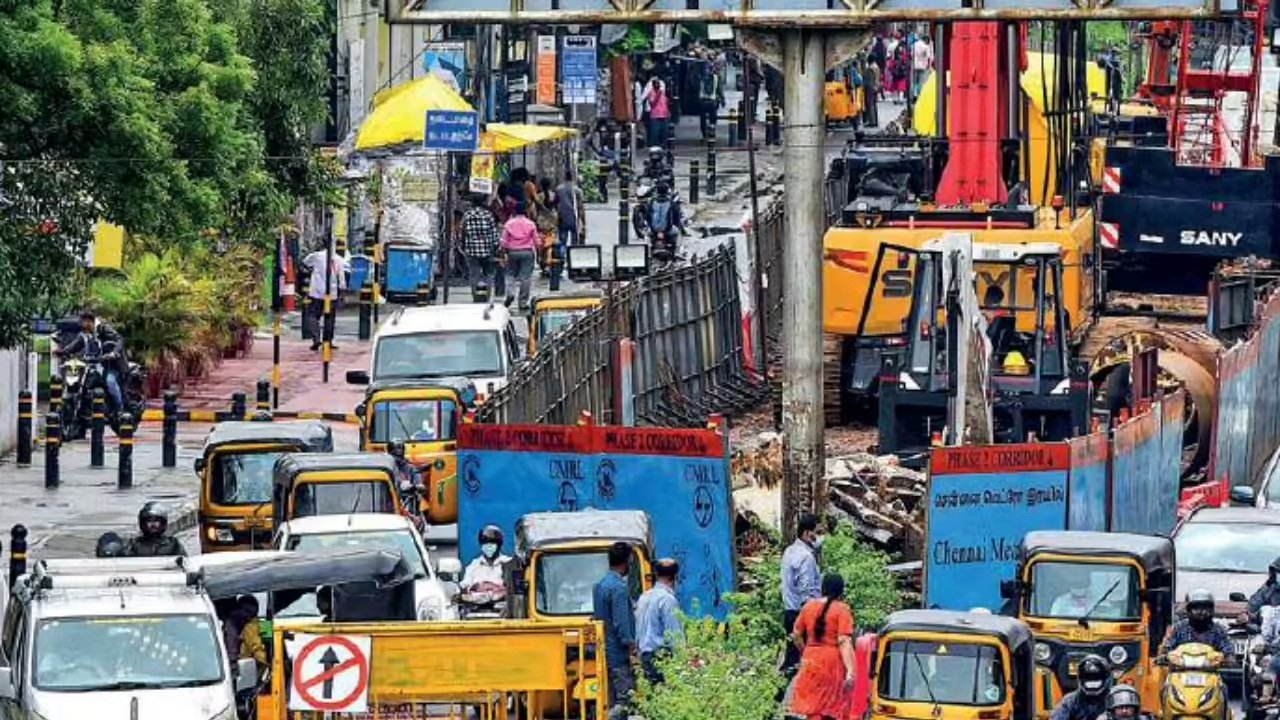
Chennai Traffic Hazards Escalate Near Key Urban Corridor
Chennai is witnessing a surge in traffic violations along the Saidapet-Guindy corridor, with wrong-side driving emerging as a growing safety concern. Commuters on the busy urban stretch report frequent instances of two-wheelers and autorickshaws bypassing congested intersections by riding against traffic, particularly around elevated metro pillars. Urban mobility analysts warn that such practices significantly heighten the risk of collisions and disrupt the broader traffic ecosystem of the city.
The phenomenon has been observed most acutely during peak hours, when congestion near Taluk Office Road and the approach to Guindy encourages motorists to seek shortcuts. Vehicles travelling against designated one-way lanes, especially on key feeder roads leading to Velachery Main Road, are forcing drivers on Anna Salai to make sudden evasive manoeuvres. Traffic engineers highlight that these patterns not only increase the likelihood of head-on collisions but also reduce effective traffic throughput, undermining investments in Chennai’s urban transport infrastructure. Urban planners point to a combination of systemic and enforcement gaps driving the issue. Inadequate deployment of traffic personnel during high-density periods allows habitual offenders to flout rules with minimal consequences. Infrastructure design also plays a role: elevated metro pillars and narrow carriageways create visual blind spots that exacerbate risk when drivers disregard directional regulations.
Analysts note that such unsafe practices could slow the adoption of more sustainable mobility solutions, including public transport integration, as commuters perceive city roads as unsafe for routine travel. From an economic standpoint, wrong-side driving carries indirect costs. Accidents resulting from head-on collisions often lead to road blockages, delaying goods and services across central business districts. Insurance claims, emergency response requirements, and medical expenses impose further burdens on households and municipal budgets. Transport policy experts stress that prioritising enforcement and intelligent traffic design can yield both safety and productivity gains, aligning with Chennai’s broader objectives for a climate-resilient and inclusive urban environment.
Community organisations and civic advocates urge authorities to adopt data-driven traffic management strategies. Recommendations include strategically positioned enforcement units, enhanced signage, and intelligent signalling near metro pillars to mitigate risk points. Experts emphasise that such interventions should complement wider urban planning measures, such as optimised signal timings and dedicated lanes for two-wheelers and public transport, supporting safer, equitable mobility. While Chennai’s infrastructure has expanded rapidly with metro and arterial road projects, the persistence of wrong-side driving highlights the need for integrated urban mobility governance. Addressing these behavioural and design challenges is essential not only for commuter safety but also for maintaining the city’s transport efficiency and sustainable growth trajectory.