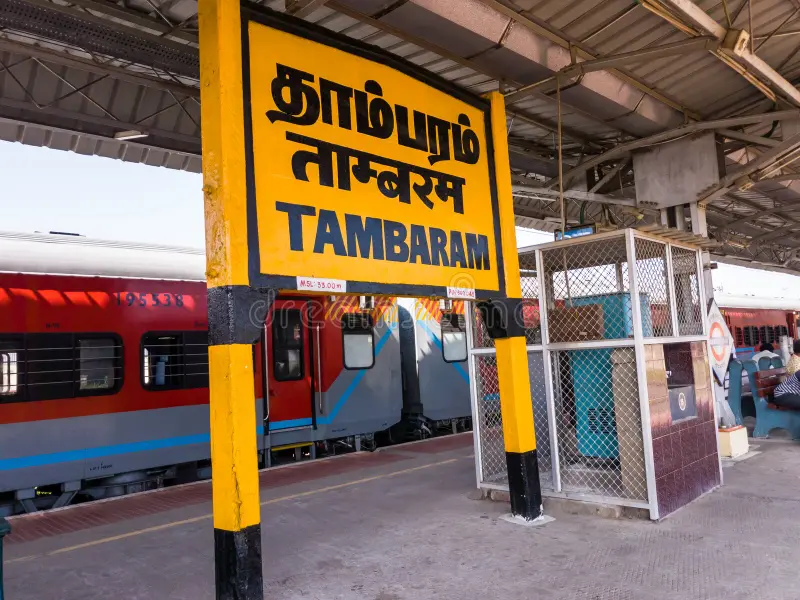
Chennai Tambaram Thirst Grows As Supply Lags Growth
Tambaram’s rapid transition into a major southern suburb of Chennai has outpaced the development of its basic water infrastructure, leaving thousands of households in newly integrated and older neighbourhoods grappling with severe supply gaps. As the corporation stands on the brink of a major territorial expansion, concerns are mounting over whether the existing network can support a population that will soon exceed 12 lakhs.
Officials estimate that Tambaram requires around 125 million litres of water daily across its five zones. Yet the system delivers just 76 MLD, creating a shortfall that forces entire communities to rely on private tankers. Urban planners say this widening deficit reflects structural weaknesses in the broader metropolitan water system, where expanding municipal boundaries often grow faster than essential civic services. Only two zones Chromepet and Pallavaram currently enjoy piped water supply, and even their connections remain incomplete. Nearly a quarter of households are still waiting to be linked to the network. In contrast, neighbourhoods such as Selaiyur, Camp Road and Mudichur continue to depend almost entirely on tanker deliveries. A resident from Pallavaram noted that water arrives only once in two or three days, pushing low-income families into recurring expenditure on tanker services. Experts warn that this model disproportionately impacts vulnerable groups and undermines the sustainability of the city’s long-term urban development.
Tambaram’s geographic footprint is set to double next year, with 19 village panchayats scheduled for merger. Many of these areas Perumbakkam, Medavakkam and Mudichur among them already face chronic supply challenges. Representatives from resident associations insist the corporation should prioritise piped networks and storage facilities before formalising the merger, arguing that integrating settlements without foundational infrastructure creates inequitable service distribution and deepens existing disparities. A potential lifeline lies in Chennai’s Perur desalination plant, a large-scale project expected to be operational by March 2027. Half the work is reportedly complete on the 400-MLD facility, which will supply treated seawater to nearly 23 lakh residents across southern Chennai. Tambaram officials say the corporation is expected to receive up to 150 MLD through a new ring main that will channel water via Sembakkam and East Tambaram. An additional 5 MLD is planned from the Palar River.
However, specialists caution that desalination alone will not resolve Tambaram’s internal infrastructure failures. A retired senior official from the state’s water administration highlighted the absence of new reservoirs in the past five years—an omission that limits Tambaram’s ability to store and distribute future desalinated water efficiently. He added that stormwater systems also need urgent upgrades to prevent monsoon runoff from mixing with sewage, a longstanding challenge for Chennai’s southern suburbs. As Tambaram prepares for its next phase of growth, planners argue that this is an opportunity to redesign the city’s water distribution framework around resilience, equity and climate readiness. Strengthening storage, expanding pipelines and improving governance will be essential to building a water-secure future for one of Chennai’s fastest-growing regions.
Chennai Tambaram Thirst Grows As Supply Lags Growth