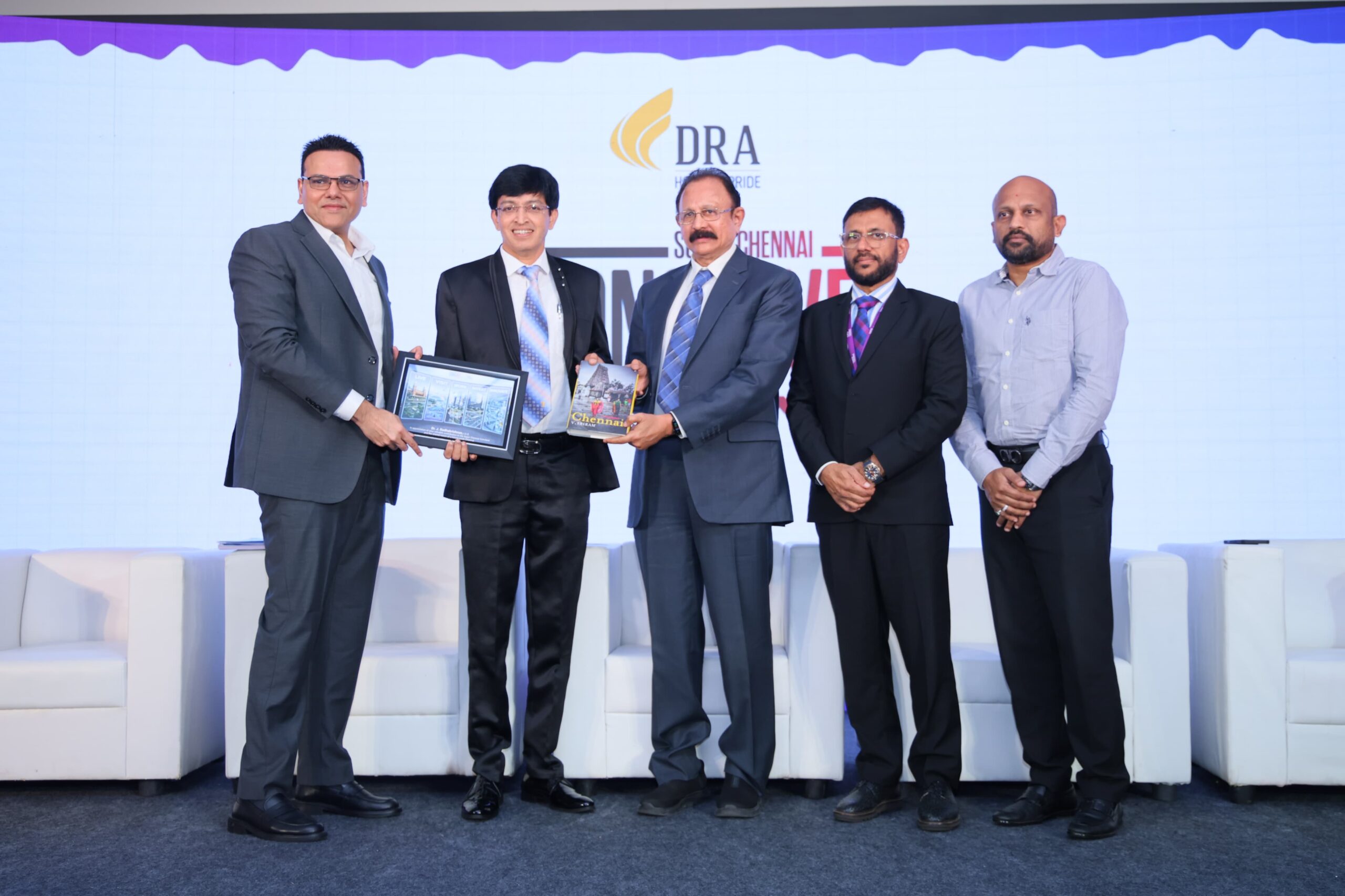
Sustainability and infrastructure planning have emerged as the twin anchors of Chennai’s next growth cycle, following deliberations at the inaugural Super Chennai Conclave 2026, where government officials, industry leaders and civic stakeholders outlined a roadmap for the city’s long-term transformation.
Held in Chennai, the forum focused on aligning economic expansion with climate resilience, positioning the coastal metropolis as a competitive yet environmentally responsible urban hub in South Asia. Participants emphasised that future growth must integrate transport upgrades, public health systems and industrial expansion within a coordinated urban framework. Senior representatives from the Government of Tamil Nadu highlighted the importance of collaborative governance in steering Chennai’s evolution. Officials noted that the city’s layered development shaped by port-led commerce, manufacturing and services now requires a new phase defined by infrastructure reliability, energy transition and inclusive access to opportunity. Urban planners at the conclave underscored the urgency of climate adaptation. As a low-lying coastal city vulnerable to flooding and extreme weather, Chennai’s expansion strategy must prioritise resilient drainage networks, coastal zone management and green mobility systems. Investment in mass transit and transit-oriented development was identified as critical to reducing congestion and emissions while supporting economic clustering.
The role of public-private partnerships featured prominently in discussions. Industry leaders pointed to the need for predictable policy frameworks, faster approvals and integrated infrastructure corridors to sustain investor confidence. Manufacturing, technology and startup ecosystems were cited as key drivers that could benefit from improved logistics connectivity and stable power supply. Chennai’s industrial base ranging from automobiles to electronics continues to underpin Tamil Nadu’s broader economic performance. Analysts noted that upgrading urban infrastructure around industrial zones, including water security and waste management, will be essential to balancing productivity with environmental safeguards. Participants also called for citizen engagement to move beyond consultation into implementation. Structured working groups are expected to refine policy recommendations into measurable targets, particularly in areas such as renewable energy adoption, sustainable building practices and last-mile mobility solutions. The discussions come at a time when Indian cities are competing for global capital amid shifting supply chains and sustainability mandates. Experts argue that cities able to demonstrate infrastructure readiness and climate resilience will gain an advantage in attracting multinational investment.
For Chennai, the path ahead lies in synchronising infrastructure expansion with ecological safeguards. The emphasis on sustainability and infrastructure at the conclave signals recognition that economic ambition must be supported by robust civic systems and long-term environmental planning. If effectively executed, this integrated approach could strengthen Chennai’s position as a benchmark coastal capital one that grows not only in scale, but in resilience and inclusivity.
Also Read: Mumbai Dharavi redevelopment land handed over
Chennai sustainability and infrastructure lead dialogue