


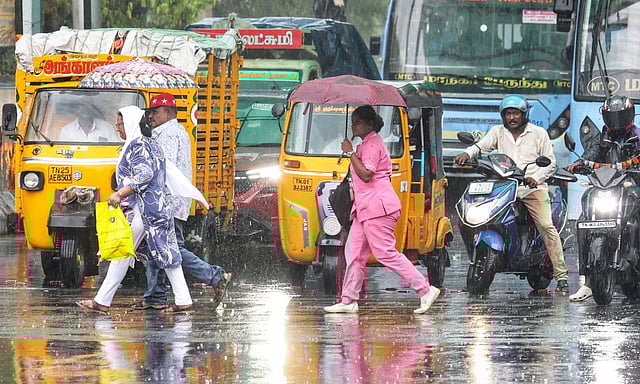
An unexpected spell of rainfall across Chennai has brought temporary relief from rising summer temperatures, offering a pause in what has otherwise been an intensifying pre-monsoon heat cycle.
The showers, driven by localised weather systems, also underline the increasing unpredictability of urban climate patterns.The sudden downpour associated with the Chennai summer rain relief was recorded across multiple neighbourhoods, leading to a noticeable dip in daytime temperatures and improved outdoor conditions. In a city where April typically marks the onset of peak summer—with temperatures often crossing 35°C—such weather events provide short-lived but significant respite for residents.Meteorological observations suggest that the rainfall was triggered by convective activity combined with atmospheric instability, a pattern becoming more common during transitional seasons.Weather agencies have indicated that intermittent showers and thunderstorms may continue in the coming days, particularly across parts of Tamil Nadu.While the immediate impact of the Chennai summer rain relief has been positive—cooler temperatures and reduced heat stress—the event also highlights the dual nature of such weather shifts in dense urban environments.Sudden rainfall can strain drainage systems, disrupt traffic, and expose vulnerabilities in infrastructure, particularly in areas with limited stormwater management capacity
.Urban planners note that Chennai’s climatic profile is evolving, with increasing instances of erratic rainfall outside traditional monsoon windows.This variability is closely linked to broader climate change trends, including rising sea surface temperatures and shifting wind patterns in the Bay of Bengal. As a result, cities must prepare for both extreme heat and sudden precipitation within short intervals.From a public health perspective, the cooling effect offers immediate benefits, especially for vulnerable populations exposed to prolonged heat. However, experts caution that fluctuating weather conditions can also lead to secondary risks, including waterlogging, vector-borne diseases, and disruptions to daily mobility.The economic implications are equally layered. While reduced heat can improve productivity and lower energy demand for cooling, unexpected rainfall may affect sectors such as construction, logistics, and informal street-based commerce. For a city with a large outdoor workforce, weather variability directly influences income stability.There is also a growing conversation around integrating climate-responsive design into urban planning. Measures such as permeable surfaces, improved drainage networks, and green cover expansion can help cities better absorb sudden rainfall while mitigating heat island effects.
As forecasts point to the possibility of continued weather activity in the near term, Chennai’s experience reflects a broader shift facing Indian cities—where traditional seasonal patterns are becoming less predictable. Building resilience will require not only responsive governance but also long-term investments in infrastructure that can adapt to both heat extremes and sudden rainfall events.
Also Read:Chennai Ponneri Civic Infrastructure Issues Persist Despite Growth
